


Ferdowsi's magnum opus, the Shahnameh, is an epic poem that has been revered as the national epic of Persia (modern-day Iran) for centuries. This monumental work, spanning over 60,000 couplets, is a testament to Ferdowsi's literary genius, telling the fantastical story of Iran's mythological and historical past.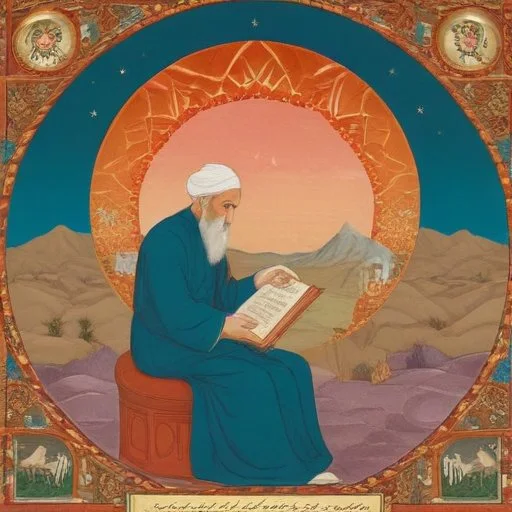
Ferdowsi's three-decade-long journey to complete the Shahnameh was nothing short of an odyssey. The poet's tireless efforts to collect and weave together tales of heroes, villains, and legendary creatures have resulted in a work of unparalleled beauty and depth. With its intricate metaphors, clever wordplay, and masterful storytelling, the Shahnameh has become an integral part of Persian literature and identity.
So great was the impact of the Shahnameh that it has influenced Persian literature for centuries, shaping the nation's cultural and social fabric. The epic poem has been translated into numerous languages, including Arabic, Turkish, and Urdu, cementing its status as a masterpiece of world literature. The Shahnameh's influence can be seen in the works of later poets, such as Rumi and Hafez, who drew inspiration from Ferdowsi's masterpiece.
Ferdowsi was born in the 10th century in the Samanid Empire, a period marked by cultural and artistic flourishing. The poet's life was shrouded in mystery, with few records of his personal life surviving. What is known, however, is that Ferdowsi was driven by a passion to preserve Persian culture and history, which was threatened by the Arab conquest of Persia.
The Shahnameh is more than just an epic poem – it's a historical record of Iran's ancient past. The poem contains accounts of the reign of the mythical Kayanian dynasty, the legendary hero Rostam, and the rise and fall of the Persian Empire. While the Shahnameh is rooted in mythology, it also provides valuable insights into the social, cultural, and political landscape of ancient Persia.
The Shahnameh is a rich tapestry of themes and motifs, including honor, loyalty, love, and the struggle between good and evil. The poem's central theme, however, is the celebration of Persian identity and the preservation of cultural heritage. Through the Shahnameh, Ferdowsi has created a sense of shared history and collective memory, binding the Persian people together across generations.
In modern times, the Shahnameh continues to inspire artists, writers, and musicians. The epic poem has been adapted into films, plays, and musicals, ensuring its enduring relevance to contemporary audiences. The Shahnameh's message of cultural pride, national identity, and the power of storytelling remains as resonant today as it was when Ferdowsi first penned the poem.
Ferdowsi's completion of the Shahnameh is a testament to the power of art to shape and reflect national identity. This epic poem has become an integral part of Iran's cultural DNA, influencing generations of poets, writers, and artists. As a masterpiece of world literature, the Shahnameh continues to inspire and captivate audiences, cementing Ferdowsi's place as one of the greatest poets of all time.
Ferdowsi's Shahnameh is often regarded as a product of the Persian Renaissance, a cultural and literary movement that emerged in the 9th and 10th centuries. This period saw a resurgence of interest in pre-Islamic Persian culture, language, and literature, which was reflected in the works of poets like Ferdowsi. The Shahnameh can be seen as a historiographical response to the Arab conquest of Persia, which had a profound impact on the region's cultural and linguistic landscape.
The epic poem's blend of myth, history, and literature has made it a rich source for historiographers. The Shahnameh provides valuable insights into the social, cultural, and political dynamics of ancient Persia, as well as the processes of cultural exchange and transmission during the medieval period.
The Shahnameh has had a profound impact on Persian and Iranian cultural identity. The epic poem has shaped the nation's collective memory, providing a shared history and cultural heritage that has been passed down through generations. The Shahnameh's themes of heroism, loyalty, and the struggle between good and evil have become deeply ingrained in Persian cultural consciousness.
The Shahnameh has also influenced Persian art, architecture, and literature, with many works of art and literature drawing inspiration from its stories and characters. The epic poem's cultural significance extends beyond Iran, with translations and adaptations appearing in languages such as Turkish, Urdu, and Arabic.
The Shahnameh reflects the complex political dynamics of ancient Persia, with the epic poem often serving as a tool for political legitimation and critique. The Shahnameh contains accounts of the reigns of various Persian monarchs, including the mythical Kayanian dynasty and the historical Achaemenid Empire.
The epic poem's portrayal of royal power and authority provides valuable insights into the workings of ancient Persian politics. The Shahnameh also contains subtle critiques of monarchical power, highlighting the importance of justice, wisdom, and courage in leadership.

Ferdowsi's Shahnameh is populated by a diverse range of characters, from heroes and villains to mythical creatures and legendary figures. One of the most iconic characters in the epic poem is Rostam, the legendary hero who embodies the values of courage, strength, and loyalty.
Rostam's story is woven throughout the Shahnameh, with the hero facing numerous challenges and battles against monsters, dragons, and other adversaries. Rostam's character has become an integral part of Persian cultural heritage, symbolizing the nation's values and ideals.
The Shahnameh has been preserved and transmitted through a range of manuscripts and illustrated editions, many of which date back to the medieval period. One of the most famous and beautiful examples is the Shah Tahmasp Shahnameh, a lavishly illustrated manuscript produced in the 16th century.
This manuscript is a testament to the art of Persian miniature painting, with intricate illustrations and calligraphy adorning its pages. The Shah Tahmasp Shahnameh is a valuable artifact for understanding the history of the Shahnameh and its role in Persian cultural heritage.