


In the crisp autumn of 1774, a monumental gathering of visionaries, rebels, and leaders congregated in Philadelphia's Carpenters' Hall, marking the beginning of a revolution that would change the course of history. This assembly, known as the First Continental Congress, defied the British crown's oppressive rule, setting the stage for a unified resistance that would ultimately pave the way for American independence.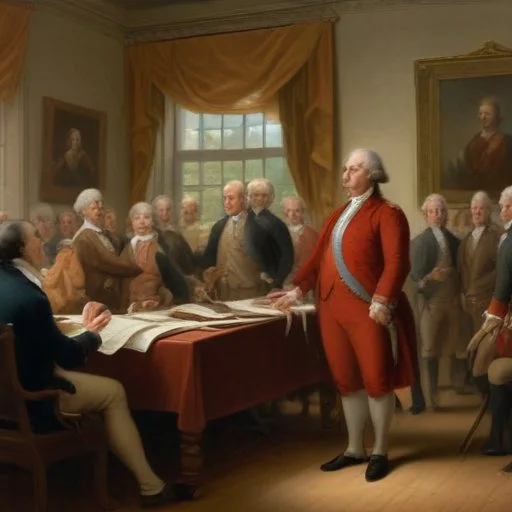
The road to the First Continental Congress was paved by the Intolerable Acts, a series of draconian laws imposed by the British government to punish the colonies for their growing dissent. These acts sparked widespread outrage, prompting the need for collective action and coordination among the colonies.
Sixty-six esteemed delegates from twelve colonies converged in Philadelphia, bringing with them a wealth of experience, passion, and strategic thinking. Notable figures such as George Washington, Patrick Henry, John Adams, and Samuel Adams were among the esteemed group, each contributing their unique perspective to the discussions.
The Congress was marked by heated debates, passionate oratory, and strategic maneuvering. The delegates issued a declaration of unity, outlining their grievances against the British government and calling for a unified boycott of British goods. This declaration sent a clear message to the British crown: the colonies would no longer be silenced or oppressed.
The First Continental Congress was a pivotal moment in American history, marking the beginning of a long and arduous journey towards independence. The seeds sown in Philadelphia would eventually blossom into the United States of America, as the colonies bravely fought for and ultimately won their freedom from British rule.
"There is a time for all things, a time to preach and a time to pray, but there is also a time to fight, and that time has now come!" - Patrick Henry
The First Continental Congress was just the beginning of a long and challenging journey. The delegates would reconvene in 1775, this time with the goal of declaring independence and forming a new nation. The path ahead would be fraught with peril, but the spirit of defiance and unity forged in Philadelphia would carry the colonies through the darkest of times.
One of the most influential figures of the Continental Congress was Samuel Adams, a passionate leader from Massachusetts. Born on September 27, 1722, Adams was a vocal critic of British rule and played a key role in organizing the Boston Patriot movement. His experience as a leader in the Massachusetts Provincial Congress and his connections with other patriot groups made him an invaluable asset to the Continental Congress. Adams' dedication to the cause of independence was unwavering, and his persuasive abilities helped to bring unity among the delegates.
Less known about Adams is his early life as a businessman. He inherited his father's brewery and attempted to make a living, but ultimately failed. This failure, however, led him to focus on politics, where he found his true calling. Adams' unique blend of passion, leadership, and strategic thinking made him an essential figure in the fight for American independence.

The Continental Congress was a masterclass in political maneuvering, with delegates from different colonies and factions vying for influence. One of the most significant challenges faced by the Congress was the issue of colonial unity. Delegates from larger colonies like Virginia and Massachusetts had more influence, while smaller colonies like Delaware and Rhode Island struggled to make their voices heard.
To address this, the Congress adopted a system of proportional representation, where each colony had a set number of votes based on its population. This system ensured that smaller colonies had a voice, while larger colonies still maintained their influence. This compromise was a testament to the delegates' ability to find common ground and work towards a united goal.
In the months leading up to the Continental Congress, tensions between the colonies and Great Britain continued to escalate. The British government, led by Prime Minister Lord North, imposed a series of punitive measures, including the closure of the port of Boston and the dissolution of the Massachusetts colonial government.
In response, the colonies began to organize and coordinate their resistance. Committees of Correspondence, established in 1772, allowed colonies to share information and coordinate their efforts. The First Continental Congress was the culmination of this coordination, bringing together leaders from across the colonies to present a united front against British tyranny.

Historians have long debated the significance of the Continental Congress, with some viewing it as a pivotal moment in American history and others seeing it as a relatively minor event. However, most agree that the Congress marked a turning point in the relationship between the colonies and Great Britain.
Some historians, such as John Adams, have argued that the Continental Congress was a necessary step towards independence, as it allowed the colonies to present a united front against British rule. Others, like Edmund Burke, have seen it as a rash and ill-conceived move, driven by passion rather than reason.
The Continental Congress took place against the backdrop of a shifting global landscape. The British Empire, once the dominant world power, was facing challenges from rival European powers like France and Spain. The colonies, sensing an opportunity, began to explore alliances with these powers, potentially paving the way for future diplomatic and military cooperation.
The Congress itself was also influenced by global events, with delegates drawing inspiration from the ideas of the Enlightenment and the principles of the French Revolution. The Congress's focus on individual rights and liberties reflected the broader intellectual trends of the time, as thinkers across the world began to question the authority of monarchies and empires.