


The First Crusade's triumphant conquest of Jerusalem in 1099 marked a pivotal moment in history, as Godfrey of Bouillon, the respected Duke of Lower Lorraine, was elected the first Defender of the Holy Sepulchre of the Kingdom of Jerusalem. This monumental decision cemented Godfrey's position as the supreme ruler of the city and its revered sacred sites, ushering in a new era of Christian dominance in the Holy Land.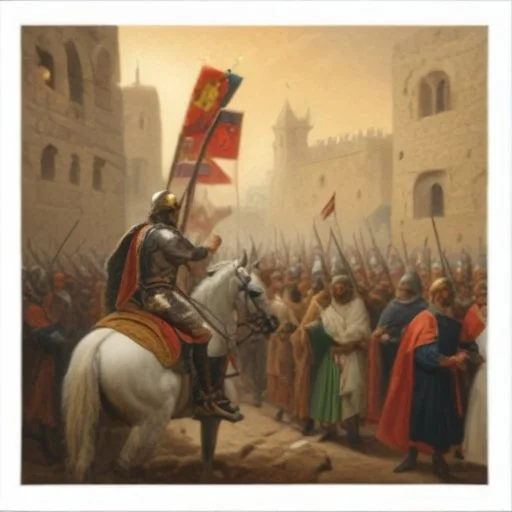
Godfrey, a seasoned military leader and devout Christian, had played a crucial role in the Crusade's success. Born in Bouillon, modern-day Belgium, around 1060, Godfrey was a descendant of the renowned Carolingian dynasty. His impressive martial skills and unwavering dedication to the Christian faith earned him the respect and admiration of his peers.
Godfrey's election marked the establishment of the Kingdom of Jerusalem, a Christian stronghold in the heart of the Middle East. As the first ruler of the kingdom, Godfrey was tasked with securing the city and its surroundings, promoting Christian settlement, and defending the sacred sites from Muslim retaliation.
Godfrey's ascension to power had far-reaching consequences, paving the way for a century of Christian rule in the Holy Land. His election not only legitimized the Crusade's conquest but also instituted a new era of Christian governance in the region. Though his reign was short-lived, Godfrey's impact on the history of the Crusades and the Kingdom of Jerusalem remains indelible.
"I will not take the title of King, as it would be unfitting to wear a crown of gold in the city where Christ wore a crown of thorns."
— Godfrey of Bouillon, inhumed on the walls of the Church of the Holy Sepulchre
Godfrey's unwavering devotion to his faith and his people inspired a generation of Crusaders and Christians alike. His leadership set a precedent for future rulers of the Kingdom of Jerusalem, solidifying the city's position as a beacon of Christian hospitality and pilgrimage.
Godfrey's election as Defender of the Holy Sepulchre marked a turning point in the history of the Crusades, establishing a Christian foothold in the Holy Land that would endure for nearly two centuries. His legacy continues to inspire and fascinate, serving as a testament to the power of courage, conviction, and devotion.
Godfrey of Bouillon was born around 1060 in Bouillon, modern-day Belgium. He was the second son of Eustace II, Count of Boulogne, and Ida of Lorraine. Godfrey's family was of noble lineage, with connections to the Carolingian dynasty.
Godfrey's early life was marked by a strong sense of duty and responsibility. He was trained in martial skills from a young age and quickly demonstrated a prowess in battle. His brother, Baldwin of Boulogne, would later join him on the First Crusade.

In the late 11th century, the Holy Land was a hotbed of political and religious tension. The Seljuk Turks had recently conquered Jerusalem, and the Fatimid Empire was struggling to maintain control over the region.
The Crusades were, in part, a response to the instability and violence that had plagued the region for centuries. Godfrey's election as Defender of the Holy Sepulchre marked a significant shift in the balance of power, as Christian forces began to assert their dominance over the region.
Godfrey's refusal to take the title of King in Jerusalem was more than just a humble gesture. It was a public declaration of his commitment to the Crusade's ideology and his devotion to the Christian faith.
"I will not take the title of King, as it would be unfitting to wear a crown of gold in the city where Christ wore a crown of thorns."This oath, inscribed on the walls of the Church of the Holy Sepulchre, became a symbol of Godfrey's leadership and a reminder of the Crusade's sacred mission.
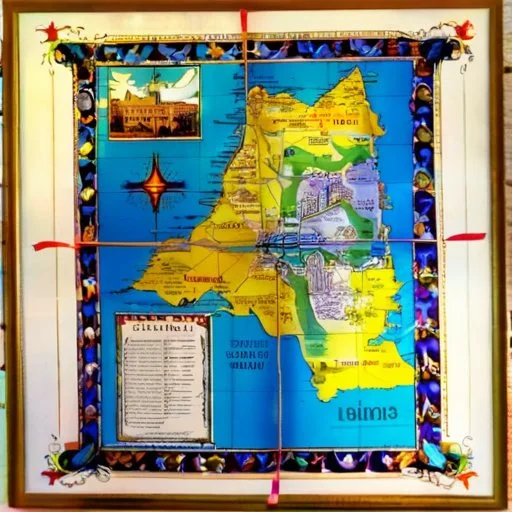
The Kingdom of Jerusalem, established by Godfrey's election, had a profound impact on the cultural landscape of the Holy Land. The city became a hub of Christian pilgrimage, attracting visitors from across Europe.
The Crusades also facilitated the exchange of ideas, art, and architecture between East and West. The Kingdom of Jerusalem became a melting pot of cultural influences, as Christians, Muslims, and Jews lived and worked together in the city.
Historians have long debated the motivations and goals of the First Crusade. Some view it as a purely religious endeavor, while others see it as a cynical attempt to expand Christian territory.
Godfrey's role in the Crusade has also been subject to interpretation. Was he a pious leader, driven by faith, or a cunning politician, seeking to expand his power and influence?