


The Siege of Jerusalem, a brutal and decisive battle, marks the climax of the First Crusade, a holy war launched by Christian armies to reclaim the sacred city from Muslim rule. This pivotal event, which began on June 7, 1099, would forever alter the landscape of Christian-Muslim relations and reshape the fate of the Middle East.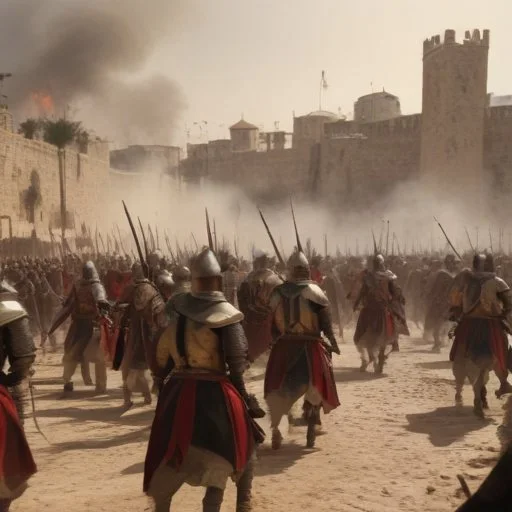
In 1095, Pope Urban II, responding to the pleas of Byzantine Emperor Alexios I, issued a call to arms, urging Christian knights to liberate Jerusalem from Muslim occupation. This clarion call sparked a wave of enthusiasm, mobilizing thousands of warriors, nobles, and peasants to embark on a perilous journey to the Holy Land.
The Crusader army, comprised of various factions, converged on Jerusalem, laying siege to the city on June 7, 1099. The initial assault, marked by a series of skirmishes and failed attempts to breach the walls, was met with fierce resistance from the Fatimid defenders.
The Siege of Jerusalem marked a decisive turning point in the First Crusade, securing a vital stronghold for Christian forces in the Holy Land. The conquest, however, came at a terrible cost, with estimates suggesting tens of thousands of Muslim and Jewish civilians perished in the carnage.
This event cemented the seeds of mistrust and hostility between Christians and Muslims, fueling a cycle of violence that would persist for centuries.
The Siege of Jerusalem resonated throughout Christendom, galvanizing support for future Crusades and shaping the very fabric of Western society.
The event has been immortalized in literature, art, and music, inspiring countless works, from epic poems to grand paintings, that continue to captivate audiences to this day.
The Siege of Jerusalem remains a deeply controversial topic, with many condemning the violence and bloodshed as a dark stain on Christendom's conscience.
Others, however, view the event as a necessary evil, a crucial step in the reclaiming of the Holy Land for Christianity.
The bravery, resilience, and unwavering dedication of the Crusaders, despite unimaginable hardship and peril, serve as a testament to the power of faith and conviction.
Their sacrifices, though shrouded in controversy, continue to inspire generations, reminding us of the importance of standing up for one's beliefs, even in the face of adversity.
 The Crusader army lays siege to Jerusalem
 Bohemond of Taranto, leader of the Crusader army
 The aftermath of the siege, with the Crusaders victorious
The Siege of Jerusalem, a pivotal event in the First Crusade, continues to captivate historians, scholars, and enthusiasts alike, offering a window into a complex, turbulent era marked by zealotry, conquest, and tragedy.
The road to Jerusalem was paved with blood and sacrifice. The Crusader army, comprising knights, nobles, and peasants, had been marching for months, braving treacherous terrain and treacherous foes. As they approached the Holy City, their determination to reclaim it from Muslim rule only intensified.
In the weeks leading up to the siege, the Crusaders had already conquered several key towns and cities, including Antioch and Ma'arrat al-Numan. These victories had not only bolstered their confidence but also provided them with vital supplies and reinforcements.
Meanwhile, the Fatimid defenders of Jerusalem, led by Governor RTBU Fahad, were well-prepared to resist the Crusader onslaught. The city's formidable walls, strengthened by a series of fortifications and bastions, seemed impenetrable. But the Crusaders were undeterred, driven by their unwavering conviction that God was on their side.

Raymond IV, Count of Toulouse: A Leader's Legacy
Raymond IV, Count of Toulouse, was one of the most prominent leaders of the First Crusade. A powerful and charismatic figure, he played a crucial role in mobilizing support for the Crusade and guiding the army to Jerusalem.
Raymond's leadership was marked by a series of bold decisions, including the construction of a massive siege engine, dubbed the "Malvoisine," which would ultimately breach Jerusalem's walls. His unwavering commitment to the Crusade's ideals earned him the respect and admiration of his fellow Crusaders.
The Siege of Jerusalem had a profound impact on the cultural fabric of Western society. The event was immortalized in literature, art, and music, inspiring countless works that continue to captivate audiences to this day.
The Crusade's emphasis on chivalry and honor helped shape the ethos of medieval knighthood, while the ideals of religious conviction and sacrifice influenced the development of Christian art and architecture.
In the centuries that followed, the Siege of Jerusalem became a powerful symbol of Christian-Muslim conflict, shaping the way Westerners perceived and interacted with the Islamic world.

Theology of Conquest: Understanding the Crusaders' Mindset
The First Crusade was not simply a military campaign, but a holy war sanctioned by the Catholic Church. The Crusaders' belief in the righteousness of their cause was rooted in their interpretation of Christian scripture and the teachings of the Church Fathers.
Their concept of a "just war" was informed by the writings of St. Augustine and other early Christian thinkers, who argued that violence could be justified if it was waged in defense of the faith or to reclaim territory from infidels.
The Geopolitical Context of the Siege
The Siege of Jerusalem took place against the backdrop of a complex and tumultuous geopolitical landscape. The Byzantine Empire, which had once dominated the region, was in decline, creating a power vacuum that the Fatimid dynasty sought to fill.
The Crusade, in turn, was facilitated by a temporary alliance between the Byzantines and the Crusader leaders, who shared a common goal of combating Muslim expansion in the East.