


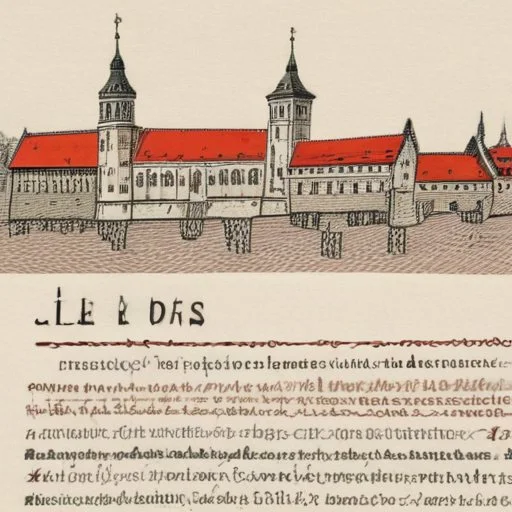
The Quedlinburg monastery's annals provide a unique window into the 9th century's medieval world. The monastery's strategic location at the intersection of the Holy Roman Empire and the Slavic territories made it an ideal vantage point for chronicling the region's significant events. The scribes' meticulous record-keeping practices allowed for the preservation of historical events, including the first recorded mention of Lithuania.
The annals' significance extends beyond the Lithuania entry, as they offer valuable insights into the medieval world's politics, culture, and society. The Quedlinburg monastery's annals are an exemplary model of medieval historiography, showcasing the importance of monastic record-keeping in preserving historical knowledge.
The inclusion of Lithuania in the annals highlights the region's growing importance in the 9th century. As the Baltic nations began to emerge as distinct entities, the Quedlinburg monastery's scribes played a crucial role in documenting their development. This entry, in particular, marks a turning point in Lithuania's history, acknowledging its existence and paving the way for future interactions with European powers.

The scribes of the Quedlinburg monastery remain somewhat of an enigma, with their individual identities lost to the sands of time. Despite this, their collective contributions to the annals have left an indelible mark on history. These learned men, dedicated to the pursuit of knowledge and preservation of historical events, played a vital role in shaping our understanding of the medieval world.
It is likely that the scribes responsible for the Lithuania entry were well-versed in the languages and customs of the Baltic region. Their knowledge and expertise would have been instrumental in recording the intricacies of regional politics and cultural exchanges. Although their individual stories may be unknown, their cumulative efforts have had a lasting impact on the field of historiography.
The Quedlinburg monastery's annals can be seen as a microcosm of medieval historiography, reflecting the broader trends and practices of the time. A comparative analysis of the annals with other medieval chronicles reveals striking similarities in recording events, emphasizing the importance of monastic record-keeping in preserving historical knowledge.
Similarities can be drawn between the Quedlinburg annals and the works of other medieval chroniclers, such as the Anglo-Saxon Chronicle. Both share a focus on documenting significant events, highlighting the importance of record-keeping in understanding the medieval world. This comparative analysis underscores the significance of monastic historiography in shaping our understanding of the past.

The first recorded mention of Lithuania had far-reaching cultural implications, influencing the development of the nation's unique cultural identity. As Lithuania began to establish itself as a distinct entity, cultural exchange with European neighbors accelerated, leading to the exchange of ideas, customs, and traditions.
Lithuania's strategic location at the crossroads of Eastern and Western Europe made it an ideal conduit for cultural exchange. The nation's cultural identity, shaped by its interactions with neighboring states, was influenced by the first recorded mention, paving the way for future literary and artistic achievements.
The Quedlinburg monastery's location within the Holy Roman Empire provides a unique geopolitical context for understanding the first recorded mention of Lithuania. The monastery's proximity to the Baltic region and its position at the intersection of Slavic and Germanic territories made it an ideal vantage point for chronicling regional events.
The geopolitical context of the 9th century, marked by the rise of the Holy Roman Empire and the emergence of Baltic nations, created an environment conducive to cultural exchange and diplomatic interactions. The Quedlinburg monastery's annals, including the Lithuania entry, reflect this complex geopolitical landscape, offering valuable insights into the medieval world's regional dynamics.