


In a groundbreaking experiment, a British professor took a bold step into the unknown, merging human and machine in a way that would change the course of technological innovation. On August 24, 1998, the first-ever human implantation of a radiofrequency identification (RFID) chip in the United Kingdom took place, sparking both awe and trepidation about the future of human-technology interaction.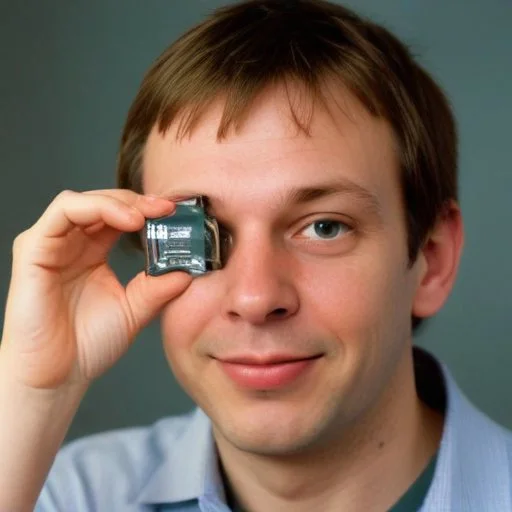
Meet Professor Kevin Warwick, a renowned British academic and pioneer in the field of cybernetics. Warwick's fascination with the potential of human-machine symbiosis drove him to push the boundaries of modern technology. As a professor of cybernetics at the University of Reading, Warwick had already gained recognition for his work in artificial intelligence, robotics, and biomedical engineering.
The RFID chip implantation experiment aimed to test the tracking capabilities of these microchips, demonstrating the potential to revolutionize the way humans interact with technology. With the implant, Warwick's movements were monitored, raising questions about privacy, security, and the implications of a world where humans and machines become increasingly intertwined.
The success of Warwick's experiment paved the way for further research into the potential of RFID technology in various fields, including healthcare, security, and logistics. The experiment also sparked a global conversation about the ethical implications of human-machine interfaces, prompting experts to re-examine the boundaries between humans and technology.
The RFID chip implantation experiment resonated with the public's fascination with futuristic technologies and their potential to transform human existence. The experiment also sparked concerns about the potential risks of a surveillance state and the erosion of individual privacy. As a result, Warwick's work became a catalyst for discussions about the responsible development and deployment of emerging technologies.
The experiment sparked intense debate about the potential risks and benefits of RFID chip implantation. While some hailed Warwick's pioneering spirit, others expressed concerns about the potential misuse of this technology. Critics argued that the experiment raised serious questions about individual autonomy, security, and the blurred lines between humans and machines.
"I'm not just a lecturer, I'm a guinea pig. I want to understand what it's like to be a cyborg." – Professor Kevin Warwick
The success of Warwick's experiment has inspired a new generation of researchers and innovators to explore the potential of human-technology interfaces. Today, RFID technology is used in various applications, from contactless payments to inventory management, and continues to shape the way we interact with technology.
Professor Kevin Warwick was born on February 9, 1954, in Coventry, England. Growing up in a family of modest means, Warwick developed an early interest in science and technology. He attributes his fascination with robotics and artificial intelligence to his childhood hobby of building and programming model robots.
Warwick's academic pursuits took him to Aston University, where he earned a degree in electrical engineering. He later received his Ph.D. in robotics from Imperial College London.

The concept of cyborgs has long fascinated popular culture, with movies like The Terminator and RoboCop exploring the themes of human-machine integration. Warwick's experiment tapped into this cultural zeitgeist, sparking a national conversation about the possibilities and implications of merging humans and machines.
In the years following the experiment, the idea of cyborgs began to permeate music, art, and literature, reflecting the public's growing fascination with the potential of human-technology symbiosis.
The successful implantation of an RFID chip in Professor Warwick's arm paved the way for further research into the potential of these microchips. Today, RFID technology is used in various applications, including inventory management, supply chain logistics, and even contactless payment systems.
The experiment also inspired new areas of research, such as bio-inspired robotics and neural interfaces, as scientists continue to explore the possibilities of human-machine interfaces.

Warwick's experiment not only sparked a national conversation about the ethics of human-machine integration but also inspired a new wave of DIY biohackers. These individuals, often self-identified as "grinders," began experimenting with implantable devices, blurring the lines between humans and machines.
This growing subculture has raised important questions about the regulation of emerging technologies and the responsibilities that come with pushing the boundaries of human enhancement.
Historians of technology have long debated the role of innovators like Professor Warwick in shaping our understanding of human-machine interfaces. Warwick's experiment has been seen as a turning point in this narrative, marking a shift from the machine as a tool to the machine as an extension of the human body.
This new perspective has significant implications for our understanding of the role of technology in society, challenging traditional notions of what it means to be human in the 21st century.