


The first bombing in a series of attacks that shook the city of Moscow occurred on a fateful summer evening, leaving one person dead and 40 others wounded. This marked the beginning of a campaign of violence that would leave the city in a state of terror and uncertainty.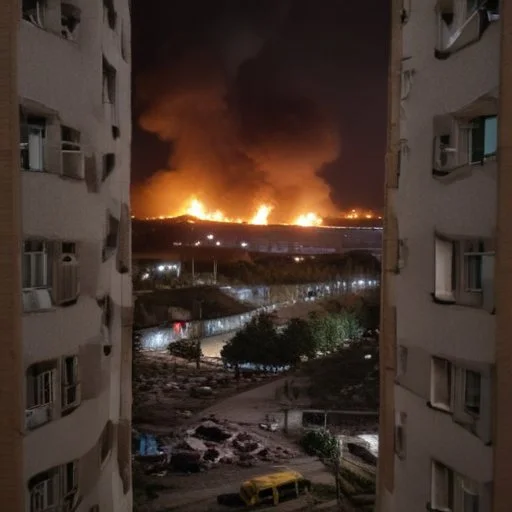
In the late 1990s, Russia was experiencing a period of political and economic turmoil. The country was transitioning from a socialist to a capitalist economy, and the government was struggling to maintain control. This created an environment of instability, which extremist groups sought to exploit.
On the evening of August 31, 1999, a massive explosion rocked a residential apartment building on Guryanova Street in Moscow. The blast caused widespread destruction, ripping through the building and sending debris flying through the streets. The immediate aftermath was chaotic, with residents and emergency responders struggling to comprehend the scale of the disaster.
In the days and weeks that followed, authorities worked tirelessly to identify the perpetrators and motives behind the attack. The investigation was led by the Federal Security Service (FSB), which eventually attributed the bombing to a group of Chechen separatists. However, many questions surrounding the attack remained unanswered, fueling speculation and conspiracy theories.
The Moscow bombings had a profound impact on the city's social fabric, leading to increased tensions between ethnic and religious groups. The attacks also sparked a wave of nationalist sentiment, with many Russians calling for greater action against separatist groups.
The investigation into the bombing was marred by controversy, with many questioning the FSB's official narrative. The attacks also sparked a heated debate about the role of the state in protecting its citizens and the balance between security and civil liberties.
The Moscow bombings serve as a stark reminder of the devastating consequences of political extremism and the importance of promoting dialogue and understanding in the face of adversity.
In the aftermath of the Moscow bombings, the world's attention turned to the troubled region of Chechnya, a small autonomous republic in southern Russia. However, the roots of Chechen separatism date back to the 19th century, when the Russian Empire first annexed the region.
Under Soviet rule, Chechnya was subjected to forced assimilation, with the Chechen language and culture suppressed in favor of Russian. This led to widespread resentment among the Chechen population, which simmered just below the surface until the Soviet Union's collapse in 1991.
In the early 1990s, Chechen nationalists, led by Dzhokhar Dudayev, declared independence from Russia, sparking the First Chechen War. Although the war ended in 1996, the conflict never truly resolved, setting the stage for the Moscow bombings and the devastating Second Chechen War that followed.

Dzhokhar Dudayev, the first president of the Chechen Republic of Ichkeria, was a complex and enigmatic figure. A former Soviet Air Force general, Dudayev was known for his charisma and cunning, as well as his unwavering commitment to Chechen independence.
Despite his reputation as a ruthless leader, Dudayev was also a skilled diplomat, able to negotiate with Russian leaders and international organizations alike. However, his increasing radicalization in the late 1990s contributed to the escalation of violence in the region.
Dudayev's legacy remains divisive, with some hailing him as a hero and martyr, while others condemn him as a terrorist and warlord. Regardless, his influence on the Chechen separatist movement cannot be overstated.
The Moscow bombings had a profound impact on Russian literature, inspiring a new wave of writers to confront the trauma and uncertainty of the post-Soviet era.
Authors such as Ludmila Ulitskaya and Viktor Pelevin explored the themes of terrorism, nationalism, and identity in their works, capturing the mood of a nation in crisis.
The bombings also sparked a renewed interest in literary works that explored the Chechen conflict, such as Anna Politkovskaya's A Dirty War: A Russian Reporter in Chechnya. These works humanized the conflict, giving voice to the victims and challenging the official narrative.

The Moscow bombings marked a turning point in Russian politics, with the government invoking the attacks to justify a range of authoritarian measures.
Then-Prime Minister Vladimir Putin, who had been appointed just months earlier, capitalized on the public's fear and outrage to consolidate power and crush political opposition.
The bombings also accelerated the erosion of civil liberties in Russia, with the government introducing sweeping anti-terrorism laws that restricted freedom of assembly and expression.
The Moscow bombings were not an isolated incident, but rather part of a broader pattern of violence and instability in the Caucasus region.
The conflict in Chechnya was intertwined with separatist movements in neighboring regions, such as Dagestan and Ingushetia, creating a volatile geopolitical landscape.
The bombings highlighted the need for a comprehensive approach to regional security, one that addressed the root causes of extremism and instability rather than simply responding to its symptoms.