


The Treaty of Karlowitz, signed on January 26, 1699, marks a pivotal moment in history as the Ottoman Empire, for the first time, permanently cedes territory to the Christian powers. This unprecedented defeat marked a significant shift in the balance of power, cementing the Ottoman Empire's reputation as the "sick man of Europe" and sowing the seeds of its eventual decline.
The Ottoman Empire, once a dominant force in Eastern Europe and the Mediterranean, had been weakened by years of war and internal strife. The empire had been engaged in a series of costly conflicts with the Holy Roman Empire, Poland, and Venice, draining its resources and manpower. Meanwhile, internal power struggles and corruption had further eroded the empire's strength.
The Treaty of Karlowitz was signed after a series of disastrous Ottoman military campaigns, which had resulted in significant losses of territory and manpower. The treaty forced the Ottoman Empire to relinquish control over a substantial portion of its territory, including parts of Hungary, Transylvania, and the Peloponnese, to the Holy Roman Empire, Poland, and Venice.
The Treaty of Karlowitz was negotiated by the Ottoman Grand Vizier, Rami Mehmed Pasha, and the envoys of the Holy Roman Empire, Poland, and Venice. The Grand Vizier, tasked with salvaging what was left of the empire's dignity, was forced to accept the humiliating terms of the treaty.
The Treaty of Karlowitz marked a significant shift in the balance of power in Eastern Europe and the Mediterranean. The Christian powers, once threatened by the Ottoman Empire's expansion, had finally gained the upper hand. The treaty also marked the beginning of the Ottoman Empire's decline, as it struggled to recover from the devastating losses of territory and prestige.
The Treaty of Karlowitz had significant cultural and social implications, as it fueled nationalist sentiment in the territories gained by the Christian powers. The treaty also marked a turning point in the history of Eastern Europe, as the region began to break free from Ottoman domination and forge its own identity.
The Treaty of Karlowitz left a lasting legacy, with the Ottoman Empire's defeat becoming a symbol of its decline. As the famous Ottoman historian, Ahmed Cevdet Pasha, wrote: "The Treaty of Karlowitz was a cruel blow to the empire's pride, but it was also a wake-up call to reform and revitalize our great nation."
The Treaty of Karlowitz marked a turning point in history, similar to the Battle of Vienna in 1683, which had halted the Ottoman Empire's westward expansion. The treaty signaled the beginning of the end of Ottoman dominance in Eastern Europe and the Mediterranean, paving the way for the rise of new powers.
| Date | Event |
|---|---|
| 1683 | Battle of Vienna: Ottoman Empire's westward expansion halted |
| 1695-1698 | Ottoman Empire engaged in costly wars with Holy Roman Empire, Poland, and Venice |
| January 26, 1699 | Treaty of Karlowitz signed: Ottoman Empire cedes territory to Christian powers |
This visual timeline highlights the series of defeats that led to the Ottoman Empire's historic surrender at the Treaty of Karlowitz.
The Treaty of Karlowitz, though little-known, marks a significant turning point in history, signaling the beginning of the end of Ottoman dominance in Eastern Europe and the Mediterranean.
Rami Mehmed Pasha, the Grand Vizier of the Ottoman Empire, played a crucial role in the negotiations leading up to the Treaty of Karlowitz. Appointed to the position in 1697, Mehmed Pasha was tasked with salvaging what was left of the empire's dignity and negotiating a peace treaty with the Christian powers.
Little is known about Mehmed Pasha's early life, but it is believed that he rose through the ranks of the Ottoman administration through his intellect and diplomatic skills.
Despite his best efforts, Mehmed Pasha was forced to accept the humiliating terms of the treaty, which marked a significant defeat for the Ottoman Empire. His role in the negotiations has been the subject of much debate among historians, with some viewing him as a reluctant negotiator who did what was necessary to preserve the empire, while others see him as a weak leader who failed to stand up to the Christian powers.

The Treaty of Karlowitz was signed at a time of great upheaval in Eastern Europe and the Mediterranean. The Ottoman Empire, once the dominant power in the region, was facing challenges from the Holy Roman Empire, Poland, and Venice, all of which were vying for control of the region.
The treaty marked a significant shift in the balance of power, with the Christian powers gaining the upper hand and the Ottoman Empire being forced to cede territory.
The treaty also had significant implications for the region, as it paved the way for the rise of new powers and the eventual decline of the Ottoman Empire.
The Treaty of Karlowitz has been the subject of much debate among historians, with some viewing it as a significant turning point in the history of Eastern Europe and the Mediterranean, while others see it as a minor blip on the radar of Ottoman decline.
Some historians have argued that the treaty marked the beginning of the end of Ottoman dominance in the region, while others have suggested that it was simply a temporary setback for the empire.
Despite these differing perspectives, most historians agree that the treaty marked a significant shift in the balance of power in the region, with the Christian powers gaining the upper hand and the Ottoman Empire being forced to adapt to a new reality.
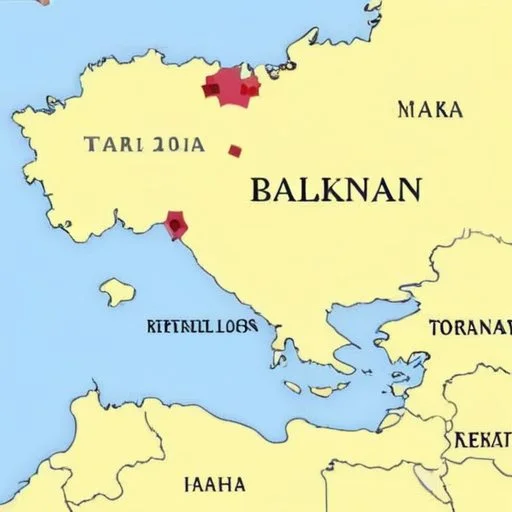
The Treaty of Karlowitz has been compared to other significant historical events, including the Battle of Vienna in 1683 and the Treaty of Westphalia in 1648.
Like the Battle of Vienna, the Treaty of Karlowitz marked a significant turning point in the history of Eastern Europe and the Mediterranean, as the Ottoman Empire's westward expansion was halted and the Christian powers gained the upper hand.
The treaty has also been compared to the Treaty of Westphalia, which marked a significant shift in the balance of power in Europe and paved the way for the rise of new powers.
The Treaty of Karlowitz had significant environmental implications, as the Ottoman Empire's cession of territory led to the destruction of natural habitats and the displacement of wildlife.
The treaty also paved the way for the exploitation of natural resources, as the Christian powers sought to capitalize on the region's rich natural resources.
The environmental impact of the treaty has been felt for centuries, with the region still grappling with the consequences of environmental degradation and resource exploitation.