


The first wave of the Egyptian revolution, marked by widespread street demonstrations, rallies, acts of civil disobedience, riots, labor strikes, and violent clashes, was a pivotal moment in the country's modern history. As the people's frustration with President Hosni Mubarak's authoritarian regime reached a boiling point, thousands took to the streets, demanding democratic reforms, freedom, and an end to corruption.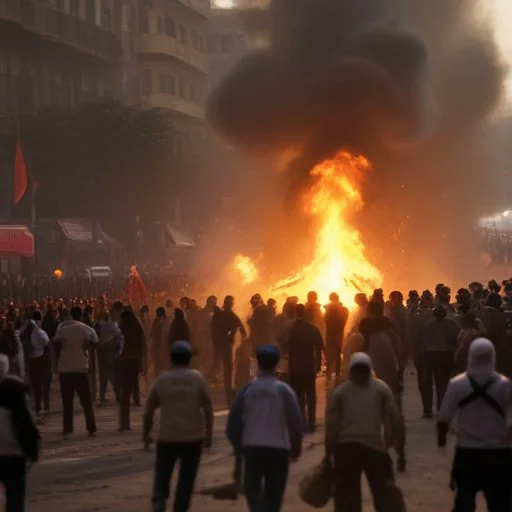
In the years leading up to the revolution, Egypt had experienced a growing sense of discontent among its citizens. The regime's iron grip on power, coupled with rampant corruption, nepotism, and economic stagnation, had created a fertile ground for dissent. The 2005 presidential election, which saw Mubarak's re-election amidst allegations of voter fraud, had sparked widespread protests and calls for reform.
The Egyptian revolution led to the eventual resignation of President Mubarak on February 11, 2011, marking a significant shift in the country's political landscape. The uprising paved the way for the country's first democratic elections, which saw the Muslim Brotherhood's Mohamed Morsi elected as president in 2012.
The Egyptian revolution was characterized by its heavy reliance on social media platforms, such as Facebook and Twitter, to organize and mobilize protesters. The hashtag #Jan25 became a rallying cry for the movement, allowing activists to coordinate and disseminate information in real-time.
"We are not going to go back to our homes until Mubarak steps down." - Ahmed Harara, protester and activist
The revolution was not without its controversies, with some critics accusing the Muslim Brotherhood of hijacking the movement and others expressing concerns about the role of the military in the transition process. Despite these criticisms, the revolution remains a powerful symbol of the Egyptian people's desire for democracy and human rights.
"I remember the smell of tear gas and the sound of gunfire. But most of all, I remember the sense of unity and purpose that filled the air." - Amal, protester and activist
The Egyptian revolution sent shockwaves across the Arab world, inspiring similar uprisings in countries such as Tunisia, Libya, and Bahrain. The movement's emphasis on democratic reforms and human rights has had a lasting impact on the region's political landscape.
The Egyptian revolution serves as a testament to the power of the human spirit, demonstrating that even in the face of adversity, ordinary people can come together to demand change and create a better future for themselves and their communities.
Wael Ghonim, a 29-year-old Google executive, never intended to become a symbol of the Egyptian revolution. However, his anonymous administration of the "We Are All Khaled Said" Facebook page, which documented police brutality and called for reform, made him a key figure in mobilizing the masses.
Ghonim's arrest on January 28, 2011, sparked widespread outrage, with protesters demanding his release. His emotional televised interview after his release, in which he mourned the deaths of protesters, further galvanized the movement.
The Egyptian revolution had its own soundtrack, with protest anthems and chants echoing through the streets. Songs like "Irhal" (Leave) by Ramy Essam and "The Voice of Freedom" by Ahmed Rock became rallying cries for the movement.
Music played a crucial role in motivating and organizing protesters, with songs often used to convey messages, slogans, and demands. The use of music as a tool for social change highlighted the power of art in mobilizing masses and inspiring action.
In the years leading up to the revolution, Egypt's geopolitical landscape was marked by rising tensions and instability. The country's strategic location, bordering the Suez Canal and sitting atop significant oil reserves, made it a prized asset for global powers.
The regime's close ties with the United States, Israel, and other Western nations had created resentment among the Egyptian people, who felt their government was serving foreign interests rather than their own. This sentiment helped fuel the revolution, as protesters demanded a more independent and sovereign Egypt.

The Egyptian military played a crucial role in the revolution, ultimately facilitating the transition of power from Mubarak to the Supreme Council of the Armed Forces (SCAF). However, the military's motivations and actions remain controversial.
Some argue that the military's interests aligned with those of the protesters, while others believe they sought to protect their own power and interests. The military's role in the transition process and their subsequent governance of the country raised questions about their commitment to democracy and human rights.
The Egyptian revolution was marked by a sense of community and solidarity, as protesters from diverse backgrounds came together to demand change. This phenomenon extended beyond Tahrir Square, as neighbors and communities organized their own protests and initiatives.
The revolution highlighted the importance of grassroots mobilization and community engagement in driving social change. As protesters returned to their neighborhoods, they brought with them a newfound sense of empowerment and a desire to continue pushing for reform and improvement in their local communities.