


The Movement for the Restoration of the Ten Commandments of God, a secretive cult in Uganda, is infamous for the tragic loss of 530 lives in a devastating fire, orchestrated by its leaders in a twisted display of faith and control. This catastrophic event, which unfolded on March 17, 2000, would later be accompanied by the discovery of an additional 248 bodies, leaving a trail of sorrow and unanswered questions in its wake.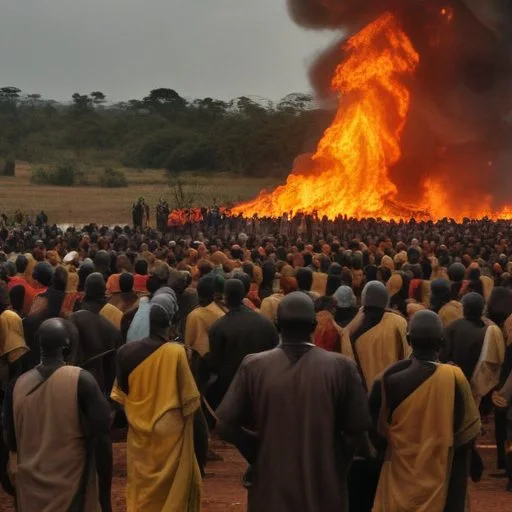
The Movement for the Restoration of the Ten Commandments of God was founded in the 1980s by Credonia Mwerinde, a former Catholic nun, and Joseph Kibwetere, a failed politician. This Ugandan cult attracted followers from rural areas, promising them salvation and a return to traditional values. Over time, the cult became increasingly isolated, with its leaders imposing strict rules and punishments on its members.
In 1999, Kibwetere and Mwerinde predicted the end of the world, claiming that a catastrophic event would occur on December 31, 1999. When the predicted apocalypse failed to materialize, the cult's leaders began to prepare for a new prophecy – one that would result in the deaths of hundreds of their followers. Followers were told to sell their belongings, leave their families, and gather at the cult's headquarters in Kanungu, where they would be "saved" by divine intervention.
On March 17, 2000, the cult's followers gathered at the headquarters, unaware of the horror that awaited them. The windows and doors were boarded up, and the doors were sealed with metal bars. In the dead of night, the cult's leaders set fire to the building, trapping their followers inside. The screams of the victims were drowned out by the sound of drums and chanting, as the cult's leaders allegedly watched from a safe distance.
The true extent of the tragedy was only revealed when police and rescue teams arrived at the scene. The charred bodies of 530 people were found inside the burned-out building, with many more discovered in the surrounding areas in the following weeks. The investigation that followed revealed a web of deceit, manipulation, and control, which had led to one of the deadliest cult-related tragedies in modern history.
The Kanungu tragedy serves as a stark reminder of the dangers of blind faith and the devastating consequences of unchecked power. It also highlights the importance of monitoring and regulating religious groups, ensuring that they do not exploit or harm their followers. As we reflect on this tragic event, we are reminded of the importance of critical thinking, tolerance, and respect for human life.
The people who lost their lives in the Kanungu tragedy were more than just victims of a cult – they were mothers, fathers, sons, and daughters, who were misled by false promises of salvation. Their memories serve as a reminder of the importance of protecting our fellow human beings from exploitation and harm.
The Movement for the Restoration of the Ten Commandments of God may have been destroyed by its own leaders, but its legacy lives on as a cautionary tale of the dangers of extremism and the importance of protecting human life. As we remember the victims of this tragedy, we are reminded of the importance of promoting tolerance, understanding, and respect for diversity in our communities.
The roots of the Movement for the Restoration of the Ten Commandments of God can be traced back to the 1960s, when Credonia Mwerinde's father, a devout Catholic, began to experience visions and nightmares that he believed were messages from God. These supernatural occurrences deeply influenced Mwerinde, who would later use similar tactics to manipulate her followers. Her father's visions also laid the groundwork for the cult's apocalyptic beliefs, which emphasized the importance of preparing for the end of the world.
In the 1970s and 1980s, Mwerinde and Kibwetere began to recruit followers from rural areas, capitalizing on the poverty, political instability, and social unrest that plagued Uganda during that time. The duo's promise of salvation and a return to traditional values resonated with many, who saw the cult as a beacon of hope in a tumultuous era.

Joseph Kibwetere, the co-founder of the Movement for the Restoration of the Ten Commandments of God, was a complex and enigmatic figure. On the surface, he appeared to be a charming and persuasive individual, able to effortlessly recruit new followers. However, beneath the façade lay a ruthless and cunning leader who would stop at nothing to maintain control over his followers.
Kibwetere's background in politics had prepared him well for the art of manipulation. He used his charisma to influence Mwerinde, exploiting her vulnerabilities and fueling her apocalyptic visions. Together, they created a toxic dynamic, with Kibwetere pulling the strings from behind the scenes.
The Kanungu tragedy has had a profound impact on Uganda's cultural landscape. The event led to a heightened sense of awareness about the dangers of cults and false prophets, prompting the government to establish stricter regulations on religious groups. The tragedy also sparked a national conversation about the importance of critical thinking and the need for media literacy.
In the aftermath of the tragedy, Uganda witnessed a surge in community-based initiatives aimed at promoting tolerance, understanding, and respect for diversity. The event also inspired a new generation of artists, writers, and musicians, who used their work to process and reflect on the tragedy.

The Ugandan government's response to the Kanungu tragedy was marked by controversy and criticism. Many argued that the authorities had been slow to respond, failing to prevent the tragedy despite receiving warnings about the cult's activities. The government's inability to protect its citizens led to widespread outrage and demands for greater accountability.
In the years following the tragedy, the Ugandan government implemented a range of measures aimed at preventing similar tragedies. These included stricter regulations on religious groups, increased funding for mental health services, and improved communication channels between law enforcement agencies.
The Kanungu tragedy unfolded against the backdrop of a rapidly changing geopolitical landscape. The end of the Cold War had created a power vacuum, allowing religious extremist groups to flourish in the region. The tragedy highlighted the need for greater international cooperation in combating extremism and promoting global security.
In the aftermath of the tragedy, Uganda strengthened its ties with neighboring countries, recognizing that regional cooperation was key to preventing similar tragedies. The event also led to increased international pressure on governments to address the root causes of extremism, including poverty, political instability, and social inequality.