


The 1948 Arab-Israeli War, also known as the War of Independence, is etched in history as a pivotal moment of nation-building, marked by bloodshed, bravery, and the unyielding spirit of a people fighting for their homeland. This brutal conflict, triggered by the simultaneous invasion of Israel by Egypt, Transjordan, Lebanon, Syria, Iraq, and Saudi Arabia, was the first major war in the region, setting the stage for the complex and contentious relationship between Arabs and Israelis that persists to this day.
The seeds of this conflict were sown in the aftermath of World War I, when the British government, under the auspices of the Sykes-Picot Agreement, promised to establish a Jewish homeland in Palestine, then under Ottoman rule. The subsequent British Mandate for Palestine, enacted in 1920, further inflamed tensions between the Arab population and the growing Jewish settler community. As the Mandate expired on May 14, 1948, the stage was set for a violent confrontation.
David Ben-Gurion, a charismatic leader and Israel's first prime minister, had proclaimed independence just hours before the Arab armies launched their coordinated assault. The Arab League, comprising Egypt, Transjordan, Lebanon, Syria, Iraq, and Saudi Arabia, saw the nascent state as a threat to their regional dominance and Islamic identity.
The 1948 Arab-Israeli War had far-reaching consequences, shaping the trajectory of Middle Eastern politics and cementing the Israeli-Arab conflict as a defining feature of the region. The war resulted in the displacement of hundreds of thousands of Palestinians, known as the Nakba or "catastrophe" in Arabic, and the establishment of Israel as a sovereign state.
Yet, amidst the chaos and devastation, there were glimmers of hope. The war also fostered a resilience and determination that would come to define the Israeli spirit, as well as a deep-seated desire for peace and coexistence among Israelis and Palestinians alike.
As David Ben-Gurion declared in his iconic speech on May 14, 1948, "We are not only defending our country, we are fighting for our existence."
In the face of overwhelming odds, the fledgling state of Israel emerged victorious, if battered, setting the stage for a complex and often fraught relationship with its Arab neighbors. As the dust settles on this tumultuous chapter in history, we are reminded that, even in the darkest of times, the human spirit can persevere, and that the pursuit of peace and understanding remains an eternal aspiration.
The aftermath of World War I saw the rise of Arab nationalism, which was further fueled by the Arab Revolt against the Ottoman Empire. This movement sought to unite the Arab world under a single authority, free from European colonial powers. The British government, however, had other plans, and the Sykes-Picot Agreement of 1916 secretly divided the region into British and French spheres of influence. The subsequent British Mandate for Palestine, enacted in 1920, created a power vacuum that the Zionists sought to fill with a Jewish homeland.
In the years leading up to the 1948 Arab-Israeli War, tensions between the Arab population and the growing Jewish settler community continued to escalate. The Arab League, formed in 1945, saw the establishment of a Jewish state as a direct threat to its regional dominance and Islamic identity. Meanwhile, David Ben-Gurion and the Jewish Agency worked tirelessly to prepare for the declaration of independence, knowing that it would prompt a swift and brutal response from the Arab world.

David Ben-Gurion: The Indomitable Leader
David Ben-Gurion, the first Prime Minister of Israel, was a man of unyielding conviction and unwavering determination. Born in Poland in 1886, Ben-Gurion was an early advocate for Zionism and immigrated to Palestine in 1906. He played a crucial role in the establishment of the Jewish Agency and was instrumental in navigating the complexities of British politics to secure international recognition for a Jewish state.
Ben-Gurion's leadership during the 1948 Arab-Israeli War was characterized by his ability to balance pragmatism with idealism. He navigated the fragile coalition of Jewish militias, forged alliances with international partners, and made difficult decisions that would shape the course of Israel's history. His iconic declaration of independence on May 14, 1948, cemented his place in history as the founder of the State of Israel.
The Cultural Significance of the 1948 Arab-Israeli War
The 1948 Arab-Israeli War had a profound impact on the cultural landscape of the Middle East. The displacement of hundreds of thousands of Palestinians, known as the Nakba or "catastrophe" in Arabic, led to a deep-seated sense of trauma and loss that continues to resonate in Palestinian culture today. The war also fostered a strong sense of national identity among Israelis, with the birth of the state seen as a symbol of resilience and determination.
The conflict also paved the way for the development of a unique Israeli culture, shaped by the blending of diasporic Jewish traditions with the realities of life in the Middle East. The war inspired a generation of Israeli artists, writers, and musicians, who sought to express the complexities and contradictions of this new nation.
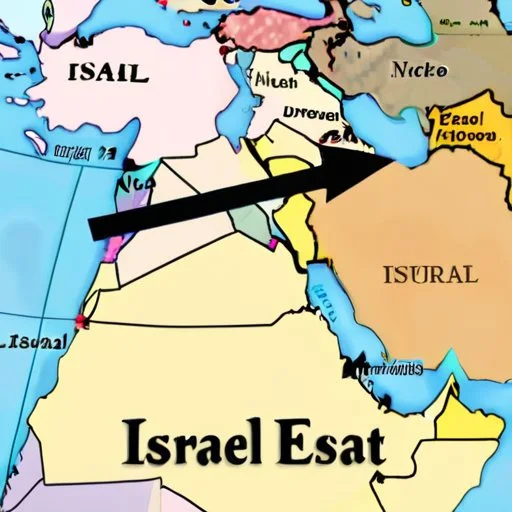
The Shifting Global Political Landscape
The 1948 Arab-Israeli War took place against the backdrop of a rapidly changing global political landscape. The aftermath of World War II saw the emergence of the United States and the Soviet Union as superpowers, with the Middle East becoming a key battleground in the Cold War. The British government, exhausted by the war effort, was gradually relinquishing its colonial grip on the region, creating a power vacuum that regional actors sought to fill.
The Arab-Israeli War marked a significant turning point in the region's geopolitical dynamics, as the new State of Israel emerged as a key player in the Middle East. The war also prompted the United States to re-evaluate its foreign policy in the region, recognizing the strategic importance of the region's oil reserves and the need to contain Soviet influence.
The Geopolitical Context of the 1948 Arab-Israeli War
The 1948 Arab-Israeli War was fought on multiple fronts, with the conflict unfolding against the backdrop of a complex and volatile regional geopolitical landscape. The war was sparked by the simultaneous invasion of Israel by Egypt, Transjordan, Lebanon, Syria, Iraq, and Saudi Arabia, each with its own distinct motivations and interests.
The war saw the emergence of key regional actors, including the Arab League, which sought to assert its dominance over the region, and the Hashemite Kingdom of Transjordan, which played a pivotal role in the conflict. The war also highlighted the significance of the region's strategic waterways, including the Suez Canal and the Jordan River, which became critical flashpoints in the conflict.