


The Bijeljina massacre, a brutal and senseless act of violence, claimed the lives of forty-two innocent civilians in the town of Bijeljina, Bosnia and Herzegovina, marking the beginning of the Bosnian War. This horrific event, which took place on April 1, 1992, would go on to spark a chain reaction of violence and bloodshed that would engulf the region for years to come.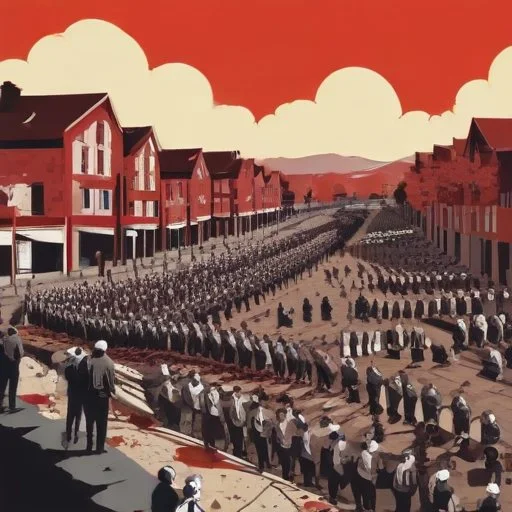
In the years leading up to the massacre, tensions had been simmering in the region. Ethnic and religious divisions had created an atmosphere of mistrust and hostility, with Bosnian Muslims, Croats, and Serbs vying for power and control. The dissolution of Yugoslavia had created a power vacuum, and the seeds of conflict were sown.
On that fateful day, armed forces, largely comprising Bosnian Serb paramilitary groups, stormed into the town of Bijeljina, leaving a trail of destruction and death in their wake. The attack was swift and merciless, with civilians caught in the crossfire. The town, once a thriving hub of activity, was reduced to rubble and chaos.
The Bijeljina massacre was orchestrated by a group of Bosnian Serb politicians and military leaders, including Radovan Karadžić, Ratko Mladić, and Vojislav Šešelj. These individuals, driven by a nationalist ideology, sought to create a ethnically pure Serbian state, and were willing to use violence and terror to achieve their goals.
The Bijeljina massacre had far-reaching consequences, both locally and internationally. The event sparked a wave of outrage and condemnation, with the international community calling for intervention. The massacre also led to the displacement of thousands of people, many of whom were forced to flee their homes and seek refuge in other parts of the country.
The Bijeljina massacre had a profound impact on the cultural and social fabric of Bosnia and Herzegovina. The event highlighted the deep-seated divisions and hatred that existed between the different ethnic groups, and served as a stark reminder of the devastating consequences of nationalism and extremism.
In the aftermath of the massacre, many individuals and organizations worked tirelessly to provide aid and support to the survivors and their families. The event also inspired a new generation of activists and human rights advocates, who were driven to promote peace, tolerance, and understanding in the region.
The Bijeljina massacre serves as a powerful reminder of the importance of promoting peace, understanding, and tolerance. It is a stark reminder of the devastating consequences of nationalism, extremism, and violence, and a call to action for individuals and governments around the world to work towards creating a more peaceful and harmonious world.
The Bijeljina massacre was not an isolated incident, but rather part of a broader pattern of violence and intimidation that had been building in the region for months. In the months leading up to the massacre, Bosnian Serb forces had been conducting a campaign of harassment and intimidation against Bosnian Muslim and Croat villages, forcing many to flee their homes and seek refuge in other parts of the country.
One of the key factors that contributed to the escalation of violence in Bijeljina was the presence of Serbian paramilitary groups, who had been brought into the region to support the Bosnian Serb forces. These groups, often referred to as "Arkan's Tigers" after their leader Željko Ražnatović, were notorious for their brutality and willingness to commit atrocities.
Despite the severity of the violence, the international community was slow to respond, with many countries hesitant to get involved in what was seen as a complex and sectarian conflict. It would take months of diplomatic pressure and international outcry before the UN would impose economic sanctions on Serbia and Montenegro, and eventually authorize the use of force to protect civilians.

Radovan Karadžić, one of the masterminds behind the Bijeljina massacre, was a complex and enigmatic figure. A former psychiatrist and poet, Karadžić had risen to prominence in Bosnia's political circles in the 1990s, using his charisma and nationalist ideology to rally support among Bosnian Serbs.
Despite his polished exterior, Karadžić was known for his ruthless tactics and willingness to use violence to achieve his goals. He was instrumental in orchestrating the Bijeljina massacre, and would go on to play a key role in the Bosnian War, eventually becoming one of the most wanted war criminals in the world.
The Bijeljina massacre bore many similarities to other atrocities committed during the Bosnian War, including the Srebrenica massacre and the Siege of Sarajevo. All of these events shared a common thread of ethnic and religious tension, fueled by nationalist ideologies and a desire for power and control.
However, the Bijeljina massacre also differs from these events in important ways. Unlike Srebrenica, which was a targeted attack on a specific ethnic group, the Bijeljina massacre was more indiscriminate, with civilians from all backgrounds caught in the crossfire.
The Bijeljina massacre had a profound impact on the cultural and social fabric of Bosnia and Herzegovina. The event highlighted the deep-seated divisions and hatred that existed between the different ethnic groups, and served as a stark reminder of the devastating consequences of nationalism and extremism.
In the aftermath of the massacre, many Bosnian artists and writers struggled to come to terms with the trauma and devastation that had been inflicted on their country. The event inspired a new generation of artists, who used their work to promote peace, tolerance, and understanding in the region.
The Bijeljina massacre took place against the backdrop of a rapidly changing geopolitical landscape. The dissolution of Yugoslavia had created a power vacuum in the region, which was quickly filled by nationalist ideologies and rival factions vying for power and control.
The international community was slow to respond to the crisis, with many countries hesitant to get involved in what was seen as a complex and sectarian conflict. It would take months of diplomatic pressure and international outcry before the UN would impose economic sanctions on Serbia and Montenegro, and eventually authorize the use of force to protect civilians.