Muhammad Ali Jinnah becomes Pakistan's first Governor-General
As the Indian subcontinent basked in the glory of independence, Muhammad Ali Jinnah, the founding father of Pakistan, was sworn in as the country's first Governor-General in Karachi. This historic moment marked the dawn of a new era for Pakistan, as Jinnah took the reins to guide the young nation towards prosperity and growth. With his vision for a democratic and egalitarian society, Jinnah's leadership paved the way for Pakistan's transition from a British colony to an independent nation.
Muhammad Ali Jinnah: The Visionary Leader Sworn in as Pakistan's First Governor-General
A New Era for Pakistan: August 14, 1947
On a sweltering summer morning in Karachi,
Muhammad Ali Jinnah, the founding father of Pakistan, took the oath as the country's first Governor-General, marking a pivotal moment in the nation's history. This ceremony, held on August 14, 1947, signified the formal transition of power from British colonial rule to an independent Pakistan, with Jinnah at the helm.
Historical Context: The Struggle for Independence
The path to independence was paved with the struggles of the All-India Muslim League, led by Jinnah, who advocated for the rights of Muslims in British India. The League's efforts culminated in the Muslim-majority provinces of Punjab, Sindh, Baluchistan, and the North-West Frontier Province uniting to form Pakistan. The British Parliament passed the Indian Independence Act on July 18, 1947, effectively dividing British India into two separate dominions: India and Pakistan.
The Man Behind the Vision
Muhammad Ali Jinnah, a seasoned politician, and lawyer, was the embodiment of the Pakistani dream. His leadership was characterized by a strong sense of justice, equality, and democracy. Jinnah's unwavering commitment to the cause earned him the title "Quaid-e-Azam" or "Great Leader." His vision for Pakistan was that of a modern, progressive nation, where Muslims could live freely, without fear of persecution.
The Inaugural Ceremony
The swearing-in ceremony took place at the Sindh AssemblyBuilding in Karachi, with Lord Mountbatten, the last Viceroy of British India, and other dignitaries in attendance. Jinnah, dressed in his signature attire – a black Sherwani and Karakul cap – took the oath, administered by the Chief Justice of Pakistan, Sir Abdur Rashid. The crowd erupted in joy, as Jinnah, now the Governor-General of Pakistan, embarked on the daunting task of nation-building.
Key Outcomes and Impacts
- Establishment of Pakistan as an independent nation, free from British colonial rule
- Jinnah's leadership set the tone for Pakistan's growth and development
- Pakistan's Constitution, which enshrines the principles of democracy and equality, was later formulated under Jinnah's guidance
- The ceremony marked the beginning of a new era for Muslims in the Indian subcontinent, who could now live with dignity and pride
Personal Accounts and Anecdotes
In his address to the Constituent Assembly, Jinnah emphasized the need for unity and harmony among Pakistanis, saying, "You are free; you are free to go to your temples, you are free to go to your mosques or to any other place or prayer in this State of Pakistan... You may belong to any religion or caste or creed – that has nothing to do with the business of the State." These words have become etched in the collective consciousness of Pakistanis, serving as a guiding principle for the nation.
A Lasting Legacy
Jinnah's swearing-in as the Governor-General of Pakistan marked the beginning of a journey that would shape the destiny of a nation. His leadership, foresight, and dedication have left an indelible mark on Pakistani history. As the nation continues to evolve, Jinnah's vision remains the beacon that guides its people towards a brighter future.
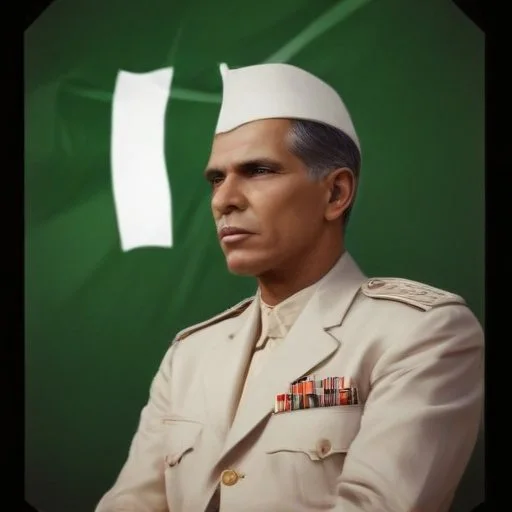
In-Depth Character Profile
One of the most fascinating aspects of Muhammad Ali Jinnah's personality was his unwavering commitment to his principles. Despite facing opposition from the British government and even some members of his own party, Jinnah remained resolute in his demand for a separate homeland for Muslims in India. This unshakeable resolve earned him the respect and admiration of his contemporaries, who began to refer to him as the "Quaid-e-Azam" or "Great Leader."
Jinnah's leadership style was also marked by his ability to bring people together. He was a master strategist who knew how to build alliances and coalitions to achieve his goals. This skill was evident in his ability to unite the various factions of the All-India Muslim League behind his vision for Pakistan.
Despite his many accomplishments, Jinnah remained humble and grounded throughout his life. He was known for his simplicity and austerity, often preferring to wear simple, traditional clothing rather than elaborate, expensive attire.

Detailed Political Report
The establishment of Pakistan as an independent nation marked a significant turning point in the history of the Indian subcontinent. It signaled the end of British colonial rule and the beginning of a new era of self-governance and autonomy for the people of Pakistan.
The creation of Pakistan also had far-reaching implications for the global politics of the time. It marked the emergence of a new nation-state that was committed to the principles of democracy, equality, and justice. This development sent a powerful message to other colonies and dominions around the world, inspiring them to demand their own independence and self-determination.
In the years that followed, Pakistan would go on to play an important role in regional and global politics, emerging as a key player in the Non-Aligned Movement and a champion of Third World solidarity.
Geopolitical Overview
The independence of Pakistan in 1947 was a major development in the broader context of global geopolitics. It marked the beginning of the end of British colonial rule in India and the emergence of a new era of nation-building and state formation in the region.
The creation of Pakistan also had significant implications for the balance of power in the region. It marked the emergence of a new nation-state that was committed to the principles of democracy, equality, and justice, and which would go on to play an important role in regional and global politics.

Examination of Cultural Influence
The establishment of Pakistan as an independent nation had a profound impact on the cultural identity of the Pakistani people. It marked the creation of a new nation-state that was committed to the principles of democracy, equality, and justice, and which would go on to develop its own unique cultural heritage.
Pakistan's independence also had significant implications for the arts and literature of the region. It marked the emergence of a new generation of writers, poets, and artists who were committed to exploring the complexities and nuances of Pakistani identity.
Study of Economic Impact
The establishment of Pakistan as an independent nation had significant economic implications for the region. It marked the beginning of a new era of economic development and growth, as the Pakistani government set out to build a modern, industrialized economy.
The creation of Pakistan also had important implications for trade and commerce in the region. It marked the emergence of a new nation-state that was committed to free trade and economic cooperation, and which would go on to play an important role in regional and global economic affairs.


