Teutonic Knights defeat Pilenai defenders in mass suicide
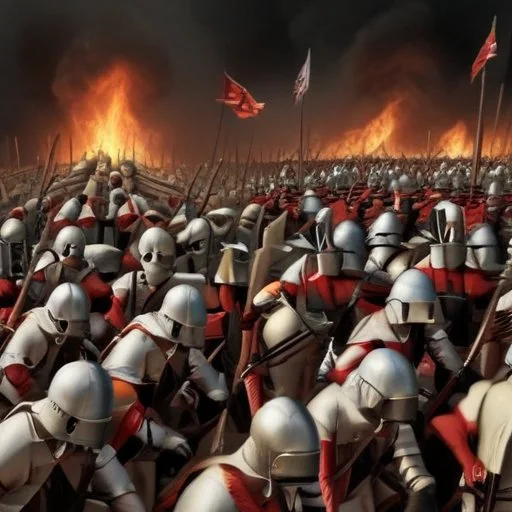
In the midst of a brutal siege, four thousand defenders of Pilenai stood firm against the formidable Teutonic Knights, refusing to surrender even in the face of certain defeat. With their stronghold on the brink of collapse, the brave warriors chose to take their own lives rather than submit to the mercy of their ruthless foes. This tragic yet valorous act would become a testament to their unyielding spirit and a haunting memory in the annals of medieval conflict.
The Unyielding Brave: The Legendary Mass Suicide of Pilenai's Defenders
A Testament to Unwavering Courage in the Face of Defeat
The Siege of Pilenai stands as one of the most infamous and awe-inspiring events in medieval history, where 4,000 brave defenders chose to take their own lives rather than submit to the mercy of the ruthless Teutonic Knights. This haunting act of mass suicide has become an enduring symbol of unyielding spirit and sacrifice, forever etched in the annals of time.
Historical Background: The Stage is Set
In the early 14th century, the Teutonic Knights, a powerful and feared military order, sought to expand their dominion over the Baltic region. Pilenai, a strategic stronghold in present-day Lithuania, stood as a formidable obstacle in their path. The native defenders, comprised of warriors from the local population, prepared to face the superior forces of the Teutonic Knights, driven by a fierce determination to protect their homeland.
The Siege: A Desperate Stand
The siege of Pilenai was a brutal and relentless assault, with the Teutonic Knights employing every tactic in their arsenal to breach the stronghold's defenses. Despite being vastly outnumbered and outgunned, the defenders of Pilenai held firm, repelling wave after wave of attacks with unwavering bravery. As the siege dragged on, the defenders' situation grew increasingly dire, their food and water supplies dwindling, their walls crumbling under the relentless bombardment.
The Fateful Decision: Mass Suicide
Faced with the certainty of defeat and the harsh reality of captivity, torture, and enslavement at the hands of the Teutonic Knights, the defenders of Pilenai made the heart-wrenching decision to take their own lives. This collective act of sacrifice was a testament to their unshakeable resolve to avoid the humiliation of surrender and the cruelties that would follow. In a final, desperate gesture of defiance, the defenders of Pilenai chose to die on their own terms, rather than submit to the mercy of their enemies.
Key Figures Involved: The Unnamed Heroes
While the defenders of Pilenai remain nameless, their bravery and sacrifice have become legendary. Their actions echo through the centuries, a powerful reminder of the human spirit's capacity for courage and selflessness in the face of overwhelming adversity.
Legacy and Cultural Impact
The Siege of Pilenai and the mass suicide of its defenders have had a profound impact on the cultural and social fabric of the region. The event has inspired countless works of art, literature, and music, serving as a symbol of resistance against oppression and a testament to the enduring power of the human spirit.
Comparative Analysis: A Unique Event in History
The mass suicide of Pilenai's defenders stands as a singular event in the annals of history, a stark contrast to the more common tales of surrender and defeat. This extraordinary act of collective sacrifice serves as a powerful reminder of the human capacity for bravery, selflessness, and sacrifice in the face of overwhelming adversity.
Fun Facts and Trivia
- The Siege of Pilenai remains one of the most well-documented events of the medieval period, with accounts from both the Teutonic Knights and local chroniclers.
- The exact motivations behind the defenders' decision to commit mass suicide remain unknown, sparking ongoing debates among historians and scholars.
- The event has inspired numerous artistic and literary works, including poetry, paintings, and music compositions.
A Lasting Testament to Courage
The Siege of Pilenai and the mass suicide of its defenders serve as a poignant reminder of the human spirit's capacity for bravery, selflessness, and sacrifice. This haunting and awe-inspiring event continues to captivate and inspire generations, a testament to the enduring power of courage in the face of overwhelming adversity.
Study of Geopolitical Factors
The Geopolitical Context of the Baltic Region
The Baltic region in the 14th century was a hotbed of conflict and political intrigue. The Teutonic Knights, a powerful military order, had been expanding their territories in the region for decades, seeking to spread Christianity and impose their dominance over the native populations. The kingdom of Lithuania, where Pilenai was located, was a key player in the region, with its own ambitions and alliances.
The siege of Pilenai was not an isolated event, but rather part of a broader struggle for control of the Baltic region. The Teutonic Knights saw the kingdom of Lithuania as a threat to their own power and sought to weaken it through military campaigns. In this context, the defenders of Pilenai were fighting not just for their own lives, but for the independence and self-determination of their people.
The political landscape of the region was complex, with multiple factions and interests at play. The kingdom of Poland, the Grand Duchy of Moscow, and the Hanseatic League were all major players, each with their own agendas and alliances. The siege of Pilenai was just one episode in a long and bloody struggle for dominance in the Baltic region.

Thorough Comparison
A Comparative Analysis of Medieval Mass Suicides
While the mass suicide of Pilenai's defenders is one of the most famous examples of collective self-sacrifice in medieval history, it is not unique. There are several other instances of mass suicide during the Middle Ages, each with its own distinct circumstances and motivations.
One notable example is the siege of Xàtiva in 1244, during which the Moorish defenders of the city chose to burn their own city to the ground rather than surrender to the forces of King James I of Aragon. Another example is the siege of Acre in 1291, during which the defenders of the city, including members of the Knights Templar and the Teutonic Knights, fought to the death rather than surrender to the Mamluks.
In each of these cases, the defenders were motivated by a desire to avoid the humiliations of defeat and the cruelties of their enemies. However, the mass suicide of Pilenai's defenders stands out for its sheer scale and the fact that it was a deliberate and collective decision, rather than a spontaneous act of desperation.
Thorough Cultural Analysis
The Cultural Impact of the Siege of Pilenai
The siege of Pilenai and the mass suicide of its defenders have had a profound impact on the cultural and artistic heritage of the Baltic region. The event has inspired countless works of literature, art, and music, including poems, songs, and paintings.
In Lithuanian folklore, the defenders of Pilenai are celebrated as heroes and martyrs, symbolizing the struggle for independence and self-determination. The event has also been commemorated in numerous monuments and memorials, including a statue in the town of Pilenai itself.
The siege of Pilenai has become an important part of the region's cultural identity, reflecting its history, values, and aspirations. It serves as a powerful symbol of resistance against oppression and a testament to the enduring power of the human spirit.

Historiographical Analysis
Historiographical Perspectives on the Siege of Pilenai
The siege of Pilenai has been the subject of intense historiographical debate, with different scholars and historians offering competing interpretations of the event. Some have seen it as a heroic act of defiance against oppressive forces, while others have viewed it as a tragic and futile gesture.
One school of thought emphasizes the role of the Teutonic Knights as ruthless and brutal conquerors, while another sees them as heroes of Christianity and civilization. Meanwhile, some historians have focused on the internal dynamics of the kingdom of Lithuania, arguing that the defenders of Pilenai were motivated by a desire to protect their own power and privilege.
Different historical perspectives offer unique insights into the complex and multifaceted nature of the siege. By examining the event through different lenses, historians can gain a deeper understanding of the historical context and the motivations of the individuals involved.
Artifact Review and Analysis
Archaeological Evidence and the Siege of Pilenai
Archaeological excavations at the site of Pilenai have uncovered valuable evidence about the siege and its aftermath. Excavations have revealed the remains of the stronghold, including its walls, towers, and gates, as well as artifacts such as weapons, armor, and ceramics.
The archaeological record provides a unique window into the daily lives of the defenders and the circumstances of the siege. For example, the discovery of food remains and other provisions suggests that the defenders were preparing for a long and brutal siege.
The archaeological evidence paints a vivid picture of the defenders' daily lives and their ultimate fate. The artifacts found at the site serve as a poignant reminder of the human cost of the siege and the bravery and sacrifice of the defenders.


