


The Fourth Crusade's infamous siege of Constantinople, the majestic capital of the Byzantine Empire, is a gruesome chapter in the history of Christianity, marked by brutal violence, plunder, and betrayal. On April 13, 1204, the unthinkable happened: the city, once the epicenter of Eastern Orthodox Christianity, was conquered by Frankish Crusaders, and its emperor, Alexios III Angelos, fled in haste, leaving his people to face the merciless wrath of the invaders.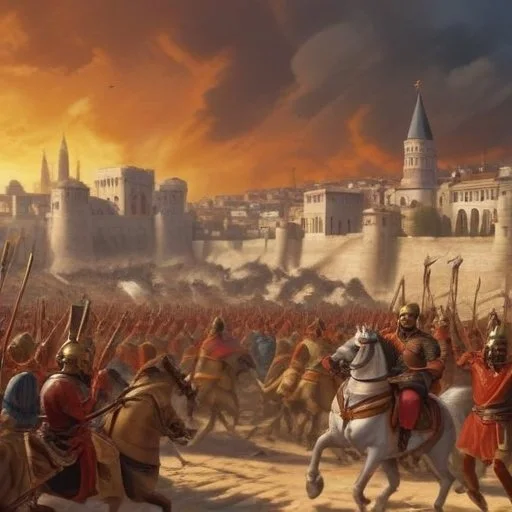
Constantinople, the fabled "Queen of Cities," was a treasure trove of riches, architecture, and art. Founded by the Roman Emperor Constantine in 324 CE, the city had been the seat of power for the Byzantine Empire, boasting walls that had withstood countless sieges and empires that had risen and fallen. Its grandeur was renowned, with ornate palaces, majestic churches, and bustling markets that attracted merchants from across the globe.
The Fourth Crusade, initiated by Pope Innocent III in 1198, was meant to reclaim the Holy Land from Muslim forces. However, the Crusade was soon hijacked by power-hungry nobles and opportunistic mercenaries, who saw the riches of Constantinople as a more tantalizing prize than the sacred lands of Jerusalem. The Crusaders, led by the doge of Venice, Enrico Dandolo, formed an unholy alliance with the Latin Empire, pledging to support the claim of Alexios IV Angelos, the son of the deposed emperor Isaac II Angelos, to the throne.
On April 6, 1204, the Crusaders, accompanied by a fleet of Venetian ships, laid siege to Constantinople. The Byzantine army, vastly outnumbered and outmatched, put up a valiant fight, but their efforts were in vain. The Crusaders breached the city walls, and a frenzy of plunder and violence ensued. Emperor Alexios III, realizing his army was no match for the invaders, fled the city, leaving his people to face the mercy of the Crusaders.
The Fourth Crusade's brutal sacking of Constantinople left an indelible mark on the fabric of Christendom, sparking controversy and acrimony that would reverberate for centuries to come. The once-majestic city, now lay in ruins, its people scarred by the memories of violence and betrayal. The echoes of that fateful day continue to resonate, serving as a poignant reminder of the devastating consequences of unchecked ambition and the transient nature of power and glory.
"We have taken the city, and we have taken the empire. We have taken the riches, and we have taken the lives of those who once called it home." - A Latin Crusader, 1204 CE
"It is not the walls that make the city, but the people who dwell within them. We have destroyed the walls, but we have also destroyed the souls of those who once lived here." - A Byzantine Survivor, 1204 CE
The Fourth Crusade's assault on Constantinople stands as a monument to the destructive power of human ambition, a grim testament to the devastating consequences of unchecked greed and the wanton disregard for human life. As we reflect on this pivotal event, we are reminded that even the greatest civilizations can fall prey to the whims of power and the capricious nature of human fortune.
While the Fourth Crusade's assault on Constantinople is often viewed as a singular event, it was, in fact, the culmination of centuries of tension and rivalry between the Byzantine Empire and the Latin West. The Byzantine Empire, founded by Constantine in 324 CE, had long been the epicenter of Eastern Orthodox Christianity, while the Latin West, led by the Catholic Church, had grown increasingly influential in the centuries that followed. The Fourth Crusade marked the intersection of these two rival powers, with devastating consequences.
The build-up to the Crusade was marked by a series of skirmishes and diplomatic maneuvers, as the Byzantine Empire sought to maintain its independence in the face of growing Latin influence. In 1195, the Byzantine Emperor Isaac II Angelos was overthrown by his brother, Alexios III Angelos, who promptly appealed to the Latin West for aid. The Latin Empire, eager to expand its influence, responded by dispatching a Crusader army to Constantinople.

Enrico Dandolo: The Mastermind Behind the Crusade
Enrico Dandolo, the Doge of Venice, was the mastermind behind the Fourth Crusade's invasion of Constantinople. A cunning and ambitious leader, Dandolo had long coveted the riches of the Byzantine Empire and saw the Crusade as the perfect opportunity to expand Venetian influence.
Despite his advanced age and blindness, Dandolo was a shrewd politician and military strategist, who orchestrated the Crusade's campaign with precision. His alliance with the Latin Empire and his manipulation of the Crusade's leadership allowed him to guide the invasion from behind the scenes, ultimately securing a deal that would grant Venice control over a significant portion of the Byzantine Empire's territories.
The Sack of Constantinople in 1204 CE is often compared to the Fall of Rome in 410 CE, with both events marking significant turning points in the history of Western civilization. While both events involved the capture of a major city, the similarities extend beyond mere coincidence.
Both the sack of Constantinople and the fall of Rome were precipitated by internal weakness and external pressure. The Byzantine Empire, like the Roman Empire before it, had grown complacent and inefficient, leaving it vulnerable to attack. The Crusaders, like the Visigoths before them, were driven by a desire for plunder and power, and saw the treasures of Constantinople as a tempting prize.
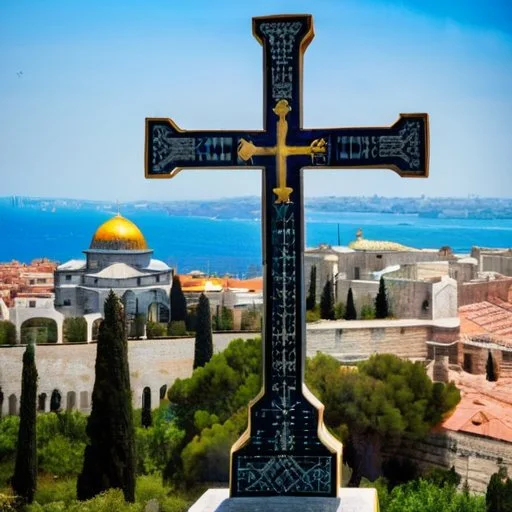
The Fourth Crusade's assault on Constantinople had a profound impact on the cultural heritage of Eastern Orthodox Christianity. The destruction of the city's magnificent churches, monasteries, and libraries led to the loss of countless irreplaceable artifacts, manuscripts, and relics.
The Crusaders' pillage and plunder of Constantinople also led to a significant transfer of cultural capital, as many of the city's most precious artifacts were carried off to the Latin West. The looting of Constantinople's churches and monasteries led to the dispersal of the city's vast collection of Byzantine art and artifacts, many of which would eventually find their way into the treasuries of European monarchs and nobles.
The Fourth Crusade's conquest of Constantinople marked a significant shift in the global balance of power, as the Byzantine Empire, once the dominant force in Eastern Europe, was supplanted by the rising powers of the Latin West. The fall of Constantinople led to a realignment of trade routes and diplomatic alliances, as the Latin Empire and the Venetian Republic sought to consolidate their gains.
The Crusade also had significant implications for the Islamic world, as the Byzantine Empire's defeat created a power vacuum that would be exploited by the rising Ottoman Empire. The fall of Constantinople would ultimately pave the way for the Ottoman Empire's conquest of Eastern Europe, marking a significant turning point in the history of the Middle East and Europe.