


In a move that would reverberate throughout French history, the Estates-General convened for the first time in 175 years on May 5, 1789, marking a pivotal moment in the country's struggle for reform and representation. This grand assembly, comprising representatives from the three estates – clergy, nobility, and commoners – signaled a growing discontent with the absolute monarchy and paved the way for the French Revolution.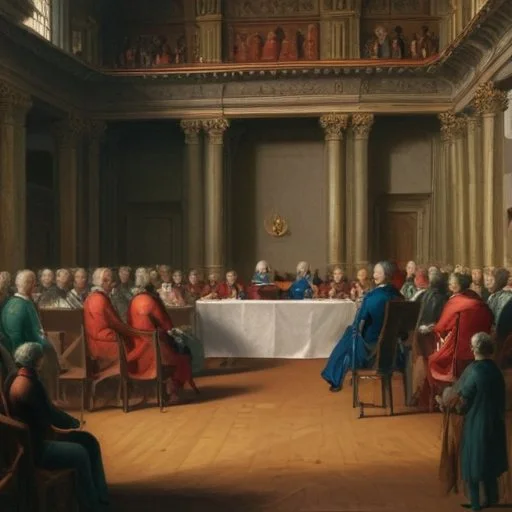
As the 18th century unfolded, France found itself mired in financial woes, with a crippling national debt and a stagnant economy. The burden of taxation fell squarely on the shoulders of the common people, while the nobility and clergy enjoyed privileges and exemptions. Against this backdrop, a growing chorus of discontent emerged, calling for reform and greater representation in government.
The Estates-General, a medieval institution that had lain dormant since 1614, was summoned by King Louis XVI in response to the mounting pressure for change. This historic gathering brought together representatives from the three estates, each with their own distinct interests and agendas. The clergy, nobility, and commoners – the tiers état – converged on Versailles, eager to confront the monarchy and shape the future of France.
The Estates-General was unprecedented in its composition, with the Third Estate, representing the common people, holding the majority of representatives. This newfound sense of empowerment emboldened the tiers état, which refused to be silenced or marginalized by the nobility and clergy. As the assembly deliberated, it became clear that the Third Estate would no longer be content to play a subordinate role in French politics.
The Estates-General's initial focus on financial reform gradually gave way to more radical demands for constitutional reform and greater representation. The assembly's deliberations were punctuated by passionate speeches, fiery debates, and dramatic gestures, as the representatives of the people voiced their desire for a more equal and just society.
The Estates-General's convocation marked the beginning of a seismic shift in French history, as the once-dormant forces of revolution began to stir. The assembly's courageous stand against the monarchy paved the way for the National Assembly, the Tennis Court Oath, and ultimately, the French Revolution itself. As the dust settled on this turbulent era, the Estates-General's legacy would endure, a testament to the power of collective action and the unwavering pursuit of liberty, equality, and fraternity.
The Estates-General's convocation had far-reaching consequences, including:
The years leading up to the Estates-General were marked by a series of events that further deteriorated the relationship between the French monarchy and its people. In 1770, the Parlement de Paris, a noble-dominated court, was abolished, only to be reinstated in 1774. This move was seen as a blatant attempt by the monarchy to consolidate power and ignore the growing demands for reform.
In 1787, the Assemblée des Notables, a gathering of high-ranking nobles and clergy, was convened to address the financial crisis. However, this assembly proved ineffective, and its recommendations were largely ignored by the monarchy. The failure of the Assemblée des Notables only added fuel to the fire, as the Third Estate began to organize and demand greater representation.

Jean-Sylvain Bailly, the mayor of Paris, played a crucial role in the initial deliberations of the Estates-General. A moderate and conciliatory figure, Bailly was instrumental in bridging the gap between the rival factions of the assembly. His commitment to reform and his ability to navigate the complex web of alliances and rivalries earned him the respect and admiration of his peers.
Bailly's leadership during the early days of the Estates-General was marked by a series of dramatic moments, including the famous Serrement du Jeu de Paume, where he persuaded the representatives to take an oath to continue their work on a new constitution.
The Estates-General and the subsequent French Revolution inspired a wave of artistic expression, as writers, artists, and musicians sought to capture the spirit of the era. The iconic depiction of the Tennis Court Oath by Jacques-Louis David, a renowned painter and ardent supporter of the Revolution, is a testament to the power of art to reflect and shape public opinion.
The era also saw the emergence of revolutionary songs, such as Ça Ira and La Marseillaise, which became anthems of the Revolution and continue to be celebrated as symbols of French identity.
The Estates-General was a complex web of alliances and rivalries, as representatives from the three estates navigated the treacherous landscape of French politics. The clergy, nobility, and commoners each had their own agendas, and the assembly was marked by fierce debates and negotiated compromises.
At the heart of the politics was the question of representation and voting rights. The Third Estate, determined to assert its authority, pushed for voting by head, while the nobility and clergy favored voting by estate. This fundamental disagreement would ultimately lead to the declarations of the National Assembly and the Tennis Court Oath.
The Estates-General did not take place in a vacuum, and the gathering of representatives in Versailles was influenced by a broader European context. The American Revolution, with its ideals of liberty and democracy, had sent shockwaves across the continent, inspiring reform movements and challenging the authority of monarchies.
In the years leading up to the Estates-General, the Dutch Patriot movement and the Swedish Revolution of 1789 had also shaken the foundations of absolute monarchy. The French Revolution would go on to inspire similar movements across Europe, as the ideals of liberty, equality, and fraternity spread like wildfire.