


The Franco-Prussian War's most pivotal moment arrived on September 1, 1870, as the Prussian army, led by the ingenious Helmuth von Moltke, clashed with the French forces under Napoleon III in the Battle of Sedan. This crushing defeat marked a major turning point in the war, paving the way for German unification and a new world order.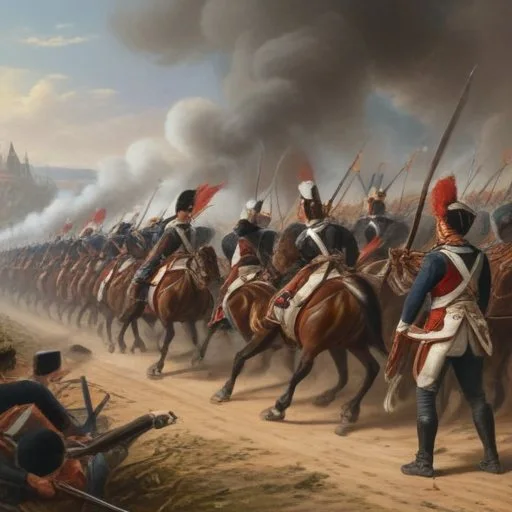
The Prussians, bolstered by their superior artillery and clever tactical maneuvers, capitalised on the French army's overconfidence and lack of preparedness. Napoleon III's forces, still reeling from the Battle of Gravelotte, were caught off guard by the Prussian army's lightning-fast mobilisation and encirclement tactics.
The Battle of Sedan's consequences were far-reaching and profound. The French Second Empire crumbled, paving the way for the formation of the Third Republic. Meanwhile, the Prussian victory cemented Germany's position as aEuropean powerhouse, paving the way for German unification.
The Battle of Sedan's impact on French culture and society was immense. The defeat led to widespread outrage, mourning, and soul-searching, with many questioning the very fabric of French society. The war also sparked a renewed sense of nationalism, as France sought to rebuild and reclaim its status as a major European power.
Helmuth von Moltke: The Prussian Mastermind
Helmuth von Moltke's strategic genius was forged in the crucible of the Prussian military academy, where he honed his skills as a cartographer, linguist, and tactician. His innovative approach to warfare, which emphasized speed, deception, and maneuverability, revolutionized the art of battle and earned him the sobriquet "Moltke the Great."
Behind the scenes, Moltke was a meticulous planner, pouring over maps and intelligence reports to anticipate every possible contingency. His ability to think several steps ahead of his opponents allowed him to outmaneuver even the most seasoned commanders, including Napoleon III.
The Economic Toll of Defeat
The Battle of Sedan had far-reaching economic implications for France, which was forced to surrender a massive indemnity to Prussia. The war reparations, amounting to 5 billion francs, crippled the French economy and led to widespread poverty and unemployment.
The defeat also led to a decline in French industrial production, as key manufacturing centers were occupied by Prussian forces. The subsequent loss of Alsace-Lorraine, a region rich in natural resources, further exacerbated France's economic woes.
The Sedan Paintings: A Cultural Response to Defeat
In the aftermath of the Battle of Sedan, French artists responded to the national trauma with a flurry of paintings, prints, and sculptures. These works, which captures the pathos and horror of war, served as a form of cultural catharsis, allowing the French people to process their grief and shock.
One of the most famous works to emerge from this period is Alphonse de Neuville's The Last Sleep of Napoleon III at Sedan, which poignantly depicts the defeated emperor slumped in his carriage, surrounded by the detritus of war.
The Geopolitical Context of Sedan
The Battle of Sedan unfolded against the backdrop of a rapidly changing European landscape, marked by the decline of the Napoleonic Empire and the rise of Prussian power. The Prussian chancellor, Otto von Bismarck, had long sought to unify the fragmented German states under Prussian leadership, and the Franco-Prussian War provided the perfect opportunity to achieve this goal.
The defeat of France at Sedan sealed the fate of the Napoleonic Empire, paving the way for German unification and the emergence of a new European order, in which Germany would play a dominant role.
The Politics of Defeat
The Battle of Sedan marked a turning point in Napoleon III's political fortunes, as his regime began to crumble under the weight of military defeat and internal opposition. The emperor's downfall was precipitated by his own miscalculations, as he underestimated the strength and determination of the Prussian army.
In the aftermath of Sedan, Napoleon III was forced to abdicate, and the Third Republic was born, marking a new era in French politics. The defeat also led to a reappraisal of French foreign policy, as the country began to reorient itself towards a more pragmatic and realistic approach to international relations.