


On November 8, 1932, Franklin D. Roosevelt made history by becoming the 32nd President of the United States, defeating incumbent president Herbert Hoover in a landslide victory. This marked a pivotal moment in American politics, as the country was grappling with the devastating effects of the Great Depression.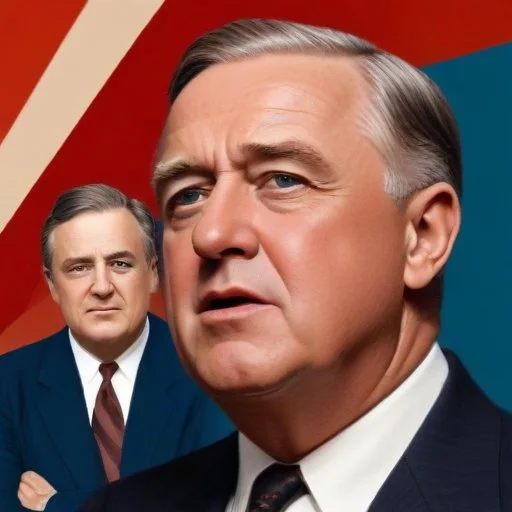
The early 1930s were a tumultuous time for America. The Great Depression had left millions jobless, homeless, and hopeless. The incumbent president, Herbert Hoover, was struggling to find solutions to the crisis, and his policies were deemed inadequate by many. Amidst this chaos, Franklin D. Roosevelt, then the Governor of New York, stepped forward with a bold promise: a New Deal for America.
Roosevelt's charisma and vision captivated the nation. He traveled the country, delivering impassioned speeches, and connecting with everyday Americans. His message of hope, reform, and recovery resonated deeply, particularly among the working class and the rural poor. Roosevelt's campaign promised to tackle the economic crisis head-on, with innovative policies and programs that would put Americans back to work.
The 1932 presidential campaign was a study in contrasts. Herbert Hoover, the incumbent president, was seen as out of touch with the common man, and his campaign focused on defending his administration's record. Roosevelt, on the other hand, was the epitome of change, promising a fresh start and a new direction for America. His campaign rallies were often raucous and energetic, with crowds chanting "Happy Days Are Here Again," the catchy tune that would become synonymous with the Roosevelt era.
On November 8, 1932, Americans flocked to the polls, eager to make their voices heard. The results were nothing short of astonishing. Roosevelt carried 40 states, receiving 472 electoral votes to Hoover's 59. The popular vote was equally one-sided, with Roosevelt garnering 22.8 million votes to Hoover's 15.7 million. It was a landslide victory, and a clear mandate for change.
Roosevelt's election marked a seismic shift in American politics. His New Deal policies would go on to transform the country, establishing programs like the Works Progress Administration, the Civilian Conservation Corps, and Social Security. The election also cemented the Democratic Party's status as the dominant force in American politics, a position they would hold for the next 40 years. Franklin D. Roosevelt's historic election will forever be remembered as a turning point in American history, a moment when a nation in crisis turned to a charismatic leader with a bold vision for a brighter future.
"A New Deal for the American people" - Franklin D. Roosevelt, acceptance speech, 1932
"The only thing we have to fear is fear itself — and I have feared none." - Franklin D. Roosevelt, inaugural address, 1933
Eleanor Roosevelt: The Influential First Lady
Roosevelt often sought Eleanor's counsel on matters of state, valuing her intuition and empathy. She, in turn, used her access to influence policy decisions, pushing for more progressive reforms and increased government support for the marginalized.
As a testament to her dedication and impact, Eleanor Roosevelt remains one of the most beloved and respected First Ladies in American history.

The Forgotten Man: Herbert Hoover's Struggle to Address the Great Depression
Herbert Hoover's presidency was marked by a desperate struggle to address the deepening crisis of the Great Depression. Despite his best efforts, his policies were deemed inadequate by many, and his perceived inaction earned him public scorn.
In hindsight, however, it becomes clear that Hoover was not entirely oblivious to the crisis. He implemented a series of measures, including the Federal Emergency Relief Administration and the Reconstruction Finance Corporation, aimed at providing relief and stimulating economic recovery.
Though ultimately unsuccessful, Hoover's efforts highlight the complexity of the crisis and the limited options available to policymakers at the time.
The New Deal's Cultural Legacy: A Lasting Impact on American Identity
The New Deal's far-reaching impact extended beyond the realm of economics, leaving an indelible mark on American culture. The programs and initiatives launched by FDR helped shape the nation's identity, fostering a sense of community, optimism, and shared purpose.
The Works Progress Administration's arts programs, for instance, enabled artists, writers, and musicians to produce innovative works that reflected the era's struggles and hopes. The Civilian Conservation Corps, meanwhile, helped shape American attitudes towards conservation and the environment.
The New Deal's cultural legacy continues to influence American society, inspiring future generations to strive for collective progress and social justice.
The Economic Turning Point: How the New Deal Reshaped America's Economy
The New Deal's extensive reforms and programs transformed the American economy, pulling the nation back from the brink of collapse. By injecting massive investments into infrastructure, job creation, and social welfare programs, FDR's administration helped stimulate economic recovery and lay the groundwork for post-war prosperity.
The creation of Social Security, in particular, marked a sea change in American economic policy, establishing a vital safety net for workers and the elderly. The Federal Deposit Insurance Corporation, another key initiative, restored confidence in the banking system, stabilizing the financial sector.
The New Deal's economic impact was profound, setting the stage for America's emergence as a global superpower in the decades that followed.
The Democratic Party's Rise to Prominence: How FDR's Election Shaped American Politics
Franklin D. Roosevelt's landslide victory in 1932 marked a seismic shift in American politics, as the Democratic Party emerged as the dominant force for the first time in over a century. FDR's charismatic leadership, combined with his bold policy initiatives, helped galvanize a broad coalition of supporters, including labor unions, minorities, and rural Americans.
The New Deal's policies and programs, in turn, cemented the Democratic Party's reputation as the champion of progressive reform and social justice. This newfound stature helped the party maintain its grip on power for the next four decades, shaping American politics and policy for generations to come.