


On August 14, 1935, Franklin D. Roosevelt, the 32nd President of the United States, signed the Social Security Act, a landmark legislation that would transform the lives of millions of Americans. This historic bill established a government pension system, providing financial security to retirees and setting a precedent for a more compassionate society.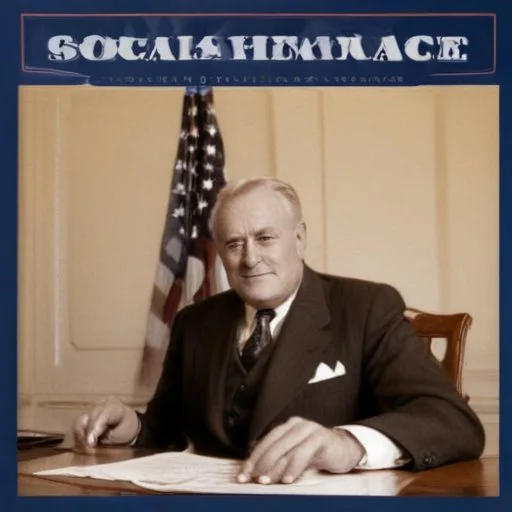
The Social Security Act was born out of the Great Depression, a period of unprecedented economic downturn that left millions of Americans struggling to make ends meet. As the nation grappled with widespread poverty, unemployment, and homelessness, FDR's administration recognized the need for a comprehensive social insurance program that would provide a safety net for the most vulnerable members of society.
The Social Security Act revolutionized the way America cared for its seniors, providing a guaranteed income stream for retirees and setting a precedent for a more equitable society. The act established a three-part system, comprising:
The Social Security Act has had a profound impact on American society, providing financial security to millions of seniors and setting a precedent for future social welfare programs. Today, Social Security remains a cornerstone of American social policy, with over 64 million beneficiaries relying on the program for their economic well-being.
As FDR so eloquently stated, "We can never insure 100% of the population against 100% of the hazards and vicissitudes of life, but we have tried to frame a law which will give some measure of protection to the average citizen and to give him the security he has a right to expect from his government."
The Social Security Act stands as a testament to FDR's unwavering commitment to social justice and his vision for a more compassionate society. As we reflect on this landmark legislation, we are reminded of the power of visionary leadership and the enduring impact of progressive policy on the lives of ordinary Americans.
Frances Perkins, the first female Secretary of Labor, played a pivotal role in shaping the Social Security Act.
Perkins' own experiences, particularly her involvement in social reform movements, influenced her approach to crafting a comprehensive social insurance program. Her tireless efforts behind the scenes helped build bipartisan support for the legislation, ensuring its successful passage.
Perkins' contributions to the Social Security Act went beyond policy development. She also worked to educate the public about the program's benefits, often traveling across the country to explain its provisions to civic groups and community organizations.

Social Security has had a profound impact on the American economy.
By providing a guaranteed income stream to retirees, the program has enabled millions of seniors to maintain their purchasing power, thereby stimulating economic growth. Furthermore, Social Security benefits have helped reduce poverty rates among the elderly, freeing up resources for other essential expenditures.
In addition, Social Security's payroll taxes have created a stable revenue stream, allowing the government to invest in infrastructure, education, and other public goods that benefit society as a whole.
The advent of Social Security marked a significant shift in American family dynamics.
With the introduction of Old-Age Benefits, families were no longer solely responsible for supporting their elderly members. This led to a decline in multigenerational households and the rise of independent living among seniors.
Moreover, Social Security's provision of assistance for families with dependent children and the disabled helped to redefine the government's role in supporting vulnerable populations, paving the way for future social welfare programs.

The Committee on Economic Security, established by FDR in 1934, was a pivotal moment in the development of Social Security.
The committee, comprising experts from various fields, was tasked with creating a comprehensive social insurance program. Over several months, they conducted extensive research, consulted with stakeholders, and analyzed European social insurance models to inform their recommendations.
The committee's report, submitted in January 1935, provided the foundation for the Social Security Act, outlining a vision for a national social insurance program that would provide a safety net for American workers and their families.
FDR's administration faced formidable opposition from conservative lawmakers and business interests.
Conservatives argued that the Social Security program would be too costly, inefficient, and an overreach of federal power. Business leaders, concerned about the impact of payroll taxes on their bottom line, lobbied vigorously against the bill.
Despite these challenges, FDR's persuasive leadership and the unrelenting efforts of supporters like Frances Perkins helped build a coalition of progressive lawmakers and civic organizations, ultimately paving the way for the bill's passage.