


On September 7, 1812, the countryside near Moscow became a killing field as two behemoths of European military power clashed in the Battle of Borodino. This pivotal conflict, fought between Napoleon's Grande Armée and the Russian army, would earn the dubious distinction of being the bloodiest single-day battle of the Napoleonic Wars, with casualties exceeding 65,000.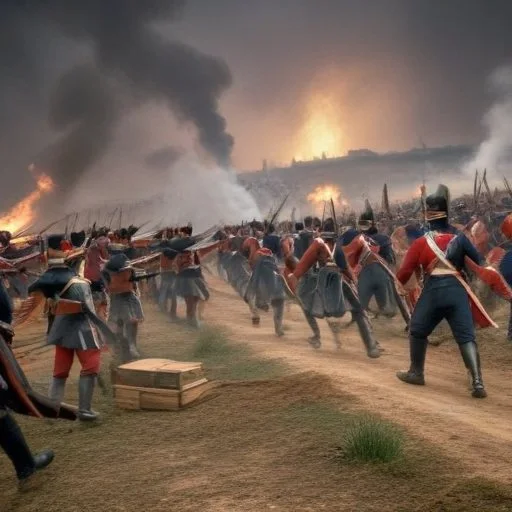
The French invasion of Russia, launched in June 1812, was meant to be a crushing blow to the Russian Empire and a demonstration of Napoleon's military prowess. However, the Russian army, under the leadership of General Mikhail Kutuzov, had other plans. Employing a scorched earth policy and a series of strategic retreats, the Russians led Napoleon's army deeper into the heart of Russia, depleting their supplies and morale.
As Napoleon's army approached Moscow, they encountered the Russian army, dug in around the village of Borodino. The stage was set for a brutal and decisive battle, with both armies determined to emerge victorious.
The Battle of Borodino was a maelstrom of chaos and destruction. Cannon fire shook the earth, while cavalry charges and bayonet fights raged across the blood-soaked fields. The French army, despite their superior firepower and training, struggled to break through the Russian lines. The Russian army, meanwhile, fought valiantly, but at a terrible cost in lives.
After a grueling 12 hours of combat, the French army emerged victorious, but at a staggering cost. Over 30,000 French soldiers lay dead or wounded, while the Russian army suffered an estimated 40,000 casualties. The French victory was hollow, as they had failed to crush the Russian army or capture Moscow.
The Battle of Borodino marked a turning point in the Napoleonic Wars. The French army, exhausted and depleted, struggled to maintain its grip on Russia. The Russian army, despite their losses, had demonstrated their resilience and determination. As the war dragged on, the Russian winter would prove to be Napoleon's downfall, but Borodino had set the stage for the eventual defeat of the French army.
The Battle of Borodino remains one of the bloodiest battles in military history, a testament to the devastating power of war. The carnage and destruction that took place on those fateful fields serve as a grim reminder of the horrors of war and the devastating consequences of unchecked ambition.
The Battle of Borodino has had a lasting impact on Russian culture and society. The battle is remembered as a symbol of Russian resilience and determination, and is celebrated in literature, art, and music. Tolstoy's epic novel, "War and Peace," features a vivid description of the battle, cementing its place in Russian literary heritage.
One French soldier, Pierre-François Percy, wrote in his journal: "The cannon fire was so intense that I thought the end of the world had come. I saw men torn apart by cannonballs, and others burning alive in the flames. It was a horror beyond imagination."
The Battle of Borodino remains a testament to the devastating power of war and the resilience of the human spirit. As we reflect on this pivotal conflict, we are reminded of the importance of diplomacy and the horrors that can result when nations clash.
The lead-up to the Battle of Borodino was marked by a series of tense negotiations between Napoleon and Tsar Alexander I. Despite their cordial relationship, the two leaders were at odds over Napoleon's Continental System, which aimed to weaken Britain by restricting European trade. The Tsar, determined to protect Russia's economic interests, refused to comply with Napoleon's demands, prompting the French invasion.
Napoleon's Grande Armée, comprising over 600,000 soldiers, was the largest military force assembled in Europe at the time. The Russian army, led by General Mikhail Kutuzov, was significantly smaller, with around 300,000 troops. Despite the disparity in numbers, the Russian army was better acquainted with the terrain and employed a series of clever tactics to counter the French army's superior firepower.
Mikhail Kutuzov, the Russian General who led the army to victory at Borodino, was a seasoned military commander with a reputation for cunning and tactical brilliance. Born in 1745, Kutuzov rose through the ranks of the Russian army, distinguishing himself in several key battles, including the Russo-Turkish War. His leadership during the Battle of Borodino earned him the respect and admiration of his troops, as well as the gratitude of the Russian people.
The Battle of Borodino has had a profound impact on Russian culture, inspiring some of the country's most celebrated works of literature and art. Leo Tolstoy's epic novel, "War and Peace," features a vivid and detailed description of the battle, cementing its place in Russian literary heritage. The battle has also inspired numerous paintings, sculptures, and musical compositions, including Tchaikovsky's famous "1812 Overture."
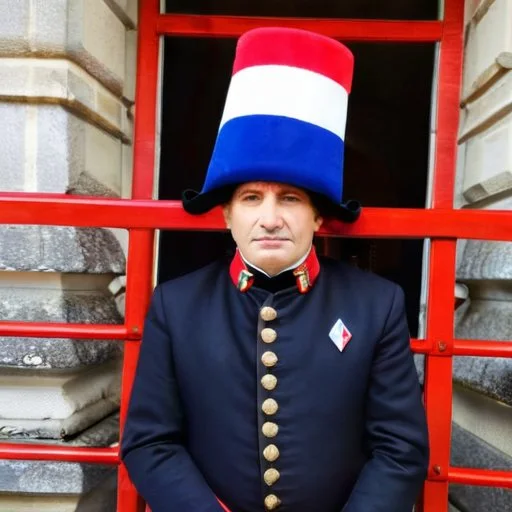
The Napoleonic Wars, of which the Battle of Borodino was a pivotal conflict, marked a significant shift in the European balance of power. Napoleon's aggressive expansionist policies had created a network of allied states and vassals across Europe, but the Russian campaign marked the beginning of his decline. The eventual defeat of Napoleon's army in Russia paved the way for the Congress of Vienna, which redrew the map of Europe and established a new order that would last for centuries.
The Battle of Borodino has left behind a rich legacy of artifacts and documents, providing valuable insights into the politics, military strategy, and daily life of soldiers during the Napoleonic Wars. The Musée de l'Armée in Paris houses an extensive collection of artifacts, including Napoleon's personal belongings, uniforms, and military equipment. The Russian State Archives in Moscow also contain a vast collection of documents, including correspondence between Napoleon and Tsar Alexander I, as well as diaries and journals of soldiers who fought at Borodino.