


The French Revolution, a era of enlightenment and liberty, took a dark and ominous turn with the initiation of the Reign of Terror in 1793. This brutal period, led by the radical Jacobins, would be marked by widespread executions, fear, and oppression, earning its notorious reputation as one of the most infamous periods in French history.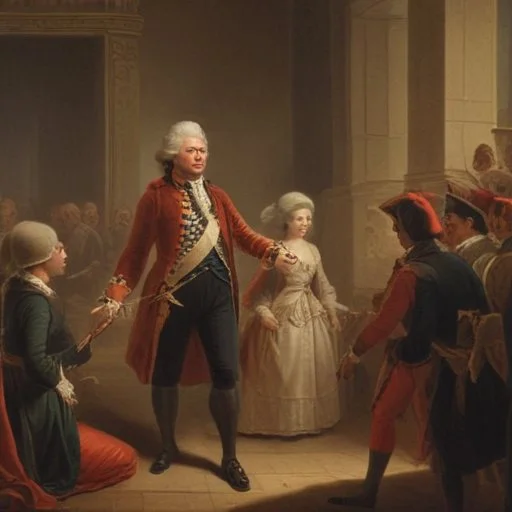
In the early months of 1793, the French National Convention, the governing body of the Revolution, underwent a radical transformation. Maximilien Robespierre, a charismatic and influential leader, rose to power, rallying the Jacobins and securing control of the Convention. This marked a turning point in the Revolution, as the Committee of Public Safety, led by Robespierre, began to dominate the government.
The Committee, a group of 12 men handpicked by Robespierre, was tasked with protecting the Revolution from internal and external threats. As their power grew, so did their paranoia and ruthlessness. They became the de facto rulers of France, wielding absolute authority and exerting total control over the population.
On September 5, 1793, the Convention declared that terror would be the order of the day, authorizing the Committee to take drastic measures against perceived enemies of the Revolution. This decree marked the official beginning of the Reign of Terror, as the Committee unleashed a campaign of repression, intimidation, and violence.
Between September 1793 and July 1794, tens of thousands of people, including nobles, clergy, commoners, and even former revolutionaries, were executed by guillotine or other brutal means. The most prominent victim was Marie Antoinette, the ill-fated queen of France, who met her demise on October 16, 1793.
On July 27, 1794, Robespierre's extreme policies and paranoid behavior finally caught up with him. The Convention, realizing the Reign of Terror had gone too far, turned against him, and he was arrested, tried, and executed the following day. The Reign of Terror ended with Robespierre's demise, marking a new era of relative peace and stability in France.
The Reign of Terror remains a dark stain on the French Revolution's legacy, a grim reminder of the dangers of unchecked power and radical ideology. Yet, it also serves as a testament to the enduring spirit of the French people, who persevered through the bloodiest year in their history, ultimately emerging stronger and more resilient than ever before.
The Reign of Terror has been the subject of intense historiographical debate, with scholars disagreeing on the motivations and consequences of this period. While some view it as a necessary evil to protect the Revolution from its enemies, others see it as a brutal and oppressive regime that undermined the Revolution's ideals.
Recent studies have challenged the traditional view of the Reign of Terror as a monolithic episode, instead highlighting the complexities and nuances of the period. These studies have also emphasized the role of social and cultural factors in shaping the Terror, rather than solely focusing on the political and ideological dimensions.

Maximilien Robespierre, the leader of the Committee of Public Safety, remains a controversial figure in French history. While some see him as a visionary who sought to create a egalitarian society, others view him as a ruthless dictator who unleashed a wave of terror on the French people.
Robespierre's early life was marked by poverty and hardship, which shaped his radical views on social justice. Despite his charisma and eloquence, he was known for his paranoia and vindictiveness, which ultimately led to his downfall.
The Reign of Terror had a profound impact on French culture, with many artists and writers responding to the trauma and violence of the period. The Romantic movement, which emerged in the aftermath of the Terror, was characterized by its emphasis on emotion, imagination, and individualism.
The Terror also influenced the development of French literature, with writers like Charles Nodier and François-René de Chateaubriand exploring themes of horror, guilt, and redemption in their works.

The Reign of Terror had devastating economic consequences for France, with trade and commerce grinding to a halt due to the chaos and uncertainty of the period. The Committee of Public Safety's policies, including the maximum, led to food shortages, inflation, and widespread poverty.
The Terror also led to a decline in foreign investment and a loss of confidence in the French economy, which took years to recover from.
The Reign of Terror was characterized by a pervasive atmosphere of fear and surveillance, with the Committee of Public Safety using spies, informers, and denunciations to maintain control over the population.
The Committee's policies, including the Law of Suspects, enabled the arbitrary arrest and execution of anyone deemed a threat to the Revolution, leading to a culture of paranoia and mistrust.