


On September 8, 1900, a powerful Category 4 hurricane made landfall in Galveston, Texas, killing an estimated 8,000 people and leaving the city in ruins. This devastating storm still holds the record as the deadliest natural disaster in US history, and its impact on Galveston's history and development is still felt today.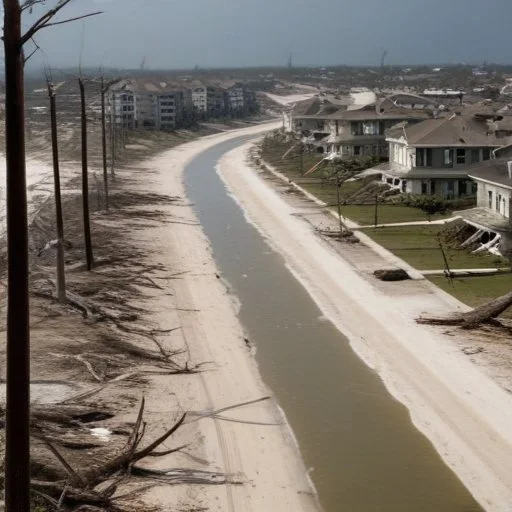
In the late 19th century, Galveston was a thriving island metropolis, boasting a vibrant economy, a bustling port, and a population of over 37,000 people. However, the city's low elevation and lack of natural barriers made it vulnerable to hurricanes, which were not uncommon in the Gulf Coast region.
The storm began to form in the Caribbean on September 3, 1900, and began to intensify as it approached the Gulf of Mexico. On September 8, the hurricane made landfall in Galveston, bringing with it winds of up to 145 mph and a storm surge of over 15 feet. The city's inadequate infrastructure and lack of preparedness meant that the storm's impact was catastrophic, with entire neighborhoods swept away and homes reduced to rubble.
The destruction caused by the hurricane was so severe that it led to a complete overhaul of Galveston's city planning and infrastructure. In the aftermath of the storm, the city built a 10-mile-long seawall to protect against future hurricanes, and elevated the city by up to 17 feet in some areas. This massive rebuilding effort not only helped to revitalize the city but also transformed it into the thriving tourist destination it is today.
One of the most remarkable stories of survival from the Galveston hurricane is that of Clara Barton, the founder of the American Red Cross. Barton arrived in Galveston just days after the storm and helped to coordinate relief efforts, earning her the nickname "Angel of the Storm."
The Galveston hurricane also led to controversy and criticism of the city's preparedness and response to the disaster. The storm highlighted the need for better weather forecasting, emergency planning, and disaster relief efforts, leading to significant changes in the way cities prepare for and respond to natural disasters.
The Galveston hurricane served as a wake-up call for cities across the United States, leading to significant improvements in disaster preparedness and response. Today, Galveston is a city built on resilience, with a strong focus on community, rebuilding, and renewal.
In conclusion, the Galveston hurricane of 1900 was a devastating event that changed the course of history for the city of Galveston and beyond. Its impact on disaster preparedness, city planning, and community resilience continues to be felt today, making it an important and unforgettable event in the annals of American history.
Clara Barton, the founder of the American Red Cross, was a pioneering humanitarian who played a crucial role in the relief efforts following the Galveston hurricane. Born in 1821, Barton was a schoolteacher, nurse, and humanitarian who had previously provided aid during the American Civil War and the Spanish-American War.
After the hurricane, Barton arrived in Galveston on September 11, 1900, and coordinated relief efforts, including establishing soup kitchens, shelters, and medical facilities. Her tireless work earned her the nickname "Angel of the Storm," and her efforts helped to provide aid to thousands of survivors.

The Galveston hurricane not only devastated the city's infrastructure and population but also had a profound environmental impact. The storm surge inundated the city's wetlands, salt marshes, and mangrove forests, causing widespread destruction of habitats and ecosystems.
The hurricane also led to significant changes in the city's ecosystem, including the loss of native species and the introduction of invasive ones. The storm's impact on the environment was so severe that it took decades for the ecosystem to recover.
The Galveston hurricane led to significant advances in meteorology, engineering, and architecture. The storm highlighted the need for better weather forecasting, leading to the development of new technologies and techniques for tracking and predicting hurricanes.
The hurricane also spurred innovations in building design and construction, including the use of reinforced concrete and the development of more resilient building materials. These technological advancements have helped to reduce the impact of subsequent hurricanes and natural disasters.

The Galveston hurricane had a profound impact on the social and cultural fabric of the city. The storm displaced thousands of people, leading to significant changes in the city's demographics and socioeconomic makeup.
The hurricane also led to changes in the way people lived and worked, with many residents opting for more elevated homes and buildings. The storm also spurred the growth of new industries, including tourism, which has become a major driver of the city's economy.
Historians have long debated the significance of the Galveston hurricane, with some viewing it as a turning point in the city's history and others seeing it as a catastrophic event that could have been avoided.
Some historians have argued that the hurricane was a result of the city's hubris and lack of preparedness, while others have seen it as a natural disaster that was beyond the control of human beings. Regardless, the Galveston hurricane remains an important event in American history, with significant lessons for cities and communities around the world.