


The morning of September 22, 1914, will forever be etched in the annals of naval history as the day a lone German U-boat, U9, pulled off a daring feat of stealth and precision, sending three formidable British cruisers to the bottom of the North Sea, claiming nearly 1,500 lives in a span of just seventy minutes.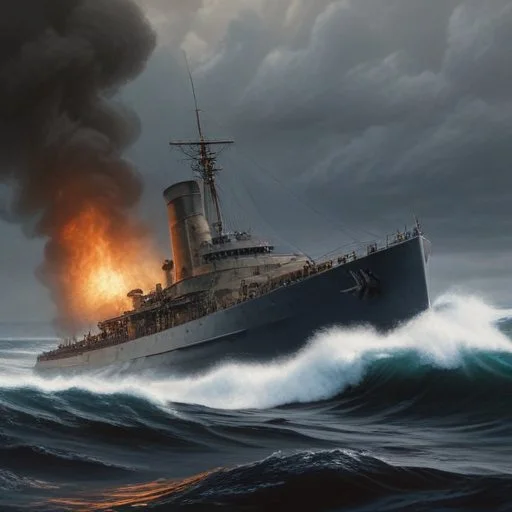
This swift and devastating attack, orchestrated by Lieutenant Otto Weddigen, would expose the vulnerability of even the mighty British Navy to the emerging menace of underwater warfare, proving that the era of surface dominance was about to come to an end.
As World War I erupted in August 1914, the North Sea became a vital battleground, with both the British and German navies vying for control of the strategic waterway. The British Navy, esteemed for its centuries-long dominance, was about to face a new and unpredictable foe: the German U-boat.
Lieutenant Weddigen, a seasoned naval officer with a keen sense of strategy, had been tracking the movements of the British cruisers HMS Aboukir, HMS Hogue, and HMS Cressy, patrolling the North Sea as part of the 7th Cruiser Squadron. He knew that these aging warships, relics of a bygone era, were slow and cumbersome, making them the perfect targets for his U9's stealthy approach.
At 6:20 am on September 22, Weddigen gave the order to launch the first torpedo, striking the HMS Aboukir with precision. The cruiser, unaware of the impending doom, continued on its course, providing an opportunity for the U9 to strike again, this time sinking the HMS Hogue at 7:15 am. Just thirty minutes later, the HMS Cressy met a similar fate, slipping beneath the waves.
The U9's audacious ambush sent shockwaves throughout the naval community, forcing both the British and German navies to reevaluate their strategies. The British Admiralty, humiliated by the loss of three cruisers, swiftly implemented new convoy systems and anti-submarine measures to counter the U-boat threat.
The attack also had far-reaching cultural and social implications, as the British public, accustomed to the notion of naval invincibility, was forced to confront the harsh realities of modern warfare. The sinking of the three cruisers would become a rallying cry for the British war effort, with widespread outrage and grief fueling a surge in recruitment and patriotic fervor.
The U9's masterclass in underwater warfare would serve as a blueprint for future naval operations, as both sides adapted to the new realities of the sea. The attack marked a turning point in the development of submarines, elevating these stealthy vessels from obscure experimental craft to respected war machines.
Lieutenant Weddigen's daring exploit would earn him the Pour le Mérite, Germany's highest military honor, and cement his place in the annals of naval history as a pioneer of underwater warfare.
Lieutenant Otto Weddigen, born on September 15, 1882, in Herford, Germany, was a seasoned naval officer with a keen sense of strategy and tactics. He joined the German Navy in 1901 and quickly rose through the ranks, earning a reputation as a skilled and daring commander.
Weddigen's leadership and bravery were instrumental in the success of the U9's ambush. His ability to read the enemy's movements and capitalize on their weaknesses was unparalleled, and his decision to target the slow and cumbersome British cruisers proved to be a stroke of genius.
Despite his heroic actions, Weddigen remained humble and dedicated to his crew. He was known for his fairness, compassion, and willingness to listen, earning the respect and admiration of his fellow sailors.
The 7th Cruiser Squadron, tasked with patrolling the North Sea, was composed of three outdated British cruisers: HMS Aboukir, HMS Hogue, and HMS Cressy. These vessels, relics of a bygone era, were slow, cumbersome, and ill-equipped to face the emerging menace of U-boats.
The squadron's commander, Rear Admiral Christian, was criticized for his lack of imagination and inflexibility, sticking to outdated tactics and ignoring warnings of U-boat activity in the area.
The squadron's vulnerability was exacerbated by inadequate communication and coordination between the British Navy's various commands, allowing Weddigen and his U9 to exploit the gaps and execute their daring ambush.
The U9, a German U-boat, and the British cruisers HMS Aboukir, HMS Hogue, and HMS Cressy, represented two vastly different eras of naval warfare. The U9, a state-of-the-art submarine, was designed for stealth, speed, and agility, while the British cruisers were lumbering relics of the past, slow and cumbersome.
The U-boat's advanced torpedoes, capable of hitting targets at long range, were in stark contrast to the cruisers' outdated guns, which were limited to short-range engagements.
This contrast in technology and tactics highlights the revolutionary impact of the U-boat on naval warfare, forcing navies to adapt to the new reality of underwater combat.
The U9's successful ambush marked a major milestone in the development of submarine warfare, showcasing the potential of U-boats to disrupt naval operations. The attack demonstrated the effectiveness of advanced torpedoes, stealthy approaches, and precision targeting.
The U-boat's ability to remain undetected, even in shallow waters, highlighted the need for improved sonar and anti-submarine technologies.
The U9's feat also emphasized the importance of intelligence gathering, as Weddigen's success was partly owed to his ability to intercept and decode British communication signals.
The sinking of the three British cruisers sent shockwaves throughout the nation, evoking widespread outrage, grief, and a sense of vulnerability.
The British public, previously confident in their naval supremacy, was forced to confront the harsh realities of modern warfare, leading to increased recruitment and patriotic fervor.
The event also sparked a renewed sense of national unity, as Britons rallied behind their government and military, determined to avenge the loss and ensure victory in the war.