


The Gold Standard Act, ratified in 1900, marks a significant milestone in the United States' economic history, as it anchors the value of the US dollar to that of gold. This bold move aimed to stabilize the economy, curb inflation, and align the nation with other major economies.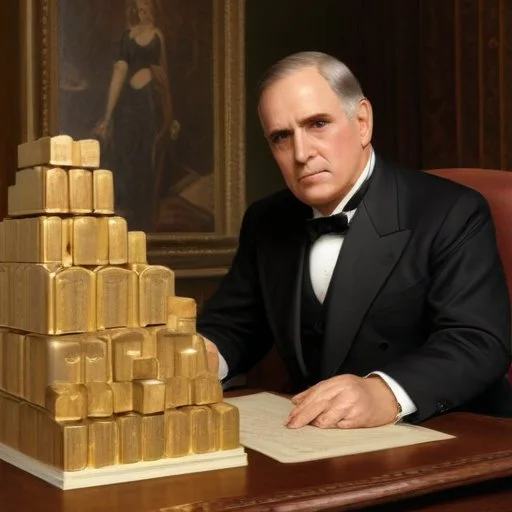
In the late 19th century, the US economy was plagued by economic instability, frequent panics, and a lack of confidence in the banking system. The government sought to address these issues by exploring alternative monetary systems, including the gold standard. The idea was to peg the value of the US dollar to a tangible asset, gold, to ensure a stable and trustworthy currency.
On March 3, 1900, President William McKinley signed the Gold Standard Act into law, cementing his legacy as a champion of economic reform. McKinley, the 25th President of the United States, was a strong advocate for the gold standard, believing it would bring prosperity and stability to the nation.
The Gold Standard Act had a profound impact on the US economy, leading to:
The Gold Standard Act marked a shift in economic thinking, as the nation moved away from a silver-based currency and towards a gold-backed standard. This change in monetary policy had far-reaching cultural and social implications, influencing the way people thought about money and the economy.
| 1890s | Economic instability and frequent panics |
| 1896 | The Gold Standard Act is introduced to Congress |
| 1900 | The Act is ratified and signed into law |
| 1901 | The US dollar becomes directly convertible to gold |
The Gold Standard Act serves as a testament to the power of economic reform, demonstrating that bold action can lead to lasting positive change. This pivotal moment in US history continues to inspire economists, policymakers, and individuals alike, reminding us that a stable economy is key to a brighter future.
President William McKinley was a strong advocate for the gold standard, believing it would bring stability and prosperity to the nation. Born in 1843, McKinley rose to prominence during the Civil War, where he served as a brevet major. He later became a congressman and governor of Ohio before being elected as the 25th President of the United States.
Mckinley's support for the gold standard was rooted in his commitment to a strong and stable economy. He believed that the gold standard would reduce inflation, increase confidence in the US currency, and align the nation with other major economies.

The Gold Standard Act had a significant impact on the US economy, leading to a reduction in inflation and an increase in economic stability. The act also led to an increase in international trade, as the US dollar became a more attractive currency.
According to some estimates, the gold standard led to a 20% increase in economic growth between 1900 and 1910. The act also led to a decrease in unemployment, as the stable economic environment created more jobs.
The Gold Standard Act marked a significant shift in the cultural and social landscape of the United States. The act symbolized a move away from the Wild West era of the 19th century and towards a more modern, industrialized economy.
The gold standard also became a symbol of American economic power and influence, reflecting the nation's growing status as a global leader.

The Gold Standard Act was ratified during a time of significant global change, with many countries adopting the gold standard as a way to stabilize their economies. The act was also seen as a way for the United States to assert its economic dominance over other nations.
In the years leading up to the act, many European countries, including the UK and Germany, had already adopted the gold standard. The US adoption of the gold standard was seen as a way to align with these economic powers and establish the US as a major player on the global stage.
Historians have debated the significance of the Gold Standard Act, with some viewing it as a bold move towards economic stability and others seeing it as a restrictive measure that limited economic growth.
Some historians have argued that the gold standard was a key factor in the economic stability of the early 20th century, while others have pointed to its limitations, including the inability to respond to economic shocks.