


The Good Friday Agreement, a watershed moment in Northern Ireland's turbulent history, marked a triumphant end to decades of sectarian violence and strife. Signed on April 10, 1998, this landmark accord brought together eight parties, including the British and Irish governments, to establish a fragile yet crucial peace in the region.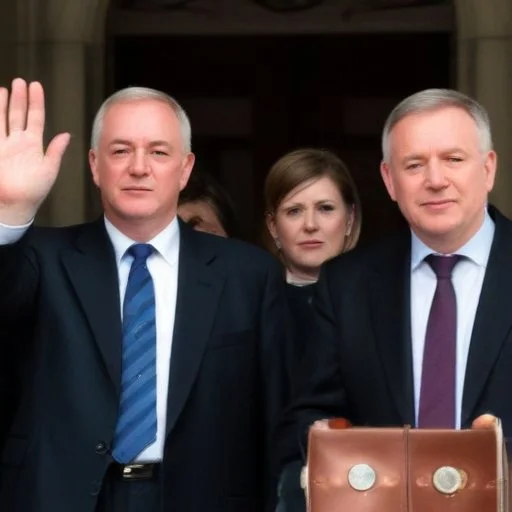
For centuries, Northern Ireland had been embroiled in a complex web of conflict, torn between the Protestant and Catholic communities. The region's troubled past was punctuated by periods of relative calm, only to be shattered by outbreaks of violence and bloodshed. The Good Friday Agreement sought to address the deep-seated grievances and fears of both communities, paving the way for a new era of cooperation and understanding.
A galaxy of prominent figures played a crucial role in brokering the Good Friday Agreement. Notable among them were:
The road to the Good Friday Agreement was long and arduous, punctuated by false starts and setbacks. The following milestones mark the journey towards this historic accord:
The Good Friday Agreement had far-reaching consequences, addressing key issues and setting a new tone for politics in Northern Ireland:
The Good Friday Agreement marked a significant cultural shift, as the region began to move away from a zero-sum game mentality towards a more inclusive and cooperative approach:
"The Agreement represents a new way of doing things – a way that values dialogue, mutual respect, and cooperation. It's a beacon of hope for a brighter future." – Tony Blair
The signing of the Good Friday Agreement was a testament to the power of diplomacy and courage in the face of seemingly intractable conflict. As the region continues to navigate the complexities of its shared history, this landmark accord remains a shining example of what can be achieved when parties put aside their differences to forge a better future.
The Good Friday Agreement was the culmination of centuries of struggle and negotiation between the British and Irish governments, as well as the nationalist and unionist communities in Northern Ireland. The roots of the conflict can be traced back to the 12th century, when the British monarchy first sought to assert its dominance over the Emerald Isle. Over the centuries, this led to waves of colonization, rebellion, and sectarian violence, which ultimately paved the way for the modern-day Troubles.
In the decades leading up to the Good Friday Agreement, the conflict had escalated to alarming levels, with bombings, shootings, and internment without trial becoming a regular occurrence. The British government's heavy-handed approach, exemplified by the Bloody Sunday massacre in 1972, had galvanized the nationalist community and created a sense of mistrust and betrayal.
The Good Friday Agreement marked a decisive shift in this trajectory, as the parties involved recognized the need for a more inclusive and participatory approach to governance.
David Trimble, the leader of the Ulster Unionist Party (UUP), played a pivotal role in the Good Friday Agreement negotiations. A quiet, unassuming figure, Trimble's courage and conviction helped to bring his party on board with the Agreement, despite vociferous opposition from hardline unionists.
Trimble's leadership was not without its challenges, however. He faced intense pressure from within his own party, as well as from the Democratic Unionist Party (DUP), which was bitterly opposed to the Agreement. Nevertheless, he remained committed to the process, recognizing that the Agreement offered a once-in-a-lifetime opportunity to bring peace and stability to Northern Ireland.
Despite his heroic efforts, Trimble's party ultimately paid the price for his bravery, as they were eclipsed by the DUP in subsequent elections.The Good Friday Agreement has been hailed as a model for conflict resolution around the world. In comparison to other peace agreements, such as the Oslo Accords or the Dayton Agreement, the Good Friday Agreement stands out for its comprehensiveness and inclusivity.
One key feature that sets the Good Friday Agreement apart is its focus on powersharing and institution-building. By creating a range of new institutions, including the Northern Ireland Assembly and the North-South Ministerial Council, the Agreement established a framework for cooperation and collaboration between former adversaries.
In contrast to other peace agreements, which often focus on ceasefire arrangements or territorial adjustments, the Good Friday Agreement went further, tackling the underlying issues that had driven the conflict in the first place.
The Good Friday Agreement had a profound impact on the cultural landscape of Northern Ireland. By acknowledging the validity of both nationalist and unionist cultural identities, the Agreement helped to create a new sense of shared ownership and belonging.
The Agreement also paved the way for a range of cultural initiatives, including the establishment of a new Irish language TV channel, TG4, and the promotion of cross-community arts projects. These initiatives helped to break down barriers and promote greater understanding and respect between the two communities.
Today, Northern Ireland is a vibrant, multicultural society, where people from all backgrounds can come together to celebrate their differences and shared humanity.The Good Friday Agreement was not just a local solution to a local problem; it was also a product of global geopolitical trends. The end of the Cold War had created a new era of international relations, characterized by a greater emphasis on cooperation and multilateralism.
In this context, the British and Irish governments, as well as the European Union, played a crucial role in facilitating the Agreement. Their combined diplomatic efforts helped to create a conducive environment for negotiation and compromise.
The Agreement also reflected a broader shift in the global political landscape, as the emphasis shifted from national sovereignty to regional integration and cooperation.