


The Good Friday earthquake, a massive magnitude 9.2 quake, struck Southcentral Alaska on March 27, 1964, claiming 125 lives and leaving a trail of destruction in its wake. It remains the most powerful earthquake ever recorded in North American history, a testament to the awe-inspiring force of nature.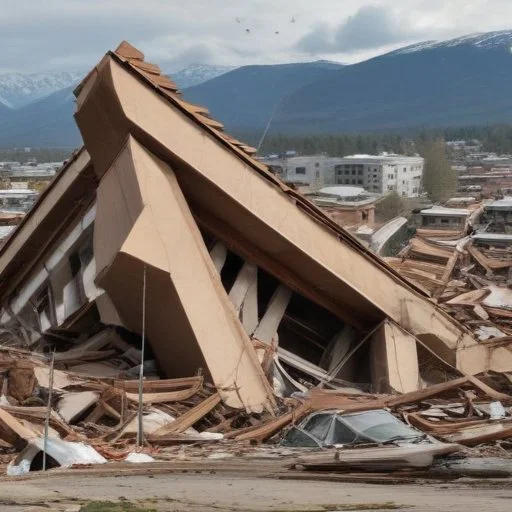
The 1960s were a geologically active period in Alaska, with several significant earthquakes occurring in the years leading up to the Good Friday event. However, the region was not adequately prepared for a disaster of this magnitude, and the lack of emergency preparedness and infrastructure would prove costly.
The Good Friday earthquake had far-reaching consequences, both in terms of human life and the environment. Some of the notable outcomes include:
The Good Friday earthquake had a profound impact on the people of Alaska, causing a sense of community and resilience to develop in the face of disaster. Some notable cultural and social influences include:
One of the most poignant aspects of the Good Friday earthquake is the collection of personal stories and anecdotes that have been shared over the years. One such account comes from a survivor who was a child at the time:
"I remember feeling like the world was ending. The ground was shaking so hard, and the sounds were like nothing I'd ever heard before. My family and I huddled together, praying that it would stop. When it finally did, we emerged to find our neighborhood in ruins. It was a day that changed me forever."The Good Friday earthquake has left an indelible mark on the scientific community, inspiring new research and innovation in the fields of seismology, geology, and emergency preparedness. Some notable educational contributions include:
The Good Friday earthquake was a devastating event that shook the very foundations of Alaska and the world. Today, it serves as a poignant reminder of the awe-inspiring power of nature and the importance of preparedness, resilience, and community. As we remember the lives lost and the destruction caused, we are also reminded of the incredible progress made in the fields of science, engineering, and emergency preparedness, ultimately making our world a safer place.
The Good Friday earthquake was not an isolated event, but rather part of a larger sequence of earthquakes that had been occurring in Alaska since the 1950s. In the five years leading up to the quake, there were several significant earthquakes in the region, including a magnitude 7.1 quake in 1959 and a magnitude 6.9 quake in 1961.
However, despite this seismic activity, the region was not adequately prepared for a disaster of the magnitude of the Good Friday earthquake. The Alaskan Aleutian Islands, where the earthquake occurred, are located on the Pacific Ring of Fire, an area of high volcanic and seismic activity. The islands are also subject to powerful ocean currents and tides, which can contribute to the formation of tsunamis.
The combination of these geological and oceanographic factors made the region particularly vulnerable to the devastating effects of the Good Friday earthquake. In the years following the quake, scientists and policymakers would work to develop new strategies for mitigating the impact of such disasters, including the establishment of early warning systems and the development of more stringent building codes.

The Good Friday earthquake had a profound impact on social dynamics in Alaska, particularly in terms of community building and resilience. In the aftermath of the disaster, people from all walks of life came together to provide aid and support to those affected.
This sense of community was particularly pronounced in the city of Anchorage, where entire neighborhoods were reduced to rubble. In the face of such devastation, residents banded together to provide shelter, food, and emotional support to those in need.
This outpouring of support and generosity helped to foster a sense of community and social cohesion in Alaska, which would have lasting effects on the state's social dynamics. In the years following the quake, there would be a renewed focus on community building and social welfare initiatives, as well as a greater emphasis on disaster preparedness and emergency response.
The Good Friday earthquake had a significant impact on the environment in Alaska, particularly in terms of coastal ecosystems. The quake triggered a massive tsunami that affected several coastal communities, causing widespread damage and loss of life.
The tsunami also had a devastating impact on marine ecosystems, with many fish and wildlife habitats destroyed or disrupted. The quake also triggered landslides and floods, which further exacerbated the environmental damage.
In the years following the quake, there would be a renewed focus on environmental conservation and sustainability in Alaska, particularly in terms of protecting coastal ecosystems and mitigating the impact of natural disasters.
The Good Friday earthquake marked a major milestone in the development of seismology and earthquake engineering. The quake was the first to be recorded by advanced seismic instruments, providing scientists with a wealth of data on the Earth's internal structure and the mechanisms of earthquake activity.
The data collected from the quake would go on to inform the development of new technologies for earthquake early warning systems and disaster mitigation. These technologies would have a profound impact on the field of seismology, enabling scientists to better understand and predict earthquake activity.
In the years following the quake, there would be a renewed focus on research and development in the field of seismology, as scientists worked to develop new and more effective technologies for mitigating the impact of earthquakes.
The Good Friday earthquake had a profound impact on the cultural landscape of Alaska, particularly in terms of art and literature. The quake inspired a new generation of artists and writers to explore themes of disaster, resilience, and community.
In the years following the quake, there would be a surge in creative output, with many artists and writers seeking to capture the essence of the disaster and its aftermath. This would include novels, poems, and works of art that would go on to become iconic representations of the event.
The quake also had a significant impact on indigenous cultures in Alaska, particularly in terms of the preservation of traditional knowledge and practices. In the years following the quake, there would be a renewed focus on preserving and promoting indigenous cultures, particularly in the face of natural disasters and environmental degradation.