


The Great Brinks Robbery, a daring heist that took place on January 17, 1950, is infamous for being one of the most ingenious and meticulously planned robberies in American history. In a brazen display of cunning and precision, eleven thieves, dubbed the Brinks Gang, stole over $2.7 million in cash, jewels, and securities from the Brinks Armored Car depot in Boston, Massachusetts.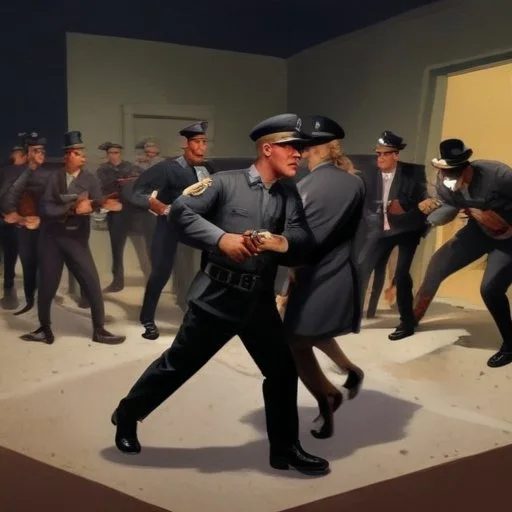
Tony Pino, a seasoned thief with a reputation for cleverness, masterminded the operation. Pino, a small-time crook from Boston's North End, had a talent for planning and executing elaborate heists. He assembled a team of skilled thieves, each with their own unique expertise, to carry out the daring robbery.
The Brinks Gang spent months casing the armored car depot, studying the guards' routines, and creating detailed maps of the facility. On the night of the robbery, they donned copied police uniforms, complete with fake badges and guns, and used duplicate keys to gain access to the vault. With military precision, they emptied the vault of its contents, leaving behind a trail of cryptic clues and no signs of forced entry.
The FBI, led by Director J. Edgar Hoover, launched an extensive investigation into the robbery. The lack of fingerprints, DNA evidence, or witnesses made it a challenging case to crack. The gang's clever use of disguises, fake identities, and coded messages further complicated the investigation.
The Great Brinks Robbery sent shockwaves across the nation, captivating the public's imagination and sparking a massive manhunt. The FBI distributed wanted posters featuring composite sketches of the suspects, and the media dubbed the thieves the "Brinks Gang." The public was both fascinated and terrified by the brazen nature of the crime.
Six months after the robbery, the FBI arrested six members of the Brinks Gang, including Tony Pino, in a dramatic sting operation. The subsequent trial was a media sensation, with the defendants facing charges of armed robbery, conspiracy, and grand larceny. In the end, eight members of the gang were convicted and sentenced to prison terms ranging from 15 to 24 years.
The Great Brinks Robbery remains one of the most daring and intriguing crimes of the 20th century. Its impact on law enforcement and the security industry was significant, leading to improved security measures and more sophisticated forensic techniques. The robbery has also inspired numerous books, films, and television shows, cementing its place in American popular culture.
The Great Brinks Robbery is a testament to the ingenuity and cunning of the human mind, a reminder that even the most seemingly impenetrable systems can be breached by those with the determination and skill to do so.
Tony Pino, the brains behind the Great Brinks Robbery, was a small-time crook with a big reputation. Born in 1913, Pino grew up in Boston's North End, where he quickly learned the skills of the street. He began his criminal career as a teenager, pulling off small-time heists and robberies.
Pino's talent for planning and execution made him a natural leader, and he soon assembled a team of skilled thieves to carry out his elaborate heists. His meticulous attention to detail and ability to think on his feet earned him the respect of his peers, and even the admiring gaze of law enforcement.
Despite his criminal exploits, Pino was a charming and charismatic figure, known for his good looks and quick wit. He was a master of disguise, able to blend in seamlessly with his surroundings, making him nearly impossible to catch.

The Great Brinks Robbery is often compared to other daring heists of the 20th century, such as the Isabella Stewart Gardner Museum heist and the Bank of America robbery.
While these robberies share similarities with the Great Brinks Robbery in terms of their brazen nature and clever execution, they differ in key respects. For example, the Isabella Stewart Gardner Museum heist, which occurred in 1990, remains unsolved to this day, whereas the Great Brinks Robbery was cracked just six months after the fact.
The Bank of America robbery, on the other hand, was notable for its use of inside help, whereas the Great Brinks Robbery was pulled off without the aid of internal collaborators.
The Great Brinks Robbery captivated the American public's imagination, inspiring a wave of media coverage and popular culture references.
In the years following the robbery, the Brinks Gang became folk heroes of sorts, with their daring heist inspiring songs, films, and books.
The robbery also had a profound impact on the security industry, leading to widespread improvements in security measures and forensic techniques.
Today, the Great Brinks Robbery remains a cultural touchstone, symbolizing the cat-and-mouse game between criminals and law enforcement.

The FBI's investigation into the Great Brinks Robbery marked a turning point in the development of forensic science.
Agents used cutting-edge techniques such as handwriting analysis and polygraph tests to link the suspects to the crime.
Forensic experts also analyzed the cryptic clues left behind by the Brinks Gang, using innovative methods to decipher their meaning.
The investigation's focus on forensic science set a new standard for future crime scenes, paving the way for modern forensic techniques.
The Great Brinks Robbery took place against the backdrop of post-war America, a time of great social and economic change.
In the late 1940s and early 1950s, the United States was experiencing a period of rapid growth and industrialization, with the economy booming and crime rates rising.
The Brinks Gang's heist was seen as a symbol of the era's excesses, a daring display of greed and audacity that captured the public's attention.
In this sense, the Great Brinks Robbery can be seen as a reflection of the tumultuous times in which it took place, a fitting symbol of an era marked by both prosperity and lawlessness.