


In the depths of the Great Depression, President Franklin D. Roosevelt took a bold step to prevent a complete economic collapse, declaring a nationwide bank holiday that shuttered all U.S. banks and froze financial transactions. This unprecedented move, announced on March 5, 1933, aimed to restore confidence in the banking system and halt the panic that had gripped the nation.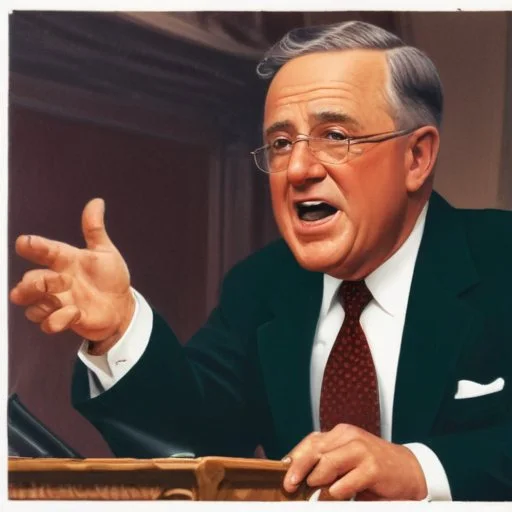
The Great Depression had left Americans reeling, with widespread unemployment, business failures, and a sharp decline in living standards. The banking system, once the backbone of the economy, had become increasingly unstable, with banks failing at an alarming rate. As deposits disappeared, panicked citizens rushed to withdraw their savings, sparking a devastating cycle of bank runs and failures.
FDR's executive order, issued on March 6, 1933, instructed all banks to remain closed until further notice, suspension of all banking transactions, and the suspension of gold and currency transactions. The decree also authorized the Secretary of the Treasury to reopen only those banks deemed solvent, ensuring that the reopened institutions would be stable and secure.
The bank holiday marked the beginning of a new era of banking reform in the United States. FDR's administration implemented a series of measures to strengthen the banking system, including the creation of the Federal Deposit Insurance Corporation (FDIC) to insure deposits, the Glass-Steagall Act to separate commercial and investment banking, and the Securities Exchange Act to regulate stock exchanges.
The bank holiday was met with a mix of anxiety and relief from the American public. While some criticized FDR's drastic action, many saw it as a necessary step to restore confidence in the banking system. The move also sparked a wave of community-driven initiatives, as citizens came together to support each other during this time of crisis.
The bank holiday of 1933 remains one of FDR's most significant decisions, marking a turning point in the nation's struggle to overcome the Great Depression. By taking bold action, FDR not only stabilized the banking system but also paved the way for a more stable and regulated economy.
"We must act and act quickly if we are to save our economic system." - Franklin D. Roosevelt, March 5, 1933
"The success of our whole national program depends on the success of our banking system." - Franklin D. Roosevelt, March 12, 1933
The Bank Holiday of 1933 had a significant impact on the economic recovery of the United States. During the holiday, the federal government took control of the banking system, allowing for a comprehensive audit of bank assets and liabilities. This led to the closure of over 5,000 insolvent banks, with deposits totaling over $3.5 billion transferred to stronger banks. The holiday also enabled the government to recapitalize the banking system, injecting $1 billion in new capital into the system.
The bank holiday also had a positive effect on the stock market, with the Dow Jones Industrial Average increasing by 67% in the months following the holiday. The holiday marked a turning point in the Great Depression, with economic indicators such as GDP and unemployment rates beginning to improve.

Michigan Governor William A. Comstock, often credited as the first to declare a bank holiday in February 1933, played a crucial role in influencing FDR's decision to declare a national bank holiday.
Comstock's bold move was seen as a necessary step to prevent the collapse of the Michigan banking system, and it caught the attention of FDR, who was struggling to address the national banking crisis. FDR's advisors later cited Comstock's initiative as a key factor in the president's decision to take similar action.
The Bank Holiday of 1933 was a bold political move that demonstrated FDR's willingness to take decisive action in the face of crisis. By declaring a national bank holiday, FDR effectively bypassed Congress, using his executive authority to address the economic emergency.
The holiday also marked a significant shift in the balance of power between the executive and legislative branches, with FDR's administration taking on a more prominent role in shaping economic policy. This move set a precedent for future presidents, who would also use executive authority to address economic crises.

The Bank Holiday of 1933 had a profound impact on American culture, as it marked a turning point in the nation's collective psyche. The holiday signaled a shift from despair to optimism, as Americans began to see a way out of the Great Depression.
The holiday also led to a renewed sense of community, as citizens came together to support each other during this time of crisis. Neighborhoods organized volunteer committees to distribute food and provide other essential services, fostering a sense of solidarity and collective purpose.
The concept of a bank holiday was not new in 1933, but FDR's declaration marked the first time such a measure had been taken on a national scale. In the years leading up to the holiday, several states had declared their own bank holidays, but these efforts were often ad hoc and lacked the coordinated response needed to address the national crisis.
The origins of the bank holiday can be traced back to the 19th century, when banks would occasionally close temporarily to prevent runs and restore confidence. However, it was not until the Great Depression that the concept of a bank holiday was applied on a large scale, with FDR's declaration marking a bold experiment in economic crisis management.