


As the Great Depression deepened, the American economy was on the brink of collapse. Bank failures had become a daily occurrence, with over 9,000 banks closing their doors between 1929 and 1933. The lack of depositor confidence, coupled with a gridlocked credit system, had brought the economy to a standstill.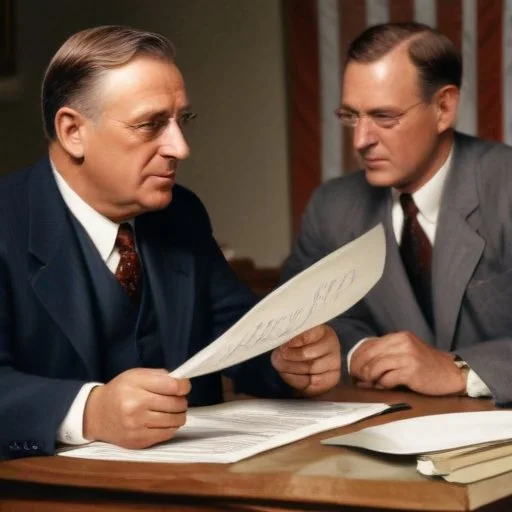
The Emergency Banking Act marked a significant shift in the government's role in the economy, paving the way for a series of reforms that would shape America's economic future. By taking bold action, Roosevelt demonstrated his commitment to addressing the nation's economic woes, establishing himself as a champion of change and earning the trust of the American people.
The Emergency Banking Act's success can be measured by its immediate impact: within a week, confidence was restored, and many banks reopened their doors. The Act's passage also set the stage for subsequent New Deal reforms, including the Glass-Steagall Act, the Federal Deposit Insurance Corporation (FDIC), and the Securities Exchange Commission (SEC). Today, the Emergency Banking Act is remembered as a vital step in stabilizing the American economy and cementing Roosevelt's legacy as a visionary leader.
"When you come to the end of your rope, tie a knot and hang on." - Franklin D. Roosevelt
| March 4, 1933 | FDR takes office, inheriting an economy in crisis |
| March 9, 1933 | Emergency Banking Act submitted to Congress |
| March 13, 1933 | Act passes Congress, marking the first New Deal policy |
| March 15, 1933 | solvent banks begin to reopen, restoring depositor confidence |
Franklin D. Roosevelt, the 32nd President of the United States, was a leader like no other. With his charismatic personality and unwavering determination, he steered the nation through its darkest hour, the Great Depression. Born on January 30, 1882, in Hyde Park, New York, Roosevelt came from a wealthy family but was not immune to personal struggles, having contracted polio in 1921. Despite this, he remained resolute in his pursuit of public service, serving as the Governor of New York before assuming the presidency in 1933.
Roosevelt's leadership style was characterized by his ability to empathize with the masses and his willingness to take bold action. His New Deal policies, including the Emergency Banking Act, were a testament to his vision for a more equitable society. Through his leadership, he restored hope to a nation on the brink of collapse and cemented his legacy as one of America's greatest presidents.

The Emergency Banking Act of 1933 had a profound impact on the American economy. By restoring confidence in the banking system, the Act helped to increase the money supply, facilitating economic growth and job creation. Between 1933 and 1936, the GDP grew by over 40%, and unemployment rates decreased significantly. The Act also paved the way for subsequent New Deal reforms, which further stimulated economic recovery.
The Act's impact was not limited to the short term. It established the Federal Deposit Insurance Corporation (FDIC), which provided deposit insurance and protected depositors' funds. This move helped to maintain stability in the banking system, preventing future bank runs and promoting long-term economic growth.
The Emergency Banking Act of 1933 marked a turning point in American cultural history. It symbolized the government's commitment to addressing the needs of the common citizen, rather than just the wealthy elite. The Act's passage was met with widespread relief and optimism, as people began to see a glimmer of hope in the midst of the Great Depression.
The Act also had a profound impact on American art and literature. The era saw a surge in creative works that reflected the nation's struggles and triumphs. Writers like John Steinbeck and Langston Hughes, and artists like Dorothea Lange and Walker Evans, captured the essence of the Depression era, producing works that continue to resonate with audiences today.

The Emergency Banking Act of 1933 was enacted amidst a global economic downturn. The Great Depression had far-reaching consequences, affecting economies worldwide. The Act's passage was closely watched by other nations, who were grappling with similar economic challenges.
The Act's success served as a model for other countries, demonstrating the effectiveness of bold government intervention in stabilizing the economy. It also marked a shift in the global economic landscape, as the United States began to assume a more prominent role in international economic affairs.
The Emergency Banking Act of 1933 was the culmination of years of economic strife and government inaction. The stock market crash of 1929 had triggered a wave of bank failures, and by 1933, the situation had reached crisis point. President Herbert Hoover's policies had failed to stem the tide, and the economy was on the brink of collapse.
Franklin D. Roosevelt's election in 1932 marked a turning point. He campaigned on a platform of bold action and reform, promising to address the nation's economic woes. The Emergency Banking Act was his first major initiative, and it set the tone for his subsequent New Deal policies.