


In the late 16th century, the Catholic Church took a giant leap forward in modernizing timekeeping with the introduction of the Gregorian Calendar, sweeping away the outdated Julian Calendar that had drifted 10 days from the celestial rhythms. This monumental reform, championed by Pope Gregory XIII, corrected the error, realigning our calendars with the Earth's orbit, and introducing a 400-year rule for leap years.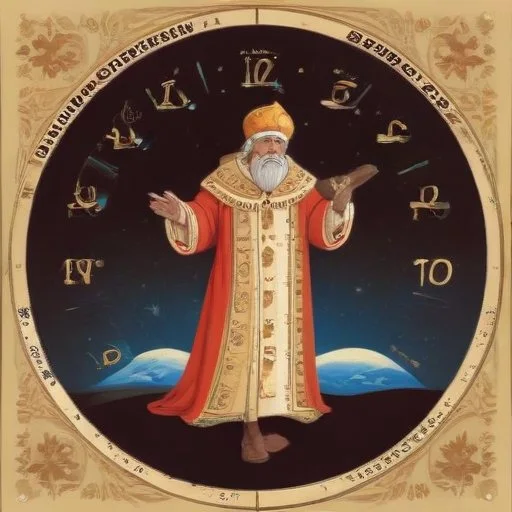
The Julian Calendar, introduced by Julius Caesar in 45 BCE, was a remarkable innovation in its time. However, it had a fundamental flaw – it underestimated the length of a solar year by approximately 11 minutes. This may seem like a small margin, but over centuries, it added up to a significant error, resulting in a 10-day discrepancy between the calendar and the actual solar year.
Pope Gregory XIII, the 226th Pope of the Catholic Church, was a visionary leader who recognized the need for a more accurate calendar. Born Ugo Boncompagni in 1502, he was a renowned scholar and diplomat who played a crucial role in reforming the Catholic Church during the Counter-Reformation.
In 1572, Pope Gregory XIII established a commission to investigate the calendar reform. The commission, comprising renowned astronomers and mathematicians, worked tirelessly to develop a new calendar that would accurately reflect the solar year. After years of deliberation, the Gregorian Calendar was finally introduced on October 15, 1582.
The new calendar introduced a 400-year rule for leap years, where years divisible by 100 are not leap years, unless they are also divisible by 400. This rule eliminated three leap years every 400 years, ensuring that the calendar would remain accurate to within one day over a period of approximately 3,300 years.
The Gregorian Calendar's impact was far-reaching, with many countries gradually adopting the new calendar over the subsequent centuries. Today, it is the global standard, governing the way we schedule our lives, plan our work, and celebrate our holidays.
The Gregorian Calendar's introduction had significant cultural and social implications. It facilitated the synchronization of clocks and calendars across the world, enabling global communication, trade, and commerce. The new calendar also influenced the way people perceived time, fostering a more precise and standardized approach to scheduling and planning.
While the Gregorian Calendar was widely adopted, it was not without controversy. many Eastern Orthodox countries resisted the change, and some still use the Julian Calendar to this day. The calendar reform was also seen as an attempt by the Catholic Church to exert control over the lives of its followers.
According to legend, Pope Gregory XIII was so eager to implement the new calendar that he ordered the destruction of all Julian Calendar documents, fearing that they would confuse the faithful. This anecdote highlights the Pope's determination to modernize the Church and bring its practices in line with the latest scientific discoveries.
The Gregorian Calendar's introduction paved the way for future scientific and technological advancements. It facilitated the development of modern astronomy, navigation, and communication systems, which have had a profound impact on human history.
In conclusion, the introduction of the Gregorian Calendar by Pope Gregory XIII was a groundbreaking moment in human history, revolutionizing the way we perceive and measure time. This monumental reform has had a lasting impact on modern society, shaping the way we live, work, and interact with each other.
Pope Gregory XIII was born Ugo Boncompagni in 1502 in Bologna, Italy. As a young man, he was drawn to the study of law and philosophy, eventually becoming a renowned scholar and diplomat. He rose through the ranks of the Catholic Church, serving as the Bishop of Viesti and later as the Cardinal Secretary of State.
Gregory XIII's education and experience in diplomacy equipped him with the skills necessary to navigate the complexities of Church politics. His commitment to reform and modernization led him to prioritize the calendar reform, recognizing its significance in aligning the Church with the latest scientific discoveries.
Despite facing opposition from conservative elements within the Church, Gregory XIII persevered, driven by his vision for a more accurate and harmonious relationship between the Church and the celestial rhythms.
The Gregorian Calendar correction may have been a monumental task, but it was essential to rectify the errors accumulated over centuries. To put the scale of the correction into perspective, consider that the Julian Calendar had drifted by approximately 10 days from the celestial rhythms.
In contrast, the Gregorian Calendar has maintained an accuracy of within one day over a period of approximately 3,300 years. This remarkable achievement is a testament to the meticulous work of the commission established by Pope Gregory XIII.
The precision of the Gregorian Calendar has enabled modern societies to schedule events and plan activities with confidence, devoid of the uncertainties that plagued the Julian Calendar.The Gregorian Calendar's impact on cultural practices has been profound. The calendar's accuracy has enabled the globalization of communication, trade, and commerce, facilitating the exchange of ideas and goods across the world.
The standardization of timekeeping has also influenced the way people perceive time, fostering a more precise and coordinated approach to scheduling and planning.
The Gregorian Calendar has become an integral part of modern society, governing the way we live, work, and celebrate our holidays.
The introduction of the Gregorian Calendar paved the way for significant technological advancements in the fields of astronomy, navigation, and communication systems.
The calendar's accuracy enabled astronomers to make precise calculations, facilitating the development of modern astronomy. This, in turn, led to breakthroughs in navigation, allowing mariners and explorers to chart their courses with greater accuracy.
The Gregorian Calendar has had a profound impact on the development of modern science and technology, shaping the course of human history.Historians have long recognized the significance of the Gregorian Calendar as a turning point in the history of timekeeping. The reform marked a shift away from the traditional, empirical approach to timekeeping, embracing instead a more scientific and rational perspective.
The calendar's introduction reflects the Catholic Church's efforts to reconcile faith and reason, highlighting the complex interplay between religion and science during the Counter-Reformation.
The Gregorian Calendar has left an indelible mark on the historical record, symbolizing the triumph of reason and scientific inquiry over traditional practices.