


In the early hours of September 16, 1810, a stirring call to arms echoed through the streets of Dolores, Mexico, as Father Miguel Hidalgo y Costilla, a charismatic Catholic priest, rallied the masses to revolt against their Spanish rulers. This impassioned cry, known as the Grito de Dolores, marked the beginning of Mexico's long-fought struggle for independence, a journey that would last over a decade and ultimately reshape the nation's destiny.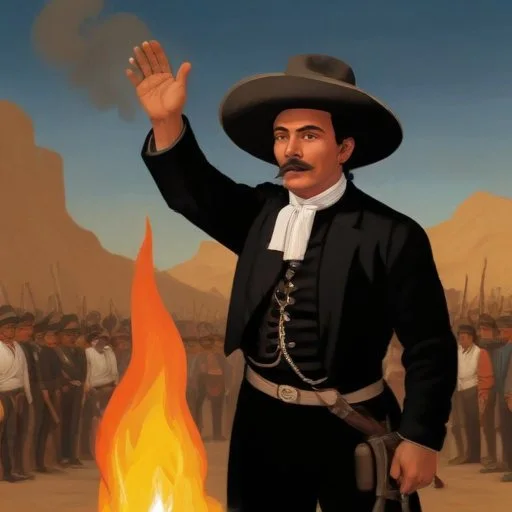
The roots of the Mexican War of Independence can be traced back to the late 18th century, when the Spanish Empire's grip on its American colonies began to falter. As the Enlightenment's ideas of liberty and equality spread, a growing sense of discontent simmered among Mexico's criollo (Mexican-born Spanish) population, who felt marginalized by the Spanish monarchy's discriminatory policies. The arrival of Napoleon Bonaparte's troops in Spain in 1808, which led to the abduction of King Ferdinand VII, further weakened the Spanish Empire's hold on its colonies.
Faced with the threat of French occupation and the growing unrest among his parishioners, Father Hidalgo, a respected educator and progressive thinker, decided to take a stand. Gathering a small group of trusted allies, including Ignacio Allende, a local militia commander, and Juan Aldama, a young soldier, Hidalgo issued his now-famous Grito de Dolores, a passionate plea for the people to rise up against their Spanish oppressors.
"¡Viva la Independencia Nacional! ¡Viva la América! ¡Muerte al mal gobierno!" ("Long live national independence! Long live America! Death to the bad government!")
The Grito de Dolores sparked a chain reaction of events that would spread like wildfire across Mexico. As the news of Hidalgo's call to arms reached surrounding towns and cities, a motley array of rebels, indigenous warriors, and disaffected criollos rallied to the cause. The ragtag army, later known as the Ejército Insurgente, marched from town to town, gathering strength and support as they went. On September 28, 1810, the insurgents captured the city of San Miguel, marking their first major victory.
The Grito de Dolores marked the beginning of Mexico's long and arduous journey towards independence, a struggle that would claim countless lives and test the nation's resolve. Today, the anniversary of the Grito de Dolores is celebrated as Mexico's Independence Day, a testament to the enduring power of Father Hidalgo's clarion call for freedom. As the father of Mexican independence, Hidalgo's legacy continues to inspire generations, a reminder that even in the darkest of times, the human spirit can ignite a beacon of hope that will burn brightly for centuries to come.
In the words of Father Hidalgo himself:
"El Dios de la Patria es el que nos concede la independencia..." ("The God of the Fatherland is the one who grants us independence...")
That cry for freedom, echoing through the streets of Dolores over two centuries ago, still resonates in the hearts of Mexicans everywhere, a powerful reminder of the nation's unwavering commitment to liberty and self-determination.
The seeds of discontent among Mexico's criollo population were sown long before the Grito de Dolores. The Enlightenment's ideas of liberty and equality had spread throughout the colonies, inspiring a growing sense of resentment towards the Spanish monarchy's discriminatory policies. The restrictions on trade, commerce, and education further fueled the fires of discontent, as the criollos felt marginalized and excluded from the wealthy and powerful positions held by the peninsulares, the Spanish-born elite.
In the decades leading up to the Grito de Dolores, a series of secretive gatherings and clandestine meetings took place, where like-minded individuals would discuss the possibility of independence from Spain. These gatherings, often held in private homes and under the guise of social events, allowed the criollos to share their grievances and forge alliances that would eventually give rise to the insurgency.
Father Hidalgo, a charismatic and well-respected figure, was part of this underground movement. His progressive ideas and advocacy for social justice resonated with the criollos, who saw him as a beacon of hope in their struggle for independence. The Grito de Dolores was the culmination of years of simmering discontent, and it marked the beginning of a long and bloody struggle for Mexico's freedom.

Father Miguel Hidalgo y Costilla was a complex and multifaceted individual, driven by a deep sense of compassion, justice, and patriotism. Born in 1753, Hidalgo was a member of the criollo class, and his upbringing and education instilled in him a strong sense of morality and social responsibility.
As a Catholic priest, Hidalgo was known for his progressive views on education, advocating for the establishment of schools and educational institutions that would provide opportunities for the marginalized and impoverished. His love for literature and poetry further solidified his reputation as a man of letters, and his writings often reflected his concerns for social justice and human rights.
Despite his pacifist nature, Hidalgo was driven by a sense of duty to his people and his country, and he was willing to make the ultimate sacrifice in the pursuit of freedom and independence. His execution in 1811 marked the end of an era, but his legacy as the "Father of Mexican Independence" continues to inspire generations to this day.
The Grito de Dolores had a profound impact on Mexico's cultural identity, resonating deeply with the nation's collective psyche. The cry for freedom and independence became an anthem for the Mexican people, symbolizing their struggle for self-determination and national pride.
The anniversary of the Grito de Dolores is celebrated as Mexico's Independence Day, a festive occasion marked by parades, music, and traditional foods. The iconic image of Father Hidalgo, with his raised fist and passionate cry, has become an enduring symbol of Mexican nationalism, adorning everything from coins to t-shirts.
The Grito de Dolores has also inspired countless works of art, literature, and music, cementing its place in Mexico's rich cultural heritage. From ranchera ballads to revolutionary murals, the cry for freedom continues to echo through the nation's cultural landscape, a testament to the power of Father Hidalgo's clarion call.

The Grito de Dolores took place against the backdrop of a tumultuous global landscape, with Napoleon Bonaparte's troops occupying Spain and the Spanish Empire's grip on its American colonies beginning to falter. The arrival of French troops in Spain in 1808 led to the abduction of King Ferdinand VII, further weakening the Spanish Empire's hold on its colonies.
The Haitian Revolution, which had achieved independence in 1804, served as a beacon of hope for Latin American independence movements, inspiring leaders like Father Hidalgo to take up the mantle of rebellion. The Grito de Dolores was part of a broader wave of independence movements sweeping across the Americas, as nations from Argentina to Venezuela sought to break free from European colonial rule.
The Grito de Dolores marked a turning point in the Spanish Empire's decline, as the once-mighty empire began to fragment and crumble. The repercussions of the Grito de Dolores rippled across the globe, shaping the course of modern history and cementing Mexico's place as a sovereign nation.
Father Hidalgo's cry for freedom was rooted in a profound sense of philosophical and ideological conviction. As a Catholic priest, Hidalgo was deeply committed to the principles of social justice and human dignity, which he saw as core aspects of Christian teachings.
Hidalgo's vision of an independent Mexico was informed by Enlightenment ideas of liberty, equality, and democracy, which he saw as essential for human flourishing. His advocacy for education and social reform was driven by a sense of moral obligation to promote the common good and alleviate poverty and suffering.
The Grito de Dolores marked a significant turning point in Mexico's philosophical and ideological trajectory, as the nation began to forge its own path towards modernity and self-determination. Hidalgo's legacy continues to inspire Mexicans to this day, serving as a powerful reminder of the enduring power of ideas and ideals to shape the course of human history.