


In the heart of Poland, a sinister plan was unfolding, one that would etch the darkest chapter in human history. On July 22, 1942, the Grossaktion Warsaw, a systematic deportation of Jews from the Warsaw ghetto, began, marking the commencement of one of the most heinous crimes against humanity.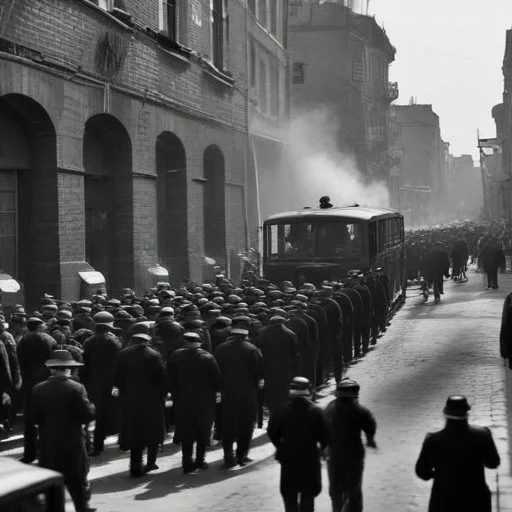
As the Nazi regime tightened its grip on Europe, the Warsaw ghetto, the largest and most notorious of all, became a symbol of Jewish resilience and hope. However, behind the barbed wires and crumbling buildings, a sinister force was brewing. SS and police leader Jürgen Stroop, driven by an insatiable hunger for power and hatred, orchestrated the Grossaktion Warsaw, a meticulous plan to eradicate the Jewish population.
Amidst the chaos and destruction, a few individuals etched their names in the annals of history. Adam Czerniaków, the chairman of the Jewish Council, took his own life in protest of the Nazi's brutality, while Irena Sendler, a Polish social worker, risked her life to smuggle over 2,500 Jewish children out of the ghetto.
The Grossaktion Warsaw claimed the lives of over 300,000 Jews, leaving behind a void that can never be filled. However, the resilience and courage of those who fought against the Nazi regime serve as a beacon of hope, inspiring generations to come.
In the aftermath of the tragedy, the world was left to confront the horrors of the Holocaust, a stark reminder of the dangers of hate, intolerance, and silence. Today, the legacy of the Grossaktion Warsaw serves as a warning, urging us to stand against injustice and protect the dignity of human life.
"I remember the screams of the children, the cries of the mothers, the silence of the fathers. It was a world gone mad." - Mary Berg, Warsaw Ghetto Survivor
"We must never forget the lessons of the past, lest we repeat the mistakes of history." - Irena Sendler, Polish social worker and Righteous Among the Nations
The Grossaktion Warsaw awakened the world to the atrocities of the Holocaust, galvanizing international opinion and paving the way for the Nuremberg trials. Today, the event serves as a powerful reminder of the importance of tolerance, empathy, and humanity, inspiring us to create a world where such horrors can never occur again.
On the eve of the Grossaktion Warsaw, the Warsaw ghetto was a hub of clandestine activity, with underground organizations and resistance groups secretly planning to counter the Nazi regime's brutality. One such group, the Jewish Combat Organization (ŻOB), comprised of brave young men and women, had been training in secret, awaiting the perfect moment to strike back.
As the Nazi forces closed in, the ŻOB launched a series of daring attacks, targeting German patrols and military installations. Despite being vastly outnumbered and outgunned, the ŻOB fighters managed to inflict significant casualties on the enemy, buying precious time for their fellow Jews to escape or go into hiding.
Their bravery, though ultimately doomed, inspired a generation of young Jews to resist the Nazi occupation, paving the way for future uprisings and rebellions throughout Europe.
Adam Czerniaków: The Chairman's Dilemma
Adam Czerniaków, the chairman of the Jewish Council, was faced with an impossible choice as the Grossaktion Warsaw unfolded. Should he comply with the Nazi demands, risking the lives of thousands, or resist, potentially sparking widespread violence and bloodshed?
Czerniaków's eventual decision to take his own life, rather than enact the Nazi's orders, was a testament to his unwavering commitment to his people. His sacrifice, though tragic, served as a beacon of hope, inspiring others to resist the Nazi regime's brutal policies.
The Warsaw Ghetto Diary of Mary Berg, a heart-wrenching account of life inside the ghetto, provides a unique glimpse into the daily struggles and triumphs of its inhabitants.
Mary Berg's diary, which spanned from 1939 to 1942, chronicles the gradual decline of the ghetto, from the early days of relative normalcy to the desperate, final days of the Grossaktion Warsaw.
Her vivid descriptions of the ghetto's crumbling infrastructure, the scarcity of food and medicine, and the resilience of its people humanize the statistics, putting a face to the hundreds of thousands affected by the tragedy.
The Grossaktion Warsaw had a profound impact on Polish culture, inspiring a new wave of artistic expression and literary works.
In the aftermath of the tragedy, writers like Czesław Miłosz and poets like Julian Tuwim reflected on the horrors they witnessed, channeling their emotions into powerful, anti-war literature.
The event also influenced the development of Polish cinema, with films like A Generation (1955) and Kanal (1957) addressing the trauma and sacrifice of the Warsaw Uprising.
The Grossaktion Warsaw exposed the complicity of the Polish government-in-exile in the persecution of its own Jewish citizens, sparking a heated debate about the nation's responsibility to protect its minorities.
In the aftermath of the tragedy, the Polish government faced mounting pressure to acknowledge its role in the Holocaust, ultimately leading to the establishment of the Polish Council for the Commemoration of the Holocaust in 1983.
The event also influenced Poland's foreign policy, with the country becoming a champion of human rights and minority protection in the decades that followed.