


The 1976 Guatemala-Honduras earthquake is one of the deadliest natural disasters in Central American history, claiming the lives of over 22,000 people and leaving hundreds of thousands homeless. This catastrophic event is remembered for its sheer destructive power, which ravaged entire villages and towns, leaving behind a trail of devastation and despair.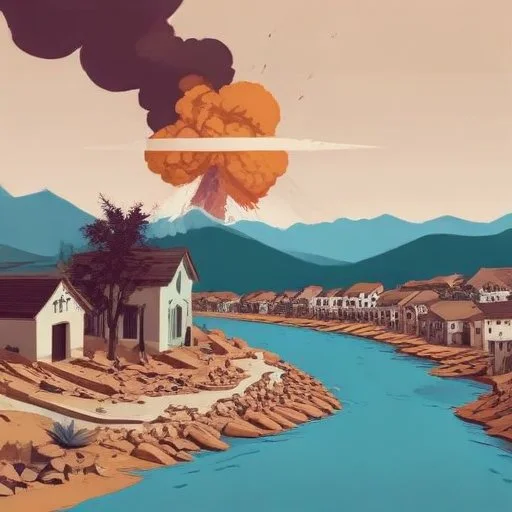
Located in the Pacific Ring of Fire, Guatemala and Honduras are inherently prone to earthquakes. The region's unique geography, with its volcanic mountains and fertile valleys, is a result of tectonic plate movement. The Motagua Fault, which runs through Guatemala, is a major transform fault that has shaped the country's landscape over millions of years.
On a typical Thursday morning, February 4, 1976, the ground beneath Guatemala and Honduras began to shake violently. The earthquake, measuring 7.5 on the Richter scale, struck at 3:01 a.m. local time. The epicenter was located in the Chimaltenango department of Guatemala, with the nearby town of Sanarate being one of the worst affected.
The earthquake triggered widespread destruction, with buildings crumbling, roads cracking, and bridges collapsing. The towns of Sanarate, San Marcos, and Chiquimula were almost completely flattened. The shaking earth also triggered massive landslides, which blocked rivers, creating lakes that drowned entire villages. The Guatemalan capital, Guatemala City, was also severely affected, with many historic buildings and landmarks reduced to rubble.
The earthquake left a staggering 750,000 people homeless, with many more injured or stranded. The Guatemalan government, led by President Kjell Eugenio Laugerud García, declared a state of emergency and appealed for international aid. The response was overwhelming, with countries from around the world sending relief teams, food, and medical supplies.
The road to recovery was long and arduous. The Guatemalan government, with the help of international organizations, launched a massive reconstruction effort. New buildings were designed to be earthquake-resistant, and infrastructure was rebuilt to withstand future seismic activity. The earthquake also led to significant changes in building codes and disaster preparedness policies in both Guatemala and Honduras.
The 1976 Guatemala-Honduras earthquake was a wake-up call for both countries, highlighting the importance of disaster preparedness and mitigation. The tragedy led to significant advances in seismology and earthquake engineering, with Guatemala becoming a leader in the field. Today, the country is better equipped to handle seismic activity, and its people remain vigilant, remembering the devastating power of the earth.
The 1976 Guatemala-Honduras earthquake will forever be etched in the memories of those who lived through it. It was a tragedy that brought destruction and despair, but also forged a sense of community and resilience that continues to inspire generations to come.
The 1976 Guatemala-Honduras earthquake was not an isolated incident. The region has a long history of seismic activity, with major earthquakes occurring in 1510, 1717, and 1902. These events have shaped the local culture and architecture, with buildings designed to withstand earthquakes becoming a staple of the region.
In the centuries leading up to the 1976 earthquake, the region experienced a period of relative calm, leading to a sense of complacency among the population. This complacency was shattered on February 4, 1976, when the devastating earthquake struck.

The 1976 Guatemala-Honduras earthquake had a devastating impact on the economies of both countries. The immediate cost of the damage was estimated to be around $1.1 billion, with long-term costs totaling over $3 billion.
The earthquake also had a significant impact on the region's agriculture, with coffee and banana crops being particularly hard hit. The resulting shortage of these staple crops led to a sharp increase in food prices, further exacerbating the economic hardship faced by the population.
President Laugerud García was a key figure in the aftermath of the 1976 Guatemala-Honduras earthquake. His swift response to the disaster, including declaring a state of emergency and appealing for international aid, helped to mitigate the damage.
A former military officer, President Laugerud García brought a sense of discipline and organization to the relief efforts, helping to coordinate the distribution of aid and the rebuilding of infrastructure.

The 1976 Guatemala-Honduras earthquake marked a significant turning point in the development of earthquake-resistant technology. In the aftermath of the disaster, engineers and scientists from around the world converged on the region to study the damage and develop new technologies to mitigate the impact of future earthquakes.
One of the key innovations to emerge from this research was the development of seismic-resistant building materials and design techniques. These advances have since been adopted globally, saving countless lives and reducing the economic impact of earthquakes.
The 1976 Guatemala-Honduras earthquake had a profound impact on the cultural identity of the region. The disaster brought communities together, fostering a sense of unity and solidarity in the face of tragedy.
In the years following the earthquake, a thriving arts scene emerged, with musicians, writers, and artists using their work to process and reflect on the disaster. This cultural response has become an integral part of the region's heritage, serving as a testament to the resilience and creativity of the Guatemalan and Honduran people.