


In the winter of 1996, Guatemala embarked on a journey of healing and transformation as its government and the Guatemalan National Revolutionary Unity (URNG) signed a historic peace accord, bringing an end to 36 years of brutal civil war. This landmark agreement marked a major turning point in the country's turbulent history, silencing the guns and paving the way for a brighter future.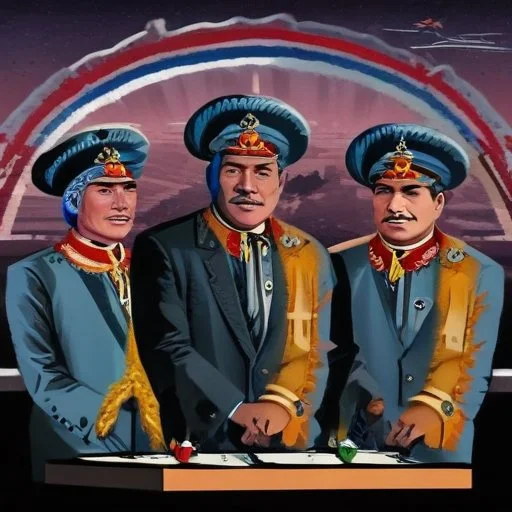
The Guatemalan Civil War, which began in 1960, was a conflict that ravaged the nation, claiming the lives of over 200,000 people and displacing millions. It was a war that witnessed human rights abuses, forced disappearances, and the destruction of entire communities. The war was fought between the government, backed by the military, and the URNG, a left-wing guerrilla organization seeking social and economic reforms.
The path to peace was long and arduous, with numerous failed attempts at negotiations. However, in the early 1990s, a new wave of optimism swept the nation as talks resumed under the auspices of the United Nations. The Norwegian government played a crucial role in facilitating the negotiations, and in 1994, the government and the URNG agreed to a framework for peace talks.
On December 29, 1996, Guatemalan President Álvaro Arzú and URNG leader Comandante Rolando Morán signed the final peace accord in a ceremony attended by world leaders and dignitaries. The agreement established a truth commission to investigate human rights abuses, recognized the rights of indigenous communities, and paved the way for significant political and social reforms.
The peace accord was built on four pillars: democratization and participation, human rights, the situation of indigenous peoples, and socioeconomic development. The agreement established a new electoral law, strengthened the judiciary, and recognized the rights of indigenous communities to their lands and cultural identity.
The signing of the peace accord marked a new chapter in Guatemalan history, one of hope and renewal. It was a testament to the power of negotiation and diplomacy, and a reminder that even in the darkest of times, peace is always possible. As Comandante Morán so eloquently put it, "The war is over, but the struggle for a better Guatemala begins."
In the years that followed, Guatemala made significant strides in consolidating its democracy and addressing the social and economic inequalities that had fueled the war. The country established a truth commission to investigate human rights abuses, and implemented policies to address the historical marginalization of indigenous communities.
Today, Guatemala stands as a beacon of hope in a region often plagued by conflict and violence. Its journey to peace serves as a powerful reminder that even the most intractable conflicts can be resolved through dialogue, negotiation, and a commitment to peace.
As Guatemala looks to the future, it does so with a renewed sense of purpose and hope. The country's journey to peace serves as a powerful reminder that even in the darkest of times, peace is always possible, and that the power of human resilience and determination can overcome even the most formidable obstacles.
The road to peace was paved with the efforts of various international players, including the United Nations, the Norwegian government, and other nations that facilitated the negotiations. One of the key milestones in the peace process was the establishment of the Esquipulas Accord in 1987, which provided a framework for democratization and peace in Central America. This accord was signed by the presidents of Guatemala, El Salvador, Honduras, Nicaragua, and Costa Rica, and it marked a significant shift in the region's approach to conflict resolution.
In the lead-up to the final peace accord, the URNG and the Guatemalan government engaged in several rounds of talks, with the URNG insisting on the need for fundamental reforms to address the country's social and economic inequalities. The government, on the other hand, was keen to maintain its grip on power and resist any significant changes to the country's political and economic structures.
The negotiations were often tense and protracted, with both sides engaging in brinkmanship and brinksmanship. However, the presence of international mediators and observers helped to keep the talks on track, and eventually, the two sides reached a compromise.
Comandante Rolando Morán, the leader of the URNG, was a complex and enigmatic figure who played a crucial role in the peace process. Born in 1929, Morán was a veteran of the Guatemalan Civil War, having joined the guerrilla movement in the 1960s. Throughout his life, he was driven by a deep commitment to social justice and a desire to bring about fundamental change to Guatemalan society.
Morán's leadership of the URNG was marked by a combination of pragmatism and idealism. He was a skilled negotiator who was able to navigate the complexities of the peace process, while remaining committed to the core principles of the guerrilla movement. His signature on the final peace accord was a testament to his willingness to compromise and his commitment to ending the war.
Morán's legacy continues to be felt in Guatemala today, with many regarding him as a national hero who played a key role in bringing about peace and reconciliation.The Guatemalan peace process shares some similarities with other peace processes in Central America, such as the Salvadoran peace process, which was facilitated by the United Nations in the early 1990s. In both cases, the UN played a crucial role in mediating between the government and the guerrilla movement, and in providing a framework for democratization and reconciliation.
However, the Guatemalan peace process was distinct in several ways. Unlike El Salvador, where the guerrilla movement was largely unified, the URNG was a loose coalition of different groups with competing interests and ideologies. This made the negotiations more complex and challenging, as the URNG had to balance the competing demands of its different constituents.
Despite these challenges, the Guatemalan peace process serves as a model for conflict resolution in other parts of the world. Its emphasis on democratization, human rights, and social justice provides a template for other countries seeking to emerge from conflict and build a more peaceful and equitable society.
The Guatemalan peace process had a profound impact on the country's cultural landscape. The recognition of indigenous rights and the establishment of a truth commission to investigate human rights abuses helped to promote a sense of reconciliation and healing.
The peace process also gave rise to a new wave of artistic and cultural expression, as Guatemalans sought to come to terms with their traumatic past and build a more hopeful future. This included a proliferation of murals, music, and literature that celebrated the country's rich cultural heritage and expressed a sense of optimism and renewal.
Today, Guatemala is a vibrant cultural center, with a thriving arts scene that reflects the country's complex history and its hopes for the future.The Guatemalan peace process had a significant impact on the country's economy, as the end of the civil war led to a surge in foreign investment and economic growth. The establishment of a truth commission and the recognition of indigenous rights helped to promote a sense of stability and confidence, which in turn attracted foreign investors and stimulated economic activity.
The peace process also led to a significant increase in international aid and assistance, as the international community sought to support Guatemala's transition to peace and democracy. This included a range of economic and development programs, which helped to promote social and economic development in the country.
Today, Guatemala is an important player in regional and global trade, with a growing economy that is driven by a combination of agriculture, manufacturing, and tourism.