


On September 24, 1973, Guinea-Bissau etched its name in the annals of history as it boldly declared its independence from Portugal, becoming the first African country to break free from Lisbon's colonial grasp. This pivotal moment marked the culmination of decades of resistance, bloodshed, and sacrifice, as the nation fought tirelessly for self-determination and the right to forge its own destiny.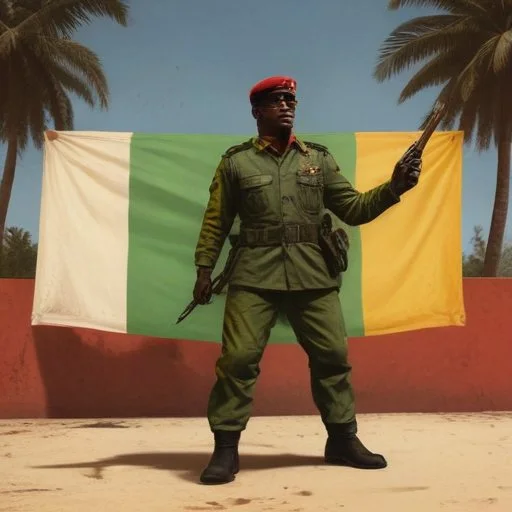
Guinea-Bissau's path to independence was paved by a long history of resistance against Portuguese colonial rule. The seeds of rebellion were sown in the early 20th century, when local chiefs and intellectuals began to organize against the oppressive regime. However, it wasn't until the 1950s and 1960s that the movement gained momentum, with the emergence of charismatic leaders like Amlcar Cabral.
Amlcar Cabral, a Guinea-Bissauan intellectual and poet, is widely regarded as the architect of the country's independence movement. Cabral's vision for a unified and independent Guinea-Bissau inspired a generation of freedom fighters, and his unwavering commitment to the cause earned him the respect and admiration of his people.
The road to independence was far from peaceful. The Portuguese colonial powers responded to the growing resistance with brutal force, committing atrocities and human rights abuses against the Guinea-Bissauan people. The conflict claimed thousands of lives, leaving entire communities displaced and devastated.
In the early 1970s, the Guinea-Bissauan rebels achieved a series of crucial military victories, capturing key towns and strategic locations. The fall of Madina do Bo, a fortified town, in 1972 marked a significant turning point in the conflict, as it signaled the beginning of the end of Portuguese dominance.
In a last-ditch effort to maintain control, the Portuguese attempted to negotiate with the Guinea-Bissauan leaders, offering concessions and promises of autonomy. However, Cabral and his comrades remained resolute, refusing to compromise on their demand for full independence.
On September 24, 1973, Guinea-Bissau proudly declared its independence, with Cabral proclaiming, "We are not asking for permission to be free; we are taking our freedom." The declaration marked a moment of jubilation and triumph for the Guinea-Bissauan people, who had fought for generations to achieve this milestone.
In the aftermath of independence, Guinea-Bissau faced the daunting task of rebuilding and reconstruction. The country's infrastructure lay in shambles, and its economy was in tatters. However, the Guinea-Bissauan people, fueled by their hard-won freedom, set about the task of nation-building with determination and resilience.
Guinea-Bissau's independence declaration sent shockwaves across Africa, inspiring anti-colonial movements and independence struggles across the continent. Today, the country's struggle for freedom serves as a beacon of hope and a testament to the indomitable human spirit.
In the words of Amlcar Cabral, "Our struggle is not just for independence, but for the people's right to be free, to live with dignity, and to build their own future."
Amlcar Cabral's Early Life
Amlcar Cabral was born on September 12, 1924, in Bafatá, Guinea-Bissau, to Cape Verdean parents. His family's experiences under colonial rule greatly influenced his anti-colonial sentiments from an early age. Cabral's education in Lisbon and later in France exposed him to Marxist ideology, which shaped his revolutionary thinking.
Cabral's involvement in the struggle for independence began in the 1950s, when he co-founded the African Party for the Independence of Guinea and Cape Verde (PAIGC). His leadership and vision inspired a generation of freedom fighters, earning him the respect and admiration of his people.

The Geopolitical Significance of Guinea-Bissau's Independence
The independence of Guinea-Bissau in 1973 had far-reaching implications for the global fight against colonialism and imperialism. The country's struggle inspired anti-colonial movements across Africa, Asia, and Latin America, marking a significant shift in the global balance of power.
The victory of Guinea-Bissau also led to the collapse of Portugal's colonial empire, paving the way for the independence of other Portuguese colonies, including Mozambique, Angola, and Cape Verde.
Comparing Guinea-Bissau's Independence with Other African Nations
Guinea-Bissau's independence movement shares similarities with other African nations that fought against colonial rule. The Algerian War of Independence, the Mau Mau uprising in Kenya, and the Mozambican War of Independence all demonstrate the common themes of resistance, bloodshed, and sacrifice in the fight for self-determination.
However, Guinea-Bissau's unique experience under Portuguese colonial rule and its subsequent independence struggle set it apart from other African nations. Cabral's leadership and the PAIGC's success in uniting the Guinea-Bissauan people made the country's independence movement distinct in its own right.

The Environmental Legacy of Colonialism in Guinea-Bissau
The Portuguese colonial regime's exploitation of Guinea-Bissau's natural resources had devastating environmental consequences. Deforestation, soil erosion, and pollution depleted the country's biodiversity, threatening the livelihoods of its people.
Guinea-Bissau's independence marked a new era of environmental awareness and responsibility. The country's government has since implemented measures to restore its natural resources, conserve its forests, and promote sustainable development.
The Cultural Significance of Guinea-Bissau's Independence
Guinea-Bissau's independence marked a renaissance of cultural expression and identity. The country's struggle for self-determination inspired a new generation of artists, writers, and musicians who sought to preserve and promote Guinea-Bissauan culture.
The nation's independence also led to a renewed emphasis on traditional practices, customs, and languages, allowing the Guinea-Bissauan people to reclaim their cultural heritage and forge a distinct national identity.