


The Hama massacre, a brutal crackdown by the Syrian government on its own people, is etched in memory as one of the deadliest and most devastating events in modern Middle Eastern history. In February 1982, the ancient city of Hama, a bastion of Islamism, was reduced to rubble and its people subjected to unimaginable horrors, as President Hafez al-Assad's regime sought to quell a growing Islamist uprising.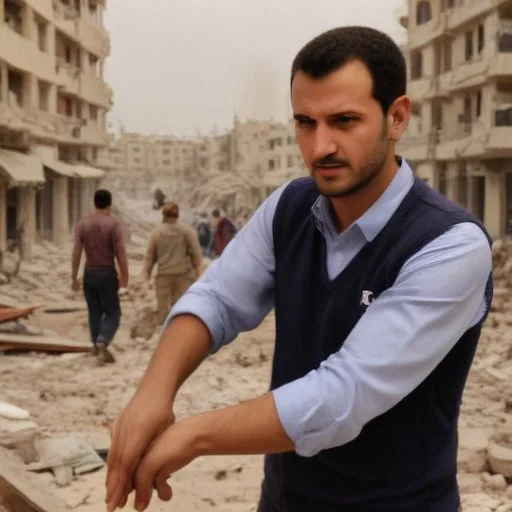
The once-thriving city of Hama, with its rich history and cultural significance, was brought to its knees as Syrian troops, under the command of President Assad, stormed the city. The city's narrow streets, lined with historic mosques and ancient architecture, became a battleground, as soldiers clashed with Islamist rebels and civilians were caught in the crossfire.
The events leading up to the massacre were marked by a series of bombings, kidnappings, and an attempted assassination of President Assad by the Muslim Brotherhood, a banned Islamist group. These acts of defiance against the Syrian government's iron-fisted rule sparked a chain reaction of violence, as the regime sought to crush the Islamist movement and maintain its grip on power.
The Hama massacre sent a chilling message to potential dissenters, cementing President Assad's grip on power and fostering an atmosphere of fear and intimidation that would shape Syria's political landscape for decades to come.
The exact number of casualties remains unknown, but estimates suggest that between 10,000 to 40,000 people were killed, with many more injured or displaced. The city's infrastructure was left in ruins, with entire neighborhoods reduced to rubble and essential services disrupted.
The Hama massacre would have far-reaching consequences, contributing to the radicalization of Islamist groups and fueling anti-Assad sentiment. The event would also serve as a stark reminder of the Syrian government's willingness to use brutal force to maintain its authority.
Survivors of the massacre recall the terror and chaos that gripped the city, as homes were razed, families were torn apart, and innocent civilians were slaughtered. One survivor, who wished to remain anonymous, remembered the sound of artillery fire and the stench of death that hung in the air: "I will never forget the screams of my neighbors, the cries of the wounded, and the silence of the dead."
The Hama massacre serves as a stark reminder of the dangers of authoritarianism and the devastating consequences of unchecked power. As a dark chapter in Syrian history, it stands as a testament to the resilience of the human spirit and a warning to future generations of the importance of protecting human rights and promoting democratic values.
The Hama massacre is often viewed as a pivotal moment in the historiography of modern Syria. Historians have interpreted the event as a manifestation of the Assad regime's authoritarian tendencies and its willingness to use brutal force to maintain power.
Some historians have argued that the massacre marked a turning point in the relationship between the Syrian government and the Islamist movement, leading to a prolonged period of violence and repression.
Others have suggested that the event was a consequence of the regime's failure to address the socio-economic grievances of the Syrian people, which had been simmering since the 1970s.
Hafez al-Assad, the President of Syria at the time of the Hama massacre, was a cunning and ruthless leader who would stop at nothing to maintain his grip on power.
Assad's early life was marked by poverty and hardship, which instilled in him a strong sense of determination and ambition.
He rose through the ranks of the Syrian military and eventually seized power in a bloodless coup in 1970.
Assad's regime was marked by a cult of personality, with propaganda machinery that portrayed him as a wise and benevolent leader.The Hama massacre had a devastating impact on the economy of Hama, with entire neighborhoods and businesses destroyed.
The city's infrastructure, including roads, bridges, and public services, was severely damaged, leading to a significant decline in economic activity.
The Syrian government's efforts to rebuild the city were slow and inadequate, leading to widespread poverty and unemployment.
The economic cost of the massacre is estimated to be in the billions of dollars, making it one of the costliest conflicts in Syrian history.
The Hama massacre took place against the backdrop of the Cold War, with Syria aligning itself with the Soviet Union and the Muslim Brotherhood receiving support from the United States and other Western powers.
The event was influenced by the regional geopolitics of the time, with Syria's rival, Iraq, vying for influence in the region.
The Iranian Revolution of 1979 had also emboldened Islamist groups across the Middle East, leading to increased tensions between Syria and its neighbors.
The Hama massacre was a critical moment in the complex web of alliances and rivalries that defined the Middle East during the Cold War era.The Hama massacre had a profound cultural impact on Syria, with the event symbolizing the brutal suppression of political dissent and the erosion of civil liberties.
The massacre led to a flourishing of underground cultural movements, including literature, art, and music, as Syrians sought to express their dissent and resistance.
The event also led to a shift in the cultural identity of Hama, with the city's rich history and heritage coming under threat from the regime's efforts to erase its Islamist past.
The Hama massacre has become a powerful symbol of resistance and defiance in Syrian cultural memory.