


On a somber morning in September 1977, Hamida Djandoubi, a Tunisian national, became the last person to be executed by guillotine in France, marking the end of a gruesome era in the country's capital punishment history. This pivotal event not only brought an end to the use of the guillotine, but it also sparked a national debate on the morality and effectiveness of capital punishment.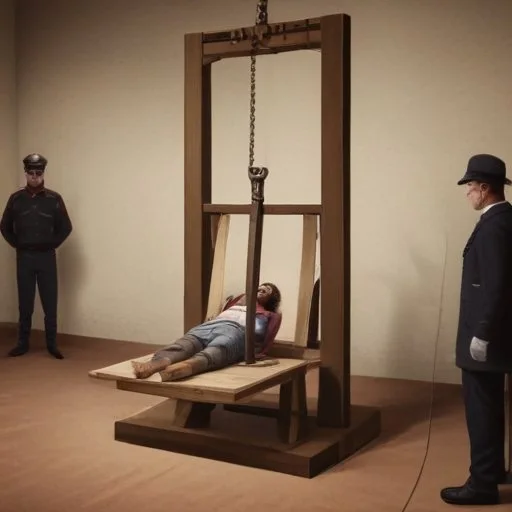
In July 1974, Djandoubi brutally murdered and tortured his former girlfriend, Elisabeth Bousquet, in Marseille. The heinous crime sent shockwaves through the community, and Djandoubi was quickly apprehended, tried, and convicted of the crime. The trial was swift, and Djandoubi was sentenced to death, a fate that would soon become a reality.
The guillotine, once a symbol of French justice, had been in use since the French Revolution. However, its use had become increasingly controversial, with many arguing that it was a cruel and inhumane method of execution. Djandoubi's execution would be the last time the guillotine would fall in France, marking the end of a chapter in the country's history.
Marcel Chevalier, the chief executioner of France, would carry out Djandoubi's sentence. Chevalier was a controversial figure, known for his unwavering commitment to his duties, despite the moral implications. His role in Djandoubi's execution would be his last, and it would mark the end of a long and complex relationship between the French state and its executioners.
Djandoubi's execution sparked a nation-wide debate on the morality and effectiveness of capital punishment. Many argued that the method of execution was inhumane, while others believed that it was a necessary deterrent to crime. The debate would eventually lead to the abolition of capital punishment in France in 1981, a move that would have far-reaching consequences for the country's justice system.
The execution of Hamida Djandoubi marks a somber chapter in French history, one that highlights the complexities and controversies surrounding capital punishment. As France looks back on its past, it is clear that the guillotine's final fall was a watershed moment, one that paved the way for a more modern and humane approach to justice.
Historians have long debated the role of capital punishment in French society, with some arguing that it was a necessary evil to maintain social order, while others saw it as a brutal relic of the past. The execution of Hamida Djandoubi marked a turning point in this debate, as the country began to question the morality and effectiveness of the guillotine.
The guillotine, once seen as a symbol of revolutionary ideals, had become a symbol of state-sanctioned violence. The device, designed to be a more humane form of execution, had become a tool of terror, used to suppress dissent and maintain state control.
As France looked back on its history, historians began to reexamine the role of capital punishment in shaping the country's identity. The debate sparked by Djandoubi's execution would continue to rage on, with many arguing that the guillotine's final fall marked a new era of enlightenment and humanitarianism in France.

Marcel Chevalier, the chief executioner of France, was a complex and controversial figure. Born in 1921, Chevalier came from a long line of executioners and had carried out his first execution at the age of 25.
Despite his role in carrying out the state's most severe sentences, Chevalier was known for his charisma and charm. He was a skilled musician and played the accordion in his spare time, earning him the nickname "The Dancing Executioner."
However, Chevalier's commitment to his duties was unwavering, and he carried out his role with a sense of duty and responsibility. His involvement in Djandoubi's execution would be his last, and he would go on to write a memoir about his experiences as an executioner.
The execution of Hamida Djandoubi had a profound impact on French culture, sparking a national debate on the morality and effectiveness of capital punishment. The event was widely covered in the media, with many newspapers and magazines publishing graphic details of the execution.
The debate sparked by Djandoubi's execution would continue to rage on, with many artists and intellectuals weighing in on the issue. The event inspired a wave of anti-death penalty activism, with many calling for the abolition of capital punishment.
The cultural impact of Djandoubi's execution was further cemented by the publication of a book by French writer and philosopher, Robert Badinter, who had witnessed the execution and was deeply affected by it. The book, titled "L'Exécution," would go on to become a bestseller and help to galvanize public opinion against capital punishment.

The debate sparked by Djandoubi's execution was not just about the morality of capital punishment, but also about the philosophical underpinnings of the French justice system. Many argued that the guillotine represented a outdated and inhumane approach to justice, one that was rooted in a 19th-century notions of retribution and punishment.
Others argued that the guillotine was a necessary evil, a deterrent to crime and a symbol of state authority. However, as the debate raged on, it became clear that the guillotine's days were numbered, and that a new approach to justice was needed.
In the years following Djandoubi's execution, a new philosophical approach to justice began to take hold in France, one that emphasized rehabilitation and restorative justice over punishment and retribution. The abolition of capital punishment in 1981 marked a major milestone in this shift, and paved the way for a more modern and humane approach to justice.
The execution of Hamida Djandoubi took place against a backdrop of social and political turmoil in France. The country was still reeling from the aftermath of the May 1968 protests, and the government was grappling with rising unemployment and social unrest.
In this context, the debate sparked by Djandoubi's execution took on a broader significance, as it touched on fundamental questions about the role of the state in society and the balance between individual freedom and collective security.
The abolition of capital punishment in 1981 marked a significant shift in the French political landscape, as it signaled a move towards a more liberal and humane approach to justice. The debate sparked by Djandoubi's execution had played a crucial role in this shift, as it had forced French society to confront its own values and principles.