


In 1875, the Hawaiian Kingdom, led by King Kalākaua, took a monumental step towards shaping its future by signing a historic treaty with the United States. This landmark agreement granted the US exclusive trade rights, paving the way for increased economic cooperation and cementing Hawaii's position as a strategic partner in the Pacific.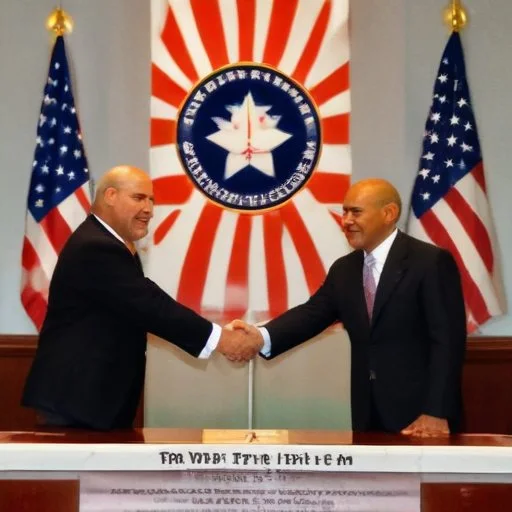
In the mid-19th century, the Hawaiian Kingdom was undergoing significant changes. The native population was facing declining numbers due to diseases introduced by foreign visitors, and the kingdom's economy was struggling to adapt to the changing global landscape. King Kalākaua, determined to ensure the survival and prosperity of his kingdom, sought to establish stronger ties with the United States, recognizing the potential benefits of increased trade and economic cooperation.
| Year | Event |
|---|---|
| 1873 | King Kalākaua begins exploring the possibility of a treaty with the United States. |
| 1874 | Henry Pierce arrives in Hawaii as the American Minister, tasked with negotiating a treaty. |
| January 30, 1875 | The Hawaiian Kingdom and the United States sign the treaty, granting the US exclusive trade rights. |
The treaty had far-reaching consequences for both the Hawaiian Kingdom and the United States. The agreement:
The treaty marked a significant turning point in Hawaiian history, as American influences began to reshape the kingdom's culture and society. The influx of American business interests and settlers led to:
The treaty was not without controversy, as some Native Hawaiians and foreign observers criticized the agreement as an unequal partnership. Concerns about American imperialism and the exploitation of Hawaii's natural resources were voiced, foreshadowing the complexities of Hawaii's future relationship with the United States.
As King Kalākaua once said, "The treaty is the foundation of our future prosperity, but it must be built upon the principles of mutual respect and cooperation."
The treaty of 1875 set the stage for a complex and multifaceted relationship between the Hawaiian Kingdom and the United States. While it brought economic growth and modernization, it also sowed the seeds of American imperialism and the eventual annexation of Hawaii in 1898. Today, this pivotal event serves as a reminder of the importance of cooperation, mutual respect, and understanding in international relations.
Henry Pierce, the American Minister to Hawaii, played a crucial role in negotiating the 1875 treaty between the Hawaiian Kingdom and the United States. Born in 1844 in Massachusetts, Pierce was a seasoned diplomat with experience in China and Japan before arriving in Hawaii in 1874. His background in international trade and commerce made him an ideal negotiator for the treaty, which granted the US exclusive trade rights in Hawaii. Pierce's diplomatic skills and ability to build relationships with King Kalākaua and other Hawaiian leaders were instrumental in securing the treaty's signature.
Pierce remained in Hawaii until 1877, continuing to facilitate American interests in the kingdom. His legacy as a key figure in Hawaii's history is often overshadowed by King Kalākaua's dominant role, but his contributions to the treaty's success should not be understated.

The 1875 treaty marked the beginning of a period of rapid economic growth in Hawaii, driven largely by American investment and trade. The influx of American capital and expertise led to the establishment of large-scale sugar plantations, which became a mainstay of Hawaii's economy. By the 1890s, sugar production had increased by over 1,800%, making Hawaii one of the world's largest sugar producers.
The treaty also led to significant infrastructure development, including the construction of roads, ports, and telegraph lines. This infrastructure facilitated the growth of other industries, such as pineapple and coffee production, and enabled Hawaii to become a major player in global trade.
The 1875 treaty marked a significant turning point in the cultural exchange between Hawaii and the United States. As American businessmen, missionaries, and settlers arrived in Hawaii, they brought with them new customs, values, and practices that gradually reshaped Hawaiian society.
American-style education, for example, was introduced to Hawaii, leading to the establishment of schools and universities that promoted Western-style learning. This, in turn, led to the growth of a new generation of Hawaiians who were educated in American ways and more receptive to American cultural influences.

The 1875 treaty brought significant technological advancements to Hawaii's agricultural sector, as American innovators introduced new farming practices and machinery to the islands. The introduction of steel plows, reapers, and other machinery revolutionized sugar production, enabling plantations to increase efficiency and productivity.
New irrigation systems and drainage techniques also allowed for the cultivation of previously unfarmable land, further expanding Hawaii's agricultural capabilities. These technological advancements had a profound impact on Hawaii's economy, enabling the kingdom to become a major player in global agriculture.
The 1875 treaty between the Hawaiian Kingdom and the United States must be viewed within the broader geopolitical context of the late 19th century. As European powers and the United States vied for influence in the Pacific, the treaty marked a significant shift in the balance of power.
The agreement ensured that Hawaii, a strategic location in the Pacific, remained under American influence, rather than falling under the control of another European power. This had significant implications for American foreign policy, as it secured a vital foothold in the Pacific and paved the way for further American expansion in the region.