


The Hitler Diaries, touted as the most significant historical discovery of the 20th century, were exposed as an elaborate hoax in 1983, leaving the academic and media communities reeling. The diaries, comprising 62 volumes, were claimed to be the personal writings of Adolf Hitler, offering a unique insight into the mind of one of history's most notorious figures.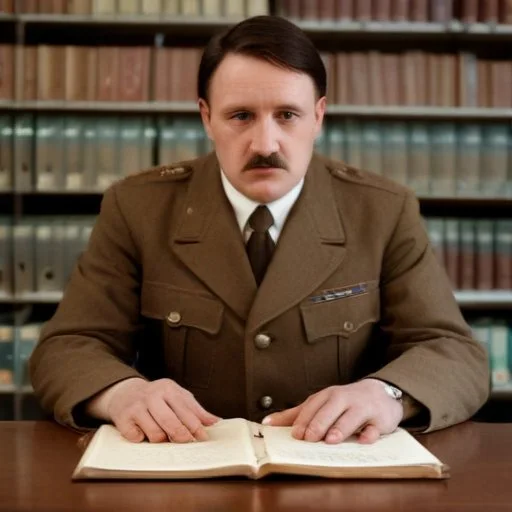
The diaries first surfaced in 1981, with Stuttgart graphologist Max Frei-Sulzer proclaiming their authenticity. However, his endorsement was swiftly contested by numerous experts, who raised concerns about the diaries' inconsistencies and inaccuracies. The German Federal Archives, determined to settle the issue, assembled a team of forensic experts to conduct a rigorous examination of the documents.
The new team of experts scrutinized the diaries, employing cutting-edge forensic techniques to uncover the truth. Their investigation revealed a plethora of anachronisms, inconsistencies, and suspicious glue residue, shattering the diaries' authenticity. The inconsistencies included:
The investigation led authorities to Konrad Kujau, a charismatic and cunning forger. Kujau, a German con artist, had a history of creating and selling fake historical artifacts. His motive, however, remains unclear – was it financial gain, a desire for notoriety, or a twisted fascination with Hitler?
The exposure of the Hitler Diaries as a hoax sent shockwaves through the media, academic, and historical communities. The scandal sparked widespread outrage, with many experts and media outlets left red-faced by their earlier credulity. The incident served as a stark reminder of the importance of rigorous authentication and academic skepticism.
The Hitler Diaries debacle highlights the imperative of meticulous research, rigorous authentication, and critical thinking in historical inquiry. The incident serves as a cautionary tale, emphasizing the need for heightened skepticism and scrutiny in the pursuit of historical truth. As historians, it is our duty to ensure the integrity and accuracy of our research, lest we perpetuate myths and misinformation.
In the end, the Hitler Diaries' exposure as a hoax serves as a valuable reminder of the importance of academic rigor, critical thinking, and the pursuit of truth in historical research.
Konrad Kujau, the German con artist behind the Hitler Diaries hoax, had a reputation for creating convincing fake historical artifacts. Born in 1938, Kujau's fascination with Hitler and Nazi memorabilia began at a young age.
Before fabricating the Hitler Diaries, Kujau had already made a name for himself by selling fake Nazi artifacts to collectors. His talent for forgery and deception earned him the nickname "The King of Forgery."
Kujau's motives for creating the Hitler Diaries remain unclear, but his actions sparked a global controversy and highlighted the need for stricter authentication processes in historical research.
The Hitler Diaries, comprising 62 volumes, were bound in black leather and featured a distinctive eagle emblem on the cover. Each volume was filled with handwritten entries, purportedly written by Adolf Hitler himself.
Forensic analysis revealed that the diaries were written on low-quality paper, inconsistent with the paper used during the Nazi era. The ink quality was also inconsistent, with some entries featuring modern ink formulas.
The diaries' bindings showed signs of tampering, with suspicious glue residue and uneven stitching. These physical inconsistencies, combined with the anachronistic language and phrasing, ultimately exposed the diaries as a forgery.
The Hitler Diaries hoax sparked a reevaluation of historical research practices, highlighting the importance of rigorous authentication and critical thinking. The incident underscored the need for historians to approach sources with skepticism and to verify information through multiple channels.
The hoax also led to a greater emphasis on interdisciplinary approaches to historical research, incorporating techniques from forensic science, linguistics, and material analysis.
In the aftermath of the scandal, historians and researchers began to reexamine the role of forgery and deception in shaping historical narratives, recognizing the need for a more nuanced understanding of the complex relationships between fact and fiction.
The Hitler Diaries surfaced during a period of heightened Cold War tensions, with the West and East blocs engaged in a propaganda war. The diaries' discovery was seen as a potential game-changer, offering a unique glimpse into the mind of the Nazi leader.
The German government's official authentication of the diaries was likely influenced by political considerations, as West Germany sought to distance itself from its Nazi past and establish a new national identity.
The hoax's exposure ultimately highlighted the dangers of politicizing historical research, underscoring the need for historians to maintain their independence and objectivity in the face of political pressure.
The Hitler Diaries hoax had far-reaching cultural implications, exposing the gullibility of the media and the public's fascination with sensational historical discoveries.
The incident sparked a wave of satirical and critical commentary, with many writers and artists using the hoax as a metaphor for the dangers of unchecked ambition and the blurring of fact and fiction.
In the years following the scandal, the Hitler Diaries became a cultural touchstone, symbolizing the risks of accepting information at face value and the importance of critical thinking in an age of misinformation.