Nazis confine Warsaw's Jews to ghetto, sealing their fate
The Nazis have just erected a 10-foot-high wall around the Jewish quarter in Warsaw, Poland, trapping over 400,000 people in a cramped, 1.3-square-mile area. The Warsaw Ghetto, as it's come to be known, is a prison, plain and simple. Behind its walls, Jews are forced to live in squalor, with little food, water, or sanitation. It's a deliberate attempt to break their spirits and strip them of their humanity. The ghetto's creation marks the beginning of the end for Warsaw's Jewish community, as they're gradually deprived of their livelihoods, possessions, and eventually, their lives. The writing's on the wall – the Nazis intend to eradicate them.
The Warsaw Ghetto: A Prison of Persecution
The Warsaw Ghetto, established in 1940, was a catastrophic turning point in the Holocaust, confining over 400,000 Jews in a cramped, 1.3-square-mile area of Warsaw, Poland. This deliberate attempt to strip Jews of their humanity would ultimately lead to the devastating eradication of the Jewish community in Warsaw.
Historical Background
Following Germany's invasion of Poland in 1939, the Nazis began implementing their anti-Semitic policies, which led to the establishment of the Warsaw Ghetto. The ghetto was part of a broader plan to isolate, persecute, and ultimately annihilate Europe's Jewish population.
The Creation of the Ghetto
In October 1940, the Nazis ordered the construction of a 10-foot-high wall around the Jewish quarter, creating a prison-like enclosure. The ghetto was formally established on November 15, 1940, with Jews from neighboring towns and villages forcibly relocated to this confined area.
Life Inside the Ghetto
Living conditions within the ghetto were inhumane, with overcrowding, starvation, and disease rampant. Food and water were scarce, and sanitation was non-existent. The Nazis imposed strict curfews, and any attempt to escape or resist was met with brutal force.
Key Figures Involved
- Adam Czerniaków: The head of the Jewish Council in Warsaw, Czerniaków was tasked with implementing Nazi decrees, which often conflicted with his own moral principles.
- Mordechai Anielewicz: A young Jewish leader, Anielewicz played a crucial role in organizing resistance within the ghetto and would later lead the brave but ultimately doomed Warsaw Ghetto Uprising.
Timeline of Events
- October 1940: Construction of the ghetto wall begins.
- November 15, 1940: The Warsaw Ghetto is formally established.
- 1941-1942: Mass deportations of Jews to extermination camps begin.
- April 1943: The Warsaw Ghetto Uprising begins, led by Mordechai Anielewicz.
- May 1943: The uprising is brutally suppressed, and the ghetto is largely destroyed.
Major Outcomes and Impacts
The Warsaw Ghetto stands as a haunting testament to the horrors of the Holocaust, serving as a precursor to the systematic extermination of six million Jews. The ghetto's establishment and subsequent liquidation were instrumental in the Nazis' "Final Solution," leaving an indelible mark on history.
Personal Accounts and Anecdotes
One survivor, Abraham Lewin, described the ghetto as "a grave, where people are buried alive." Another, Emanuel Ringelblum, documented life in the ghetto through his secret archives, which would later become a vital source of historical information.
Impact on Future Events
The Warsaw Ghetto's tragic fate serves as a poignant reminder of the dangers of prejudice, discrimination, and hatred. Its legacy has inspired countless initiatives promoting tolerance, understanding, and human rights, ensuring that the world never forgets the lessons of this dark period in human history.
Quotes and Memorable Sayings
"The world is indifferent to our suffering. The world is deaf to our cries and prayers." - Abraham Lewin
"We will not go quietly into the night. We will resist, and we will fight." - Mordechai Anielewicz
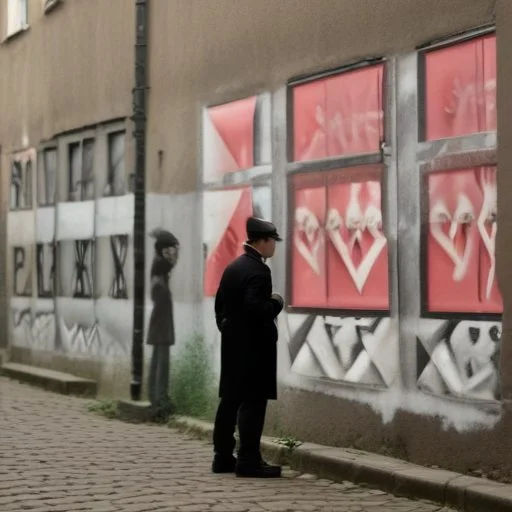
Character Overview
Adam Czerniaków: The Tragic Leader
As the head of the Jewish Council in Warsaw, Adam Czerniaków was tasked with implementing Nazi decrees, which often conflicted with his own moral principles. Despite his efforts to alleviate the suffering of the Jewish community, Czerniaków was ultimately unable to resist the Nazi occupation, and his own fate was tragically entwined with that of the ghetto. On July 23, 1942, Czerniaków took his own life, rather than sign an order to deport thousands of Jews to the Treblinka extermination camp.
Czerniaków's diary, which he kept from 1939 until his death, provides a unique perspective on the inner workings of the ghetto and the struggles of the Jewish Council. His writings reveal a deep sense of responsibility and anguish, as he struggled to balance the need to protect his community with the harsh realities of the occupation.
Rich Document Analysis
The Ringelblum Archive: A Secret Chronicle
The Ringelblum Archive is a remarkable collection of documents, diaries, and photographs that provides a firsthand account of life in the Warsaw Ghetto. Named after its founder, Emanuel Ringelblum, the archive was compiled secretly, often at great personal risk, by a group of brave individuals who sought to preserve the history of the ghetto.
The archive includes notebooks, letters, and other materials that detail the daily struggles and triumphs of the Jewish community. It also contains official documents, such as correspondence between the Jewish Council and the Nazi authorities, which provide valuable insights into the administration of the ghetto.
Today, the Ringelblum Archive is housed at the Jewish Historical Institute in Warsaw and is recognized as one of the most important and comprehensive collections of Holocaust-era documents in the world.
Examination of Cultural Influence
The Warsaw Ghetto Uprising in Polish Cultural Memory
The Warsaw Ghetto Uprising has had a profound impact on Polish cultural memory, symbolizing the country's complex and often fraught relationship with its Jewish heritage. The uprising has inspired numerous works of literature, art, and music, including Leon Uris's novel "Mila 18" and the 2001 film "Uprising," directed by Jon Avnet.
In Poland, the uprising is commemorated annually on April 19, with ceremonies and memorial services held at the POLIN Museum of the History of Polish Jews and other sites around Warsaw. These events serve as a poignant reminder of the country's shared history and the importance of promoting tolerance and understanding.
Thorough Geopolitical Study
Nazi Germany's Geopolitical Gamble
The establishment of the Warsaw Ghetto was a key component of Nazi Germany's broader geopolitical strategy, which sought to dominate Eastern Europe and assert its territorial ambitions. By isolating and persecuting the Jewish population, the Nazis aimed to create a cordon sanitaire around the German Reich, protecting it from perceived threats to its racial and cultural purity.
The ghetto also served as a testing ground for the Nazis' genocidal policies, allowing them to refine their techniques for mass murder and deportation. As such, the Warsaw Ghetto played a significant role in the development of the "Final Solution," which would ultimately claim the lives of six million Jews and millions of other innocent victims.
Study of Historical Interpretations
Historiographical Debates and Controversies
The Warsaw Ghetto has been the subject of numerous historiographical debates and controversies, with scholars engaging in lively discussions about its significance, impact, and legacy. One of the most contentious issues is the role of the Jewish Council, with some historians arguing that its leaders collaborated with the Nazis, while others view them as heroes who did their best to mitigate the suffering of the Jewish community.
Other debates center on the ghetto's place within the broader narrative of the Holocaust, with some scholars arguing that it represents a distinct phase in the development of Nazi genocidal policy, while others see it as merely one episode in a longer story of persecution and violence.


