


The date of September 22, 1942, will forever be etched in the annals of history as a day of unimaginable horror, as the German SS unleashed a brutal assault on the Jewish population in Vinnytsia, Ukraine, slaughtering 6,000 innocent lives on the sacred day of Rosh Hashanah, the Jewish New Year.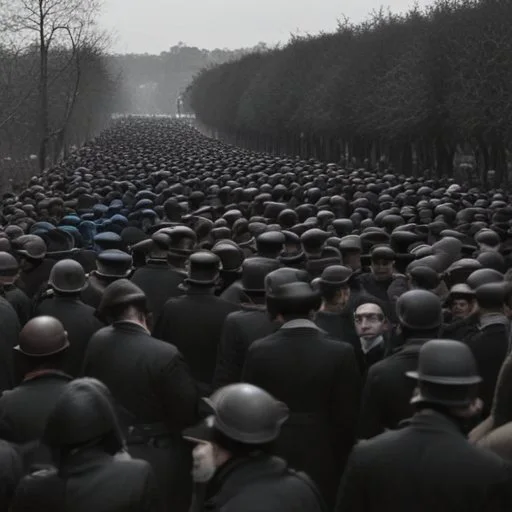
These 6,000 victims were the remnants of a larger massacre that had claimed the lives of 24,000 Jews just a few days prior, leaving behind a trail of devastation and terror that would haunt the city of Vinnytsia for generations to come.
The seeds of hatred and intolerance that led to the Holocaust in Ukraine were sown long before the outbreak of World War II. The rise of anti-Semitic sentiment in Eastern Europe, fueled by centuries of discriminatory practices and false stereotypes, created a fertile ground for the Nazi ideology to take root.
In Ukraine, the Jewish population had long been subjected to pogroms and persecution, with the 1918 pogroms in Kiev and other cities leaving hundreds of Jews dead and thousands displaced. The Nazi occupation of Ukraine in 1941 marked the beginning of a new era of terror, as the SS and Einsatzgruppen units, aided by local collaborators, set out to systematically eradicate the Jewish population.
| Date | Event |
|---|---|
| September 16-19, 1942 | First wave of massacres claims 24,000 Jewish lives in Vinnytsia |
| September 22, 1942 | Rosh Hashanah massacre: 6,000 surviving Jews executed by the German SS |
The Rosh Hashanah massacre in Vinnytsia serves as a painful reminder of the atrocities committed during the Holocaust, a genocide that claimed the lives of six million Jews and millions of others deemed undesirable by the Nazi regime.
Today, we remember the victims of the Holocaust and honor their memory by promoting tolerance, understanding, and peace. The story of the Rosh Hashanah massacre in Vinnytsia serves as a powerful warning against the dangers of hatred, bigotry, and prejudice, and stands as a testament to the enduring spirit of humanity in the face of unimaginable evil.
The historiography of the Holocaust in Ukraine is marked by a gradual shift from silence to acknowledgment. In the immediate aftermath of World War II, the Soviet Union downplayed the specific Jewish dimension of the Holocaust, instead emphasizing the suffering of Soviet citizens as a whole. It wasn't until the 1990s, with the collapse of the Soviet Union, that Ukrainian historians began to approach the topic with greater nuance and attention to detail.
Today, scholars continue to uncover new archival evidence and eyewitness testimony, shedding light on the complex dynamics of collaboration and resistance during the Nazi occupation. This ongoing historiographical effort serves as a testament to the importance of remembrance and historical accuracy in the face of tragedy.
Friedrich Jeckeln, the SS-Obergruppenführer responsible for the Rosh Hashanah massacre, remains a enigmatic figure in the annals of Holocaust history. Born in 1895, Jeckeln rose through the ranks of the Nazi party, earning a reputation for ruthless efficiency and unwavering loyalty to the SS.
Despite his central role in the Vinnytsia massacres, Jeckeln's motivations and personality remain poorly understood. Some historians have portrayed him as a zealous ideologue, driven by a fervent anti-Semitism; others have suggested that he was a calculating opportunist, leveraging his position for personal gain.
Regardless, Jeckeln's actions during the Holocaust left an indelible mark on the city of Vinnytsia, earning him a place among the most notorious perpetrators of the 20th century.
The Nazi occupation of Ukraine in 1941 marked a critical turning point in the region's history, as the country became a key battleground in the war between Germany and the Soviet Union. The subsequent implementation of the "Final Solution" in Ukraine was facilitated by the country's strategic location, with major cities like Vinnytsia serving as critical transportation hubs for the Nazi war machine.
The influx of German troops and SS units into Ukraine also brought with it a wave of radical anti-Semitic propaganda, which found fertile ground in the region's existing prejudices and biases. The resulting climate of fear and mistrust created an environment in which the Rosh Hashanah massacre could occur.
The Rosh Hashanah massacre in Vinnytsia had a profound impact on the cultural fabric of Ukraine, contributing to a persistent sense of trauma and collective guilt that would linger for generations.
In the decades following the Holocaust, Ukrainian communities around the world struggled to come to terms with the role of local collaborators in the massacres, leading to a complex and often fraught dialogue about national identity and responsibility.
Today, cultural institutions and museums in Ukraine are working to preserve the memory of the Holocaust, promoting a culture of remembrance and tolerance in the face of rising nationalism and xenophobia.
One of the most important archival documents related to the Rosh Hashanah massacre is the Vinnytsia Gestapo's own report on the event, which provides a chillingly detached account of the killings.
“On September 22, 1942, the Jewish population of Vinnytsia was liquidated. A total of 6,000 Jews were executed, bringing the total number of Jews liquidated in the region to 24,000.”
This laconic report, buried deep within the Nazi archives, serves as a stark reminder of the bureaucratic machinery that underpinned the Holocaust, and the casual cruelty with which human life was disposed of.