


On January 25, 1971, Ugandan General Idi Amin orchestrated a bloodless coup, toppling President Milton Obote's government and declaring himself the new head of state. This sudden turn of events marked the beginning of Amin's notorious eight-year reign, characterized by brutal suppression, human rights abuses, and catastrophic economic decline.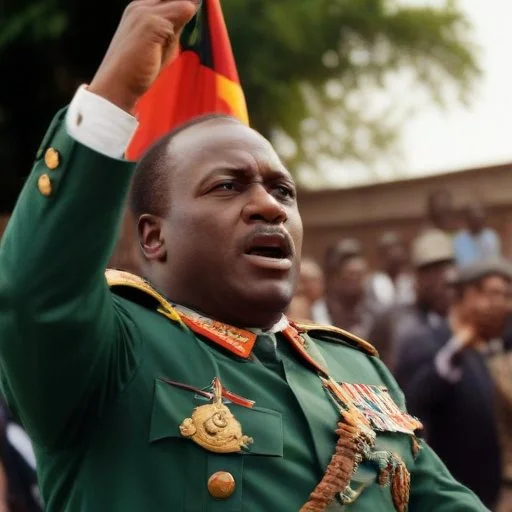
Uganda had gained independence from British colonial rule in 1962, with Obote, a member of the Langi ethnic group, becoming the country's first prime minister. Obote's government was plagued by ethnic and regional divisions, which Amin, a member of the Kakwa ethnic group, exploited to his advantage.
While Obote was attending a Commonwealth conference in Singapore, Amin, who was then the commander of the Ugandan army, saw an opportunity to strike. On January 25, 1971, Amin's troops surrounded the capital city of Kampala, and he declared himself the new president of Uganda.
| January 25, 1971 | Amin's troops surround Kampala, and he declares himself the new president of Uganda. |
| February 1971 | Amin consolidates power, appointing new ministers and dismissing Obote's supporters. |
| 1972 | Amin orders the expulsion of Asians and Europeans from Uganda, leading to a catastrophic economic decline. |
Amin's coup had far-reaching consequences for Uganda, including:
Amin's rule was marked by a unique blend of traditional Ugandan culture and quirky personal preferences. He was known for his love of boxing, and even promoted himself to the rank of field marshal.
Amin's brutal regime was widely condemned by the international community, with many countries imposing economic sanctions on Uganda. Despite this, Amin remained a charismatic figure, charming many with his charm and humor.
Amin's former close friend and advisor, Bob Astles, recalled that "Amin was a complex character, capable of great brutality, but also of great kindness."
Amin's coup set a dangerous precedent for military rule in Africa, and his brutal regime served as a warning to other countries of the dangers of authoritarianism.
Did you know that Amin was once a cook in the British colonial army, before rising to become one of Africa's most notorious dictators?
By examining the events leading up to and following Amin's coup, we can gain a deeper understanding of the complex forces that shape African politics and the devastating consequences of authoritarian rule.
Idi Amin's rise to power was as unexpected as it was swift. From his humble beginnings as a cook in the British colonial army to becoming one of Africa's most notorious dictators, Amin's charisma and intimidation tactics played a crucial role in his success.
Amin's early life was marked by a series of rebellious acts, including deserting the army and engaging in smuggling activities. However, it was his charm and ability to connect with people that helped him rise through the ranks of the Ugandan army.
Despite his brutal regime, Amin was known for his humor and ability to charm foreign leaders. He was particularly close to Libyan leader Muammar Gaddafi, who supported Amin's regime financially and militarily.

In the years leading up to the coup, Uganda was plagued by ethnic and regional divisions. Obote's government struggled to maintain power, and Amin saw an opportunity to exploit these divisions to his advantage.
Amin began secretly building alliances with other ethnic groups, including the Kakwa and the Nubians. He also cultivated relationships with foreign leaders, including Gaddafi, who provided him with financial and military support.
Meanwhile, Obote's government was weakened by internal power struggles and corruption. Amin was able to capitalize on these weaknesses, positioning himself as a strong and charismatic leader who could unite the country.
Idi Amin's regime had a profound impact on Ugandan culture. He promoted traditional Ugandan music and dance, and encouraged the development of local industries.
However, Amin's cultural legacy is also marked by repression and censorship. He banned Western music and imposed strict controls on the media, suppressing any criticism of his regime.
Despite these contradictions, Amin's cultural legacy continues to be felt in Uganda today. His promotion of traditional culture has inspired a new generation of Ugandan artists and musicians.

The expulsion of Asians and Europeans had a devastating impact on Uganda's economy. The country's GDP plummeted, and inflation soared.
The loss of skilled labor and expertise led to a decline in industrial production, and the country's infrastructure began to crumble.
Despite efforts to attract foreign investment, Amin's regime was unable to revive the economy. The country remained impoverished, and the economic damage inflicted during Amin's rule would take years to repair.
Idi Amin's regime was marked by a culture of fear and suppression. He used brutal tactics to maintain power, including torture, extrajudicial killings, and forced labor.
Amin's regime was also characterized by a lack of transparency and accountability. He ruled by decree, and his word was law.
The politics of fear had a profound impact on Ugandan society, stifling opposition and free speech. Amin's regime was widely condemned by the international community, and his brutal tactics would eventually lead to his downfall.