


On a fateful day in June 1981, an Iranian Air Force Boeing 707 took to the skies, carrying two men who would change the course of Iranian history. Abolhassan Banisadr, the ousted Iranian President, and Massoud Rajavi, leader of the Mujahideen-e Khalq (MEK), had just narrowly escaped impeachment and were bound for Paris, marking the beginning of a new chapter in their fight against the Islamist regime.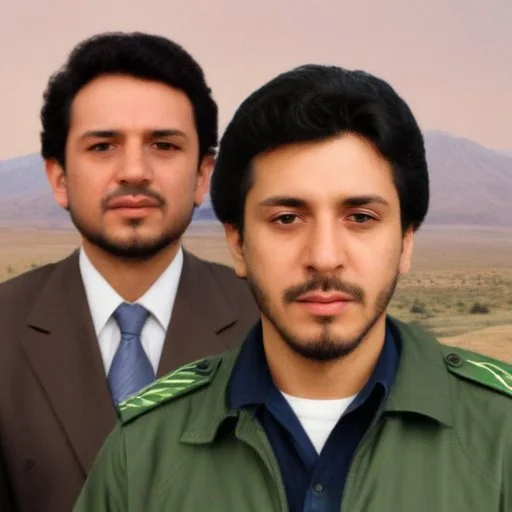
Their daring escape was orchestrated by Colonel Behzad Moezzi, a skilled Iranian Air Force pilot who had grown disillusioned with the Islamist regime. As the Boeing 707 soared through the skies, Banisadr and Rajavi began planning their next move, one that would shape the future of Iran's resistance movement.
In Paris, Banisadr and Rajavi founded the National Council of Resistance of Iran (NCRI), a coalition of democratic and secular groups opposed to the Islamist regime. The NCRI would become the primary opposition to the Iranian government, advocating for democracy, human rights, and social justice.
Abolhassan Banisadr, Iran's first democratically elected President, had been a key figure in the 1979 revolution. A staunch secularist, he had been increasingly at odds with the Islamist regime, which ultimately led to his impeachment.
Massoud Rajavi, leader of the MEK, had been a vocal critic of the regime's human rights abuses. His organization had been instrumental in organizing protests and rallies against the government.
Colonel Behzad Moezzi, the daring pilot who had facilitated their escape, would continue to play a crucial role in the NCRI, using his military expertise to support the resistance movement.
The NCRI's message of democracy and human rights resonated with many Iranians, who had grown disillusioned with the Islamist regime's strictures. The organization became a beacon of hope for those seeking a more liberal and secular society.
The NCRI's militant wing, the MEK, has been accused of carrying out terrorist attacks against the Iranian government. However, the organization has consistently denied these allegations, maintaining that it is a legitimate opposition movement.
The NCRI's formation marked a significant shift in the balance of power, providing a unified voice for Iran's opposition movement. The organization's continued advocacy for democracy and human rights has inspired generations of Iranian activists, shaping the country's ongoing struggle for freedom and social justice.
"We will not rest until Iran is free from the shackles of tyranny and oppression." - Abolhassan Banisadr
"The people of Iran will not be silenced. We will continue to fight for our rights, for our freedom, and for our future." - Massoud Rajavi
Abolhassan Banisadr, Iran's first democratically elected President, was a complex figure with a multifaceted personality. Born in 1933, Banisadr was a devout Muslim who was also deeply influenced by Western philosophy. This unique blend of traditional and modernist values shaped his political ideology, which emphasized the importance of democracy and human rights.
Banisadr's early life was marked by tragedy, with the loss of his father at a young age. This experience instilled in him a strong sense of determination and resilience, which would serve him well in his later political career.
Despite his eventual ouster, Banisadr remains a significant figure in Iranian history, symbolizing the country's ongoing struggle for democratic governance and human rights.

The 1981 escape of Abolhassan Banisadr and Massoud Rajavi took place against the backdrop of a rapidly changing geopolitical landscape. The Iranian Revolution of 1979 had led to the establishment of an Islamist government, which was viewed with suspicion by the West.
In this context, the formation of the National Council of Resistance of Iran (NCRI) represented a significant challenge to the Iranian government's authority. The NCRI's advocacy for democracy and human rights resonated with Western governments, which saw the organization as a potential ally in the region.
The NCRI's presence in Paris also highlighted the complexities of French-Iranian relations, which had long been marked by a delicate balance of cooperation and competition.
In the weeks leading up to their daring escape, Banisadr and Rajavi found themselves increasingly isolated as the Islamist regime consolidated its power. The two men realized that their only hope for survival lay in fleeing the country and establishing a government-in-exile.
The plan was fraught with risk, requiring careful coordination and precise timing. Colonel Behzad Moezzi, the skilled pilot who would facilitate their escape, had to navigate a complex web of security checkpoints and surveillance systems.
On the day of the escape, Banisadr and Rajavi were escorted to the waiting Boeing 707, which took off from Tehran's Mehrabad Airport under the cover of darkness.
The National Council of Resistance of Iran (NCRI) represented a significant political challenge to the Islamist regime, which had grown increasingly repressive in the aftermath of the 1979 revolution.
The NCRI's advocacy for democracy and human rights was seen as a threat to the regime's authority, leading to a crackdown on opposition activists and dissidents.
Despite these challenges, the NCRI continued to organize protests and rallies, using its influence to push for greater political and social freedoms.
The National Council of Resistance of Iran (NCRI) had a profound cultural impact on the Iranian diaspora, providing a sense of community and belonging for those opposed to the Islamist regime.
The NCRI's message of democracy and human rights resonated with many young Iranians, who saw the organization as a beacon of hope for a more liberal and secular society.
The NCRI's cultural influence extended beyond Iran's borders, inspiring a new generation of activists and dissidents throughout the Middle East.