


On June 1, 1988, the United States and the Soviet Union made history by introducing the Intermediate-Range Nuclear Forces Treaty (INF), marking a monumental shift in the Cold War era. This groundbreaking agreement, signed by U.S. President Ronald Reagan and Soviet General Secretary Mikhail Gorbachev, pioneered the reduction of nuclear arsenals, rather than merely capping them, for the first time in the history of the superpowers.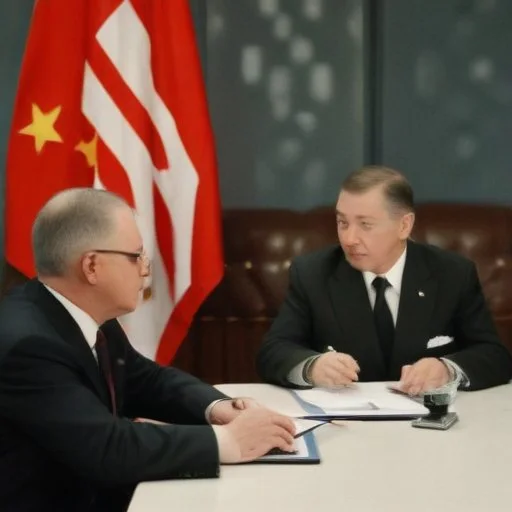
During the Cold War, intermediate-range missiles had become a significant threat to European security. These weapons, capable of striking targets within a 500-5,500 kilometer range, had placed European cities and populations in a state of perpetual fear. The INF Treaty aimed to eliminate an entire class of these missiles, alleviating the anxiety that had gripped the continent for decades.
The journey to the INF Treaty was marked by a series of tense negotiations and diplomatic maneuvers. In 1983, NATO's dual-track decision, which involved the deployment of Pershing II missiles in Europe and the pursuit of arms control negotiations, sparked a wave of protests across the continent. As the Soviet Union responded with its own missile deployments, the stakes grew higher. It was against this backdrop of escalating tensions that Reagan and Gorbachev began to explore the possibility of a historic disarmament agreement.
The INF Treaty banned the development, testing, and deployment of ground-launched intermediate-range missiles. It also established a rigorous verification regime, which included on-site inspections, to ensure compliance. The treaty's provisions applied to two classes of missiles: those with a range of 1,000-5,500 kilometers (such as the Soviet SS-20) and those with a range of 500-1,000 kilometers (such as the U.S. Pershing II).
The INF Treaty's success paved the way for future disarmament agreements, including the Strategic Arms Reduction Treaty (START). The treaty's emphasis on verification and compliance mechanisms set a precedent for future arms control agreements. Moreover, the INF Treaty marked a significant shift in the U.S.-Soviet relationship, signaling a move towards diplomacy and cooperation in place of rivalry and confrontation.
The INF Treaty's legacy extends beyond the Cold War era. It has served as a model for arms control agreements, demonstrating the importance of diplomacy and cooperation in reducing the threat of nuclear weapons. Today, as the world grapples with the challenges of nuclear proliferation, the INF Treaty remains a powerful symbol of the potential for international cooperation and diplomacy to shape a safer, more secure future.
The INF Treaty's impact extended beyond the realm of politics and international relations, influencing popular culture and civil society. The treaty's signing was hailed as a major breakthrough, inspiring a sense of hope and optimism that had been absent during the height of the Cold War.
While the INF Treaty was widely hailed as a historic achievement, it was not without its critics. Some argued that the treaty's verification mechanisms were insufficient, while others questioned the wisdom of reducing nuclear arsenals in the face of an uncertain global security environment. Despite these criticisms, the treaty remains a testament to the power of diplomacy and international cooperation in reducing the threat of nuclear war.
The path to the Intermediate-Range Nuclear Forces Treaty was paved by a series of diplomatic efforts and negotiations that began in the early 1980s. One of the key milestones was the NATO's dual-track decision in 1983, which aimed to deploy Pershing II missiles in Europe while pursuing arms control negotiations with the Soviet Union. This move was met with a strong response from the Soviet Union, which led to a deterioration in the relationship between the two superpowers.
In response to the escalating tensions, President Ronald Reagan and Soviet General Secretary Mikhail Gorbachev began to explore the possibility of a historic disarmament agreement. The two leaders engaged in a series of letters and meetings, including the landmark Reykjavik Summit in 1986, which laid the groundwork for the INF Treaty.
The treaty's success was also facilitated by the efforts of diplomats and policymakers on both sides, who worked tirelessly behind the scenes to overcome the many obstacles and challenges that stood in the way of an agreement. The signing of the INF Treaty on December 8, 1987, was the culmination of these efforts, marking a major breakthrough in the quest for nuclear disarmament.
Mikhail Gorbachev, the Soviet General Secretary, was a key architect of the Intermediate-Range Nuclear Forces Treaty. Born in 1931, Gorbachev rose through the ranks of the Communist Party to become one of the most powerful men in the Soviet Union. He is credited with introducing a range of reforms, including glasnost and perestroika, which aimed to modernize the Soviet economy and increase transparency in government.
Gorbachev's commitment to arms control and disarmament was driven by a deep-seated concern about the devastating consequences of nuclear war. He believed that the Soviet Union and the United States had a responsibility to work together to reduce the threat of nuclear conflict, and he was willing to take bold steps to achieve this goal.
Gorbachev's willingness to engage with Western leaders and to abandon the Soviet Union's traditional opposition to arms control agreements was a key factor in the success of the INF Treaty. His partnership with President Ronald Reagan helped to create a sense of trust and cooperation that was essential for achieving a major breakthrough in nuclear disarmament.
The Intermediate-Range Nuclear Forces Treaty marked a significant departure from previous arms control agreements, which had focused primarily on capping the growth of nuclear arsenals rather than reducing them. In contrast, the INF Treaty required the Soviet Union and the United States to eliminate an entire class of intermediate-range missiles, a move that marked a significant shift in the nuclear landscape.
The INF Treaty was also notable for its emphasis on verification and compliance mechanisms, which were designed to ensure that both parties adhered to the terms of the agreement. This focus on transparency and accountability helped to build trust between the Soviet Union and the United States, and paved the way for future arms control agreements.
In contrast to other arms control agreements, such as the Strategic Arms Limitation Talks (SALT), the INF Treaty was characterized by a sense of urgency and a willingness to take bold action to reduce the threat of nuclear war. This sense of urgency was driven by the growing concern about the dangers of nuclear conflict, and the recognition that the two superpowers had a responsibility to work together to reduce the threat of nuclear war.

The Intermediate-Range Nuclear Forces Treaty had a profound impact on popular culture, symbolizing a shift in the way people thought about the Cold War and the threat of nuclear conflict. The treaty's signing was hailed as a major breakthrough, inspiring a sense of hope and optimism that had been absent during the height of the Cold War.
The INF Treaty was celebrated in music, film, and literature, with many artists and writers reflecting on the significance of this historic agreement. The treaty's impact extended beyond the realm of politics, influencing the way people thought about international relations, diplomacy, and the role of leadership in shaping global events.
The treaty's cultural impact was also reflected in the way it was perceived by the media, with many outlets hailing it as a major achievement and a symbol of the power of diplomacy to shape international relations. The INF Treaty remains an important cultural touchstone, symbolizing a moment of hope and optimism in a period marked by fear and uncertainty.
The Intermediate-Range Nuclear Forces Treaty marked a significant development in the technology of arms control, introducing a range of innovative verification and compliance mechanisms that were designed to ensure that both parties adhered to the terms of the agreement. The treaty's emphasis on on-site inspections, satellite monitoring, and data exchange helped to build trust between the Soviet Union and the United States, and paved the way for future arms control agreements.
The INF Treaty also drove innovation in the field of missile technology, as the two superpowers worked to develop new systems that were consistent with the treaty's provisions. This led to significant advances in areas such as guidance systems, propulsion technology, and missile defense.
The treaty's technological impact extended beyond the military sphere, influencing the development of commercial satellite technology and the growth of the global telecommunications industry. The INF Treaty remains an important milestone in the development of arms control technology, symbolizing a moment of innovation and cooperation in a period marked by tension and rivalry.