


The International Criminal Court (ICC) made history on March 4, 2009, when it issued an arrest warrant for Sudanese President Omar Hassan al-Bashir, charging him with war crimes and crimes against humanity in Darfur. This groundbreaking decision marked the first time a sitting head of state had been indicted by the ICC since its establishment in 2002, sending shockwaves across the globe.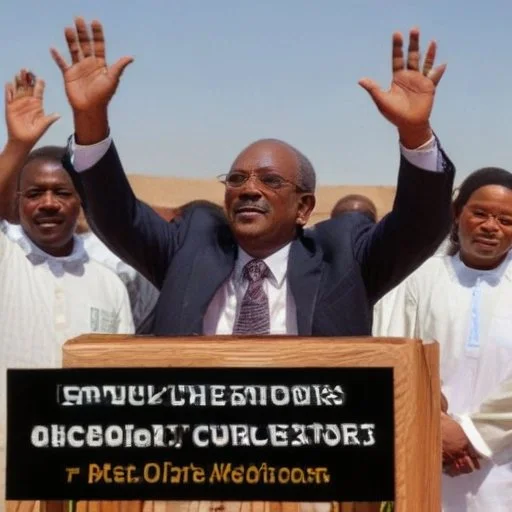
The atrocities committed in Darfur, a region in western Sudan, have been well-documented. Since 2003, the Sudanese government, led by al-Bashir, has been accused of orchestrating a brutal campaign of violence, displacement, and terror against the Fur, Masalit, and Zaghawa ethnic groups. The United Nations estimates that over 300,000 people have been killed, and more than 2.5 million displaced, in what has been described as one of the worst humanitarian crises of the 21st century.
The ICC's investigation into the Darfur conflict began in 2005, after the UN Security Council referred the situation to the court. Over the next four years, prosecutors gathered evidence of grave human rights abuses, including murder, rape, and forced displacement. On July 14, 2008, ICC Prosecutors Luis Moreno-Ocampo filed charges against al-Bashir, alleging that he was responsible for masterminding the atrocities in Darfur.
The ICC's Pre-Trial Chamber I issued the arrest warrant on March 4, 2009, after concluding that there were "reasonable grounds to believe" that al-Bashir had committed the crimes alleged. This decision sent a powerful message to leaders around the world: no one is above the law, and accountability will be pursued for the most heinous crimes.
The international community responded with widespread condemnation of al-Bashir's regime and praise for the ICC's courage. Human rights organizations hailed the decision as a major milestone in the fight against impunity. However, the Sudanese government rejected the warrant, dismissing it as "a political decision" and accusing the ICC of being a "tool of colonialism."
The al-Bashir indictment marks a significant shift in the global landscape of justice. It sets a precedent for holding leaders accountable for crimes committed on their territory, and sends a warning to tyrants and warlords everywhere: the world is watching, and you will be held accountable. As human rights advocates, we must continue to push for greater accountability and an end to impunity, wherever it may exist.
"The era of impunity is over. The ICC has sent a clear message that heads of state will be held accountable for their actions." - Luis Moreno-Ocampo, ICC Prosecutor
"Today, the ICC has taken a crucial step towards justice for the people of Darfur. We will continue to fight for accountability and an end to impunity." - Human Rights Watch
In the years leading up to the indictment, the international community had been grappling with the crisis in Darfur. The Sudanese government's campaign of violence and displacement had reached a boiling point, with reports of atrocities mounting. In 2004, the US Congress declared the situation in Darfur a genocide, a move that was followed by similar declarations from the EU and other international organizations.
Meanwhile, the ICC was still in its infancy, having been established just a few years prior. The court's first chief prosecutor, Luis Moreno-Ocampo, had been working tirelessly to build cases against those responsible for the world's worst crimes. It was against this backdrop that the ICC launched its investigation into the situation in Darfur, a move that would ultimately lead to the unprecedented indictment of Omar Hassan al-Bashir.
The road to indictment was not an easy one, however. The Sudanese government was determined to resist any attempts to hold its leaders accountable, and it launched a fierce campaign of intimidation and obstruction against the ICC. Despite these challenges, the court's prosecutors persevered, gathering evidence and building a case against al-Bashir.
Omar Hassan al-Bashir, the man at the center of the ICC's historic indictment, is a complex and enigmatic figure. Born in 1944 in northern Sudan, al-Bashir rose to power in the 1980s as a military officer. He seized control of the government in a bloodless coup in 1989, and has remained in power ever since.
Al-Bashir's rule has been marked by brutality and repression, with his government accused of committing some of the world's worst human rights abuses. Despite this, he has maintained a level of popularity among some segments of the Sudanese population, who see him as a strong leader who has brought stability to the country.
But behind the façade of strength and stability, al-Bashir has been accused of presiding over a regime of terror and violence. The ICC's indictment of him for war crimes and crimes against humanity has been hailed as a major milestone in the fight against impunity.The ICC's indictment of Omar Hassan al-Bashir sent shockwaves through the international community, with many hailing it as a major breakthrough in the fight against impunity. But the move was not without its critics, with some arguing that the ICC had overstepped its bounds by targeting a sitting head of state.
In the months and years that followed, the ICC faced intense pressure from African and Arab governments, who accused the court of being biased against leaders from their regions. The Sudanese government, meanwhile, was furious, withdrawing its cooperation with the ICC and expelling aid workers and diplomats from the country.
The indictment also had significant implications for international law and diplomacy, raising questions about the limits of sovereignty and the role of the international community in holding leaders accountable for crimes committed on their territory.
The ICC's indictment of Omar Hassan al-Bashir took place against a backdrop of shifting global power dynamics. The rise of new global players, such as China and India, had created new challenges for international institutions like the ICC.
In this new landscape, the ICC's indictment of al-Bashir was seen by many as a test of the court's ability to hold leaders accountable in the face of intense political pressure. The move was also seen as a challenge to the traditional notion of sovereignty, with the ICC asserting its authority to investigate and prosecute crimes committed on the territory of a sovereign state.
The indictment marked a significant shift in the global balance of power, with the ICC emerging as a major player in the global fight against impunity.The ICC's indictment of Omar Hassan al-Bashir had significant economic implications for Sudan, which was already struggling under the weight of international sanctions. The move led to a further deterioration in the country's economy, with foreign investment drying up and trade shrinking.
The economic impact was felt beyond Sudan's borders, however, with the indictment also affecting regional trade and investment. The move also had significant implications for the global economy, with the ICC's assertion of its authority to investigate and prosecute crimes committed on the territory of a sovereign state raising questions about the limits of state sovereignty in the global economy.
The indictment marked a significant turning point in the global economy, with the ICC emerging as a major player in the global fight against impunity.