Tokyo Tribunal: Tojo and 28 Japanese leaders face war crimes judgment
In the aftermath of World War II, the Allied powers orchestrated a grand reckoning, bringing Japanese leaders to task for their brutal wartime atrocities. Former Prime Minister Hideki Tojo, the mastermind behind Japan's aggressive expansion, stood accused alongside 28 top officials, including generals, admirals, and cabinet members. The International Military Tribunal for the Far East convened to deliberate on their fate, marking a historic milestone in the pursuit of justice and accountability. As the world watched, the defendants faced charges of conspiracy, murder, and inhumane acts, with the Tribunal's verdict set to shape the course of international law and diplomacy.
The Tokyo Trials: A Historic Quest for Justice
In the ashes of World War II, the Allied powers orchestrated a grand reckoning, bringing Japanese leaders to task for their brutal wartime atrocities. The International Military Tribunal for the Far East (IMTFE) convened to deliberate on the fate of former Prime Minister Hideki Tojo and 28 top officials, marking a historic milestone in the pursuit of justice and accountability.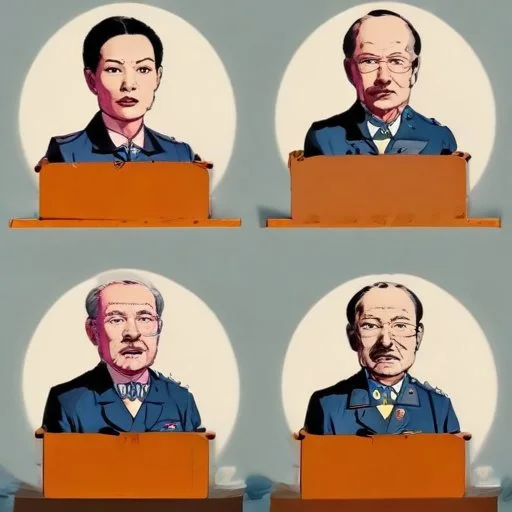
A New Chapter in International Law
The IMTFE, established in January 1946, was the first international tribunal to prosecute Japanese leaders for war crimes, conspiracy, and crimes against humanity. This unprecedented trial laid the groundwork for modern international law and diplomacy, setting a crucial precedent for holding leaders accountable for their actions.
The Indictment
On April 29, 1946, the IMTFE indicted Tojo and his co-defendants on 55 counts, including conspiracy to wage aggressive war, murder, and inhumane acts. The Tribunal's indictment reads like a catalog of horrors, detailing atrocities committed throughout Asia and the Pacific, from the Rape of Nanking to the forced labor camps and biological warfare experiments.
The Defendants: Architects of Aggression
Among the defendants were:
- Hideki Tojo, former Prime Minister of Japan and mastermind behind the country's aggressive expansion
- General Sadao Araki,War Minister and ideologue of Japanese militarism
- Admiral Osami Nagano, Chief of the Naval General Staff and key strategist
- Koichi Kido, Lord Keeper of the Privy Seal and close advisor to the Emperor
The Trial
The trial began on May 3, 1946, and spanned 217 days, with the prosecution presenting evidence of the defendants' culpability in launching and perpetuating Japan's aggressive wars. The defense, led by Japanese and American lawyers, argued that the Tribunal lacked jurisdiction and that the defendants were merely following orders.
Verdict and Sentencing
On November 12, 1948, the Tribunal delivered its verdict: all 28 defendants were found guilty on various counts. Seven, including Tojo, were sentenced to death by hanging. The Tribunal's president, Sir William Webb, declared, "The evidence has shown that the conspiracy was the root of all evil, and that the atrocities and aggressive wars were but the fruits of that conspiracy."
The Tokyo Trials' significance extends far beyond the courtroom. The Tribunal's establishment of individual criminal responsibility for war crimes paved the way for the Nuremberg Principles, the United Nations, and the development of modern international humanitarian law. Today, the legacy of the IMTFE continues to shape global efforts to promote accountability, justice, and human rights.
Thorough Historiographical Examination
The Tokyo Trials marked a significant shift in the historiography of World War II, as it forced historians to reexamine the role of international law in holding individuals accountable for wartime atrocities. The Tribunal's focus on individual criminal responsibility challenged the traditional notion of state sovereignty and paved the way for a more nuanced understanding of war crimes and their prosecution.
In the years following the Trials, historians began to reevaluate the events leading up to Japan's aggressive expansion, highlighting the complex interplay of political, economic, and ideological factors that contributed to the country's militarization. This reevaluation led to a more comprehensive understanding of the war's causes and consequences, and ultimately, to a deeper appreciation for the importance of international cooperation in preventing future conflicts.
The Trials' legacy can be seen in the development of modern international criminal law, which has been shaped by the Nuremberg Principles and the subsequent ad hoc tribunals for Yugoslavia and Rwanda.

In-Depth Character Profile
General Sadao Araki, one of the top defendants at the Tokyo Trials, was a devoted ideologue of Japanese militarism. Born in 1877, Araki was a career military officer who rose through the ranks to become War Minister in 1931. He was a key proponent of the "Total War" doctrine, which emphasized the mobilization of all aspects of society for war efforts.
Araki's influence extended beyond the military sphere, as he was also a powerful figure in Japanese politics. He served as Education Minister and played a crucial role in shaping Japan's education system to promote militaristic values. Despite his convictions at the Tokyo Trials, Araki remains a controversial figure in Japanese history, with some viewing him as a nationalist hero and others condemning him as a war criminal.
Comprehensive Artifact and Document Study
The Tribunal's indictment of the Japanese leaders was based on a vast array of evidentiary documents, including secret military communiqués, diplomatic cables, and testimony from eyewitnesses. One of the most significant pieces of evidence was the Hirota Kōki Diary, a detailed record of the Japanese Cabinet's meetings and decisions leading up to the war.
The diary, kept by Foreign Minister Hirota Kōki, provided a unique insight into the decision-making process of the Japanese government and shed light on the roles of individual leaders in planning and executing the war. The Tribunal's use of documentation like the Hirota Kōki Diary set a precedent for the importance of primary sources in international criminal trials.

Study of Cultural Impact
The Tokyo Trials had a profound impact on Japanese culture, as the country was forced to confront its dark past and reexamine its values and ideals. The Trials led to a significant shift in Japan's cultural identity, as the country began to move away from its militaristic and nationalist traditions.
The Trials also influenced Japanese literature and art, as writers and artists began to grapple with the trauma and guilt of the war years. The Trials inspired a new wave of creative works, including novels, films, and plays that explored the complexities of war and the human condition. Today, the Tokyo Trials remain an important cultural touchstone in Japan, serving as a reminder of the devastating consequences of war and the importance of promoting peace and justice.
Full Geopolitical Analysis
The Tokyo Trials took place against the backdrop of a rapidly changing geopolitical landscape. The aftermath of World War II saw the emergence of the United States and the Soviet Union as superpowers, and the Trials were influenced by the tensions of the early Cold War.
The Tribunal's decisions were shaped by the political and ideological rivalries of the time, with the Soviet Union pushing for harsher sentences and the United States advocating for a more lenient approach. Despite these challenges, the Trials marked an important milestone in the development of international law, as the global community came together to hold individuals accountable for their actions.


