


The Iran-Contra affair had far-reaching consequences for the United States government and its people. The scandal led to a loss of faith in the Reagan administration, and a renewed focus on Congressional oversight of executive branch activities. Furthermore, the affair tarnished the reputation of the National Security Council and led to a re-evaluation of the role of the CIA in covert operations.
The Iran-Contra affair seeped into popular culture, with references in film, literature, and music. The scandal also had a profound impact on the American psyche, contributing to a growing sense of disillusionment with government and politics.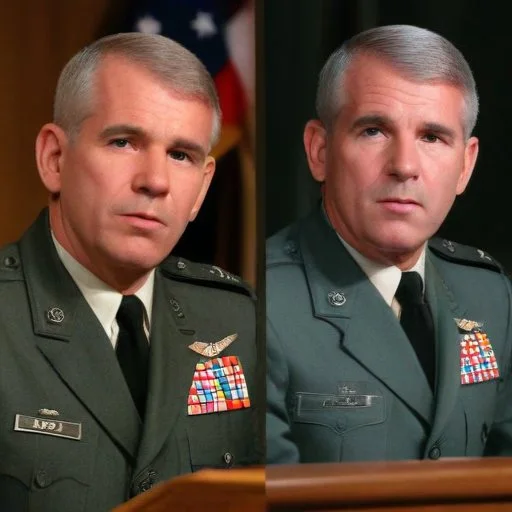
The Iran-Contra affair was marked by controversy and public outcry. Many Americans saw the scandal as a betrayal of trust, and a stark reminder of the dangers of unchecked executive power. The affair also sparked heated debates about the role of the CIA and the use of covert operations in foreign policy.
In his memoir, Under Fire: An American Story, Lieutenant Colonel Oliver North recounts the events leading up to his indictment and trial. North's account provides a unique glimpse into the mind of a man who was willing to risk everything for his country, even if it meant breaking the law.
The Iran-Contra affair served as a cautionary tale for future administrations, highlighting the importance of transparency and accountability in government. The scandal also led to a re-evaluation of the role of the National Security Council and the CIA in foreign policy decision-making.
The Iran-Contra affair will forever be remembered as a dark stain on the Reagan presidency and a stark reminder of the dangers of unchecked power. As a cautionary tale, it serves as a reminder of the importance of transparency, accountability, and adherence to the rule of law in government.
The Iran-Contra affair was not an isolated incident, but rather part of a larger pattern of covert operations and secret diplomacy that had been a hallmark of US foreign policy since the early Cold War era. The CIA's involvement in the 1953 Iranian coup, the Bay of Pigs fiasco, and the Phoenix Program in Vietnam were all precedents that set the stage for the Iran-Contra scandal.
In the context of the Cold War, the Reagan administration saw Iran-Contra as a way to counter Soviet influence in the Middle East and Central America. The operation was also motivated by a desire to free American hostages held in Lebanon, which had become a major embarrassment for the administration.
The Iran-Contra affair was a complex web of intrigue that involved multiple countries and players. It was a story of secret meetings, coded messages, and clandestine shipments of arms and cash. At its heart, however, it was a tale of human weakness, driven by a mix of ideological zeal, personal ambition, and a willingness to bend or break the rules.
Few figures in the Iran-Contra affair were more enigmatic than Manucher Ghorbanifar, the Iranian businessman who served as a key intermediary between the CIA and the Iranian government. A shadowy figure with ties to various intelligence agencies, Ghorbanifar played a crucial role in facilitating the arms-for-hostages deal that was at the heart of the scandal.
Ghorbanifar's motives were always murky, and his reliability was questioned by many in the CIA and the White House. Yet, he remained a key player in the operation, using his connections to facilitate the flow of arms and cash between the US and Iran.
The Iran-Contra affair had a profound impact on American popular culture, influencing everything from film and literature to music and television. The scandal inspired a wave of conspiracy-themed movies and books, from Oliver Stone's Talk Radio to Don DeLillo's Libra.
In music, the affair inspired songs like "Iran-Contra" by the punk band The Minutemen, and "Oliver North" by the rock band Pavement. The scandal even found its way into television, with references in shows like The Simpsons and Saturday Night Live.

The Iran-Contra affair was a key episode in the Cold War rivalry between the US and the Soviet Union. The operation was seen by many in the Reagan administration as a way to counter Soviet influence in the Middle East and Central America, and to assert US dominance in the region.
The affair also had significant implications for the regional geopolitical balance. The sale of arms to Iran helped to strengthen the regime of Ayatollah Khomeini, while the support for anti-Sandinista rebels in Nicaragua contributed to the destabilization of the region.
The Iran-Contra affair was a major political embarrassment for the Reagan administration, and it had significant implications for the president's legacy. The scandal led to a loss of trust in the administration, and it sparked a wave of congressional investigations and hearings that dominated the news for months.
The affair also had significant implications for the balance of power between the executive and legislative branches of government. It led to a renewal of congressional oversight and a re-evaluation of the role of the CIA in covert operations.