


In 1979, the Iranian Revolution brought about a seismic change in the country's political landscape, as the Pahlavi dynasty crumbled beneath the weight of Ayatollah Ruhollah Khomeini's Islamist movement. This revolution, marked by massive protests, riots, and ultimately, the downfall of the monarchy, paved the way for the establishment of an Islamic theocracy under Khomeini's leadership.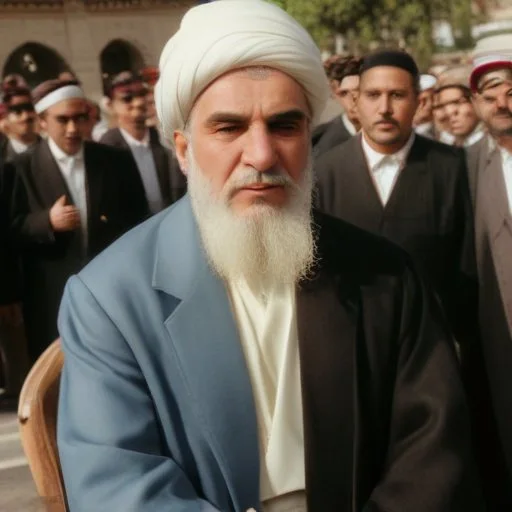
The Iranian Revolution was not a sudden, spontaneous event, but rather the culmination of decades of simmering discontent against the Pahlavi regime. The Shah's modernization efforts, while successful in terms of economic growth, had alienated the clergy, landowners, and traditionalists. The regime's close ties with the United States, paired with its brutal suppression of dissent, had created an atmosphere of resentment among the population. Ayatollah Khomeini, a vocal critic of the Shah's government, was exiled in 1964, but his message of Islamist reform and revolution continued to resonate with the masses.
In February 1978, Ayatollah Khomeini returned to Tehran, following the Shah's departure, to a hero's welcome. His message of Islamic revolution and social justice electrified the population, and protests, strikes, and demonstrations became a daily occurrence. The Shah's attempts to quell the uprising through force only fueled the flames of rebellion, as the revolution gathered momentum.
The Iranian Revolution had far-reaching consequences, both domestically and internationally. The establishment of an Islamic theocracy marked a radical shift in Iran's political trajectory, with the clergy playing a dominant role in governance. The revolution also had significant implications for the Middle East, as it challenged the region's status quo and inspired Islamist movements across the world.
The revolution's most immediate impact was the consolidation of power by the Islamic Republic, with Ayatollah Khomeini as its supreme leader. The new government rapidly introduced a series of reforms, including the establishment of an Islamic penal code, the abolition of the monarchy, and the nationalization of key industries.
The Iranian Revolution brought about a profound transformation in Iranian society, as traditional values and Islamic principles were revived and enforced. The new government promoted a culture of modesty, piety, and social conservatism, which had a profound impact on women's roles, education, and the arts.
The revolution also led to a significant shift in the country's international relations, as Iran distanced itself from the West and forged close ties with other Islamist governments and movements.
Ayatollah Khomeini remains a polarizing figure, revered by many as a champion of Islamist reform and social justice, while others view him as a ruthless autocrat who crushed dissent and imposed a repressive regime.
Despite the controversy, Khomeini's message of Islamic revolution continues to inspire and influence Islamist movements across the world, making him one of the most significant figures of the 20th century.
"The Shah is a deposed person and should be treated as such... We are not going to surrender to the Shah's treachery." - Ayatollah Ruhollah Khomeini
The Iranian Revolution's impact on modern history cannot be overstated. It marked a turning point in the global balance of power, as the Islamist movement challenged Western dominance and inspired a new wave of revolutionary fervor across the Middle East.
As the Islamic Republic continues to evolve and adapt, the Iranian Revolution remains a testament to the power of mass mobilization, religious conviction, and the human desire for social justice and change.
The roots of the Iranian Revolution can be traced back to the 1950s, when Mohammad Reza Pahlavi, the Shah of Iran, began to implement a series of modernization programs aimed at transforming Iran into a modern, secular state. However, these efforts were met with fierce resistance from the religious conservatives, who saw the Shah's reforms as an attempt to erode Iran's Islamic identity.
One of the key events that contributed to the growing resentment towards the Shah's government was the 1953 CIA-backed coup, which overthrew the democratically-elected government of Mohammad Mosaddegh and reinstated the Shah's authority. This event not only undermined Iran's sovereignty but also reinforced the perception that the Shah was a puppet of Western powers.
In the years that followed, the Shah's government became increasingly authoritarian, cracking down on dissent and opposition. Ayatollah Khomeini, who had been a vocal critic of the Shah's government, was exiled in 1964, but his message of Islamist reform and revolution continued to resonate with the masses.

Ayatollah Ruhollah Khomeini was born in 1902 in the town of Khomein, Iran. He came from a family of religious scholars and was trained in Islamic theology from a young age.
Khomeini's early years were marked by a deep sense of piety and a strong commitment to social justice. He was particularly influenced by the ideas of the Iranian nationalist and Islamist thinker, Jamal al-Din al-Afghani, who advocated for the establishment of an Islamic state.
Khomeini's rise to prominence began in the 1960s, when he became a vocal critic of the Shah's government. His charismatic leadership and unwavering commitment to Islamist principles earned him a massive following among the Iranian people, who saw him as a symbol of resistance against the corrupt and authoritarian regime.
The Iranian Revolution had a profound impact on Iranian culture, as traditional values and Islamic principles were revived and enforced. The new government promoted a culture of modesty, piety, and social conservatism, which had a profound impact on women's roles, education, and the arts.
The revolution also led to a significant shift in the country's cultural identity, as Iran began to distance itself from Western cultural influences and forge a new path that was more in line with Islamic values.
The cultural impact of the revolution was not limited to Iran, as it also inspired a new wave of Islamist movements across the Middle East, which sought to challenge Western cultural dominance and promote a more authentic, indigenous cultural identity.
The Iranian Revolution marked a significant turning point in the country's political trajectory, as the Shah's authoritarian regime was replaced by an Islamic theocracy. The new government was characterized by a strong emphasis on Islamist principles, which were seen as a way to promote social justice and resist Western imperialism.
The revolution also led to a significant shift in the balance of power in the Middle East, as Iran emerged as a major player in regional politics, challenging the dominance of the United States and other Western powers.
The political impact of the revolution was not limited to the Middle East, as it also had far-reaching implications for global politics, inspiring a new wave of Islamist movements and challenging the existing world order.
The Iranian Revolution took place against the backdrop of a rapidly changing geopolitical landscape. The 1970s were marked by a series of major international events, including the oil embargo of 1973, the Camp David Accords of 1978, and the Soviet invasion of Afghanistan in 1979.
The revolution was closely watched by the international community, which was concerned about the implications of an Islamist takeover in Iran. The United States, in particular, was wary of the new government's anti-American rhetoric and its potential to destabilize the region.
The geopolitical context of the revolution was further complicated by the Cold War, which pitted the United States against the Soviet Union in a global struggle for dominance. The Iranian Revolution marked a significant shift in the balance of power in the region, as Iran emerged as a major player in regional politics, challenging the dominance of the United States and the Soviet Union.