


On May 14, 1948, David Ben-Gurion, the leader of the Zionist movement, stood before a crowd of dignitaries and declared the establishment of the State of Israel, marking a historic moment for the Jewish people. This monumental event was soon followed by an immediate threat from Israel's Arab neighbors, sparking the 1948 Arab-Israeli War, a conflict that would last nearly a year and have far-reaching consequences for the region.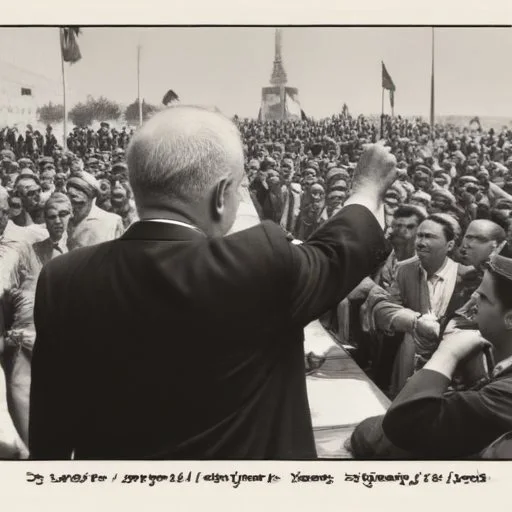
The idea of a Jewish homeland had been simmering for centuries, with the Zionist movement gaining momentum in the late 19th and early 20th centuries. Following World War I, the British government, which controlled the region, began to consider the establishment of a Jewish homeland. The 1917 Balfour Declaration expressed British support for a Jewish state, but it wasn't until after World War II that the movement gained international recognition.
On May 14, 1948, Ben-Gurion declared Israel's independence in Tel Aviv's Museum Hall, reading from a prepared text. The room erupted in cheers and tears as the dream of a homeland was finally realized. The declaration stated Israel's commitment to democracy, equality, and justice, and established the principles of the new state.
Immediately after the declaration, Israel's Arab neighbors – Egypt, Syria, Jordan, and Iraq – launched a coordinated attack on the fledgling nation. The war was sparked by fears of territorial loss and influence, as well as a desire to crush the Zionist movement. The conflict lasted for nearly a year, from May 1948 to March 1949, and resulted in the displacement of hundreds of thousands of Palestinians and the redrawing of the region's map.
The 1948 Arab-Israeli War had far-reaching consequences for the region, including:
Today, the 1948 Arab-Israeli War remains a contentious issue, with ongoing debates over territory, identity, and the rights of Palestinians and Israelis. Despite the challenges, Israel's declaration of independence and the subsequent war marked a pivotal moment in the region's history, shaping the course of politics, identity, and conflict for generations to come.
The road to Israel's declaration of independence was paved by the British government's 1939 White Paper, which restricted Jewish immigration to Palestine, leading to a surge in illegal immigration and the formation of militant Zionist groups.
In the aftermath of World War II, the international community's growing awareness of the Holocaust and its horrors created a sense of urgency and moral imperative to establish a Jewish homeland.
The United States, under President Harry Truman, played a crucial role in recognizing Israel's independence, with Truman personally intervening to ensure the State Department's support for the new nation.

David Ben-Gurion, the founder of modern Israel, was born in Poland in 1886 and was raised in a family steeped in Zionist ideals.
Ben-Gurion's leadership style was marked by a strong sense of pragmatism and a willingness to make difficult decisions, earning him the respect and admiration of his peers.
Despite his dominant role in Israel's early years, Ben-Gurion was not without his critics, with some accusing him of being autocratic and intolerant of dissenting voices.
The 1948 Arab-Israeli War had a profound impact on the Israeli economy, with the war effort requiring massive investments in defense and infrastructure.
The war also led to a significant influx of international aid, particularly from the United States, which helped to stabilize the Israeli economy and pave the way for future growth.
However, the war also had a devastating impact on the Palestinian economy, with the displacement of hundreds of thousands of Palestinians leading to widespread poverty and instability.

The Israeli Declaration of Independence, signed on May 14, 1948, is a remarkable document that reflects the hopes and aspirations of the Jewish people.
The declaration's emphasis on democracy, equality, and justice was a beacon of progressive values in a region marked by autocracy and oppression.
The original document, housed in the Israel State Archives, is a testament to the power of language and ideas in shaping the course of history.The 1948 Arab-Israeli War was not just a conflict between Israel and its Arab neighbors, but a proxy war between the superpowers of the time, with the United States and the Soviet Union vying for influence in the region.
The war marked a significant shift in the global balance of power, with the emergence of the United States as a dominant military and economic power in the Middle East.
The war also highlighted the complexities of the Cold War, with the Soviet Union's support for Arab nationalism and the United States' backing of Israel creating a labyrinthine web of alliances and rivalries.