


Operation Litani, launched on March 14, 1978, is remembered as a pivotal moment in the Arab-Israeli conflict, marked by a seven-day campaign to invade and occupy southern Lebanon. This military operation, carried out by the Israel Defense Forces (IDF), aimed to drive the Palestinian Liberation Organization (PLO) out of the region, thereby ending the constant attacks on Israel's border towns.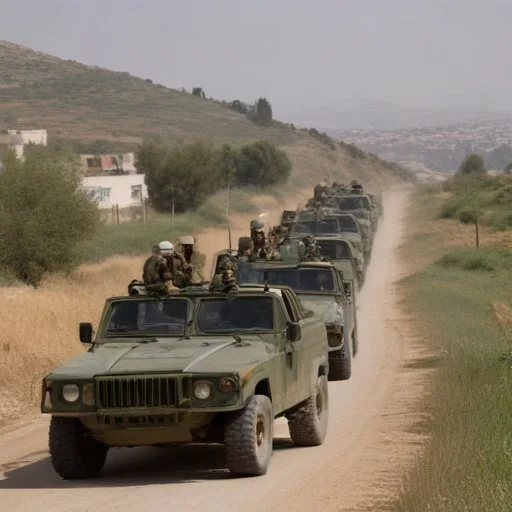
The 1970s saw a significant surge in Palestinian militancy, with the PLO establishing a stronghold in southern Lebanon. The region had become a hotbed of guerrilla warfare, with frequent raids and ambushes targeting Israeli civilians and military personnel. In response, the Israeli government, led by Prime Minister Menachem Begin, decided to take drastic measures to restore security and deter further attacks.
Defense Minister Ezer Weizman played a crucial role in planning and executing Operation Litani. As a seasoned military strategist, Weizman oversaw the IDF's operations, ensuring a swift and decisive campaign. Other key figures involved included IDF Chief of Staff Rafael Eitan and Southern Command Commander Avigdor Ben-Gal, who played critical roles in the military operation.
On March 14, 1978, the IDF launched Operation Litani, with armor columns and infantry units advancing into southern Lebanon. The initial phase of the operation saw the IDF swiftly occupy the southern region, pushing the PLO back towards the Litani River. As the operation progressed, Israeli forces continued to advance, securing key towns and strategic locations.
The operation resulted in significant casualties, with estimates suggesting hundreds of fatalities and injuries on both sides. The displacement of civilians was also a major concern, with many Lebanese residents fleeing the conflict zone. The operation's success, however, lay in its ability to drive the PLO out of the region, thereby reducing the threat to Israel's border towns.
The international community responded swiftly to the operation, with the United Nations Security Council condemning the invasion on March 19, 1978. This led to Israel's eventual withdrawal from Lebanon, marking a significant diplomatic setback for the Begin government.
Operation Litani had far-reaching cultural and social implications, particularly in Lebanon. The operation led to a significant shift in the region's demographics, with many Palestinian refugees resettling in other parts of Lebanon. The operation also contributed to the radicalization of Lebanese Shia groups, who would later form Hezbollah.
Operation Litani remains a contentious issue, with critics accusing Israel of disproportionate force and human rights abuses. The operation was also marred by allegations of civilian casualties and property damage. Despite these criticisms, many Israelis viewed the operation as a necessary response to the PLO's aggression.
In the aftermath of the operation, Defense Minister Ezer Weizman stated, "We did not go into Lebanon to conquer or to stay, but to create a new reality that would enable us to live in peace and security." This quote underscores the Israeli government's desire to restore stability to the region and secure its borders.
Operation Litani shares striking similarities with other military campaigns undertaken by Israel, such as Operation Peace for Galilee in 1982. Both operations aimed to drive out Palestinian militants from southern Lebanon, highlighting Israel's ongoing struggle to secure its borders.
The success of Operation Litani emboldened Israel to pursue further military campaigns in Lebanon, including Operation Peace for Galilee. This operation, however, would ultimately lead to Israel's protracted occupation of southern Lebanon, culminating in the 2000 withdrawal.
Operation Litani marked the first time Israel had conducted a large-scale military operation in Lebanon since the 1948 Arab-Israeli War. The operation also saw the IDF employ advanced military tactics, including the use of helicopter gunships and precision-guided munitions.
In conclusion, Operation Litani remains a significant event in the Arab-Israeli conflict, highlighting the complexities of military operations in the region. As a turning point in Israel's relations with Lebanon, the operation continues to shape the country's diplomatic and military strategies to this day.
Ezer Weizman, a seasoned military strategist, played a crucial role in planning and executing Operation Litani. Born in 1924 in Tel Aviv, Weizman was a decorated war hero, having served in the Israeli Air Force during the 1948 Arab-Israeli War. As Defense Minister, Weizman worked closely with Prime Minister Menachem Begin to develop the operational plan, leveraging his expertise to ensure a swift and decisive campaign.
Weizman's leadership during Operation Litani earned him widespread recognition, solidifying his position as a key figure in Israeli politics. His commitment to restoring security to Israel's border towns resonated with the Israeli public, who saw him as a champion of national security.
Operation Litani had a profound impact on Lebanese Shia communities, contributing to their radicalization and eventual rise to prominence. The displacement of Palestinians and Lebanese civilians created a power vacuum, which Shia groups like Hezbollah would later fill. The operation's effects on the Shia community's socioeconomic and political dynamics cannot be overstated, as it fueled their desire for autonomy and self-determination.
The event also led to a significant shift in the regional demographics, with many Shia families relocating to areas like the Beqaa Valley. This internal migration would ultimately contribute to the growth of Shia nationalism and the emergence of Hezbollah as a dominant force in Lebanese politics.
Operation Litani shares striking similarities with Operation Peace for Galilee, launched in 1982. Both operations aimed to drive out Palestinian militants from southern Lebanon, highlighting Israel's ongoing struggle to secure its borders. The two operations demonstrate a pattern of Israeli military intervention in Lebanon, with both campaigns seeking to create a buffer zone and eliminate the threat of Palestinian attacks.
However, the two operations differ in their strategic objectives and outcomes. Operation Litani was a limited military campaign, whereas Operation Peace for Galilee marked the beginning of a prolonged occupation of southern Lebanon. The latter operation would ultimately lead to Israel's withdrawal in 2000, underscoring the complexities and challenges of military intervention in the region.
Operation Litani unfolded against the backdrop of a volatile geopolitical landscape. The 1970s saw a surge in Palestinian militancy, with the PLO establishing a stronghold in southern Lebanon. The region had become a hotbed of guerrilla warfare, with frequent raids and ambushes targeting Israeli civilians and military personnel. Against this backdrop, the Israeli government decided to take drastic measures to restore security and deter further attacks.
The operation also occurred during a period of heightened tension between Israel and its Arab neighbors, with the Camp David Accords still in their infancy. The international community's response to Operation Litani, including the UN Security Council's condemnation, highlights the complexities of Middle Eastern politics and the delicate balance of power in the region.
Historians have grappled with the complexities of Operation Litani, examining its significance within the broader context of the Arab-Israeli conflict. Some scholars have framed the operation as a necessary response to Palestinian aggression, while others have criticized Israel's use of disproportionate force and human rights abuses during the campaign.
Recent historiographical research has shed new light on the operation's impact on the Lebanese Shia community, as well as its role in shaping Israel's diplomatic and military strategies in the region. By examining the multifaceted nature of Operation Litani, historians can gain a deeper understanding of the intricacies of Middle Eastern politics and the ongoing struggle for peace and security in the region.